When Construction Executive reported earlier this year that Amazon’s “Titus” initiative aims to build U.S. data center infrastructure in under 35 weeks, the implications for estimators were immediate. That kind of timeline compression is not a West Coast abstraction. It mirrors what contractors across Eastern Pennsylvania already feel: tighter bid windows on logistics parks along I-78, data center proposals in Northeast PA, and institutional work in the Philadelphia suburbs where grant deadlines leave no room for slow takeoffs. For merit shop firms competing in one of the most union-dense construction markets in the country, AI construction estimating is no longer a future consideration. It is a present competitive factor. ABC Eastern Pennsylvania is tracking these developments closely, and this article lays out what contractors across our seventeen-county territory need to know and do now.
Why AI Construction Estimating Matters Now For Eastern Pennsylvania Contractors
Bid windows are compressing across every sub-market in Eastern Pennsylvania. In the Lehigh Valley, speculative warehouse developers along the I-78 corridor expect GC responses in days, not weeks. In Northeast PA, data center and industrial projects along I-81 are operating on schedules that would have seemed unrealistic three years ago. In the Philadelphia metro and suburban collar counties (Montgomery, Bucks, Chester, Delaware), institutional and healthcare owners tie procurements to public funding cycles and grant rounds, leaving estimating teams with little margin for delay.
Layer on the region’s labor constraints. Pennsylvania’s Prevailing Wage Act requires contractors on public works over $25,000 to pay specified hourly rates plus fringe benefits that vary by county and trade. Construction laborers, for example, earn between $45.40 and $71.04 per hour total depending on county and funding source. Mispricing those burdens on a single bid can erase an entire project’s margin. Meanwhile, 92% of U.S. construction firms report difficulty hiring, according to Construction Executive, which means fewer experienced estimators are available to absorb the growing bid volume.
The result: estimating speed is now a margin issue, not just an administrative convenience. AI estimating software can cut bid preparation time by 50%, and AI-powered tools can help increase bid capacity by 3x. Yet 75% of construction companies still lack AI adoption plans. For merit shop contractors in Eastern Pennsylvania, that gap reflects the broader shift in AI in construction and represents both a risk and an opportunity.

What AI Construction Estimating Software Actually Does
Construction estimating software has existed for decades: databases for unit costs, assemblies, labor and equipment pricing, overhead, and bid packaging. What distinguishes AI construction estimating software is its use of artificial intelligence, including machine learning and computer vision capabilities that automate or accelerate specific tasks within the estimating process.
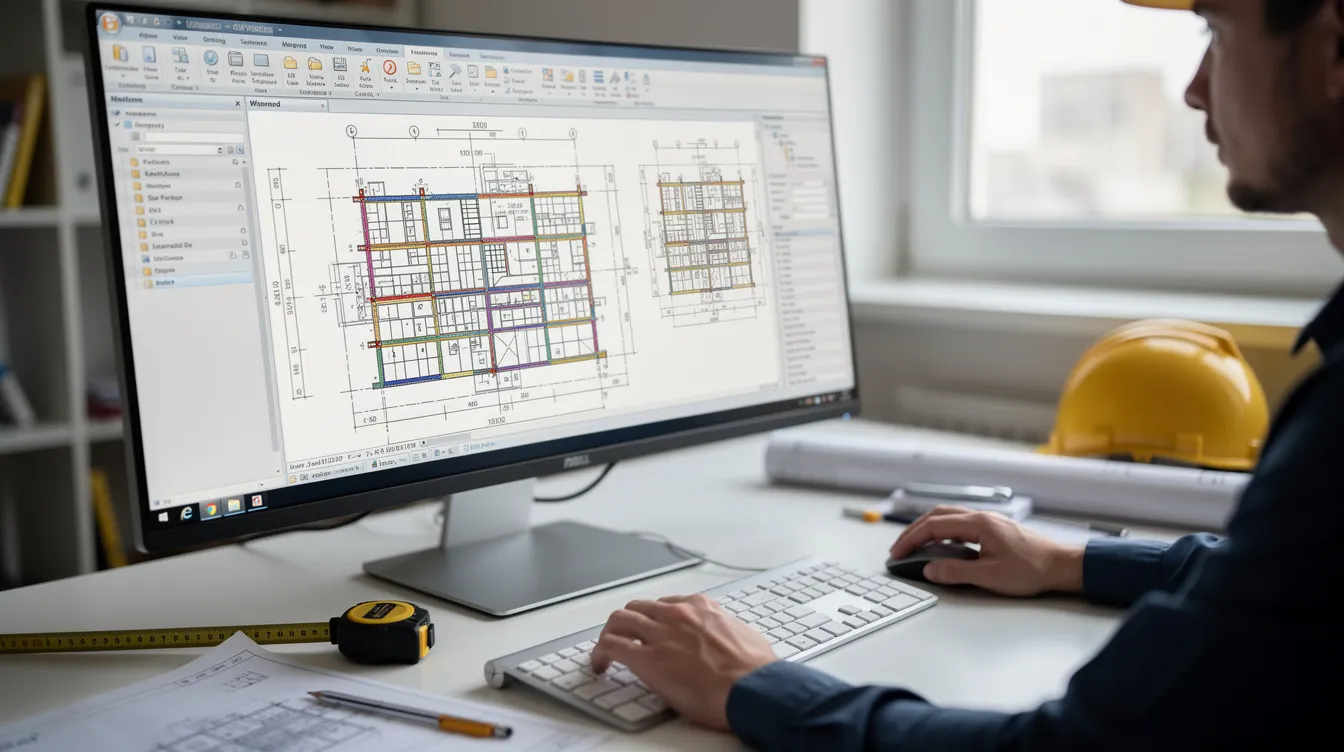
AI construction estimating software can automate quantity takeoffs and speed up the takeoff process, extracting measurements from construction drawings and measuring quantities in as little as 30 seconds. AI enhances forecasting by analyzing labor rates and current market trends. It can analyze historical productivity data to estimate labor and equipment needs. AI systems can connect to live pricing feeds to keep estimates current and can run multiple simulations to evaluate risk variables affecting budgets. Machine learning models learn from historical projects to support cost estimation and forecast costs accurately, and AI systems continuously learn from completed projects to enhance future estimates.
AI provides more consistent pricing by applying data-driven rules across projects, which matters when multiple estimators are working across different bid packages. AI allows for real-time dynamic pricing adjustments based on current market conditions. It also helps identify discrepancies between estimates and project specifications before those gaps become cost overruns.
The critical distinction: AI is decision support, not decision replacement. Every tool on the market expects an experienced estimator to review, adjust, and approve outputs. AI can improve accuracy by learning from historical data, but the estimating team retains accountability for the final bid.
AI Estimating Tasks Estimators Should Trust
The following routine tasks are where AI delivers the most reliable value in the estimation process:
- Automated takeoff and quantity extraction. AI reads plan sets, identifies symbols (doors, outlets, fixtures, pipe runs), and measures linear lengths, areas, and volumes. Automated quantity takeoffs reduce manual counting errors compared to traditional estimating methods, and AI can detect discrepancies in quantity data for precise estimates. Some platforms report 99%+ accurate takeoffs on clean drawings.
- Historical cost retrieval and normalization. AI pulls unit costs from past projects, adjusts for geographic wage differentials, material escalation, and overhead. This turns historical project data into a competitive asset rather than a filing burden.
- Bid leveling and duplicate-quote detection. When comparing subcontractor quotes, AI highlights scope gaps, missing line items, and duplicate pricing across divisions. This reduces the manual effort of line-by-line comparison on bid day.
- Automated completeness and error flagging. AI helps improve risk visibility by highlighting potential cost overruns early. It flags under-scoped trade divisions, missing spec sections, or unusually low cost per square foot against benchmarks. AI improves estimating accuracy by flagging discrepancies before submission.
- Predictive risk analysis. Predictive analytics identify items likely to be underpriced, improving contingency planning. AI enhances decision-making in early design phases by comparing different options and running what-if scenarios.
- RFI generation. AI assists in generating preliminary requests for information before final bids, catching ambiguities in documents that would otherwise surface as change orders.
AI minimizes human error through automated processing and data analysis across these tasks, but each output requires a qualified estimator’s review before it becomes part of a final bid.
Project Types And Trades Where AI-Powered Estimating Helps Most
Not every project benefits equally from AI-driven estimating tools. The highest return comes from work with standardized, repeatable scopes where speed is a competitive differentiator:
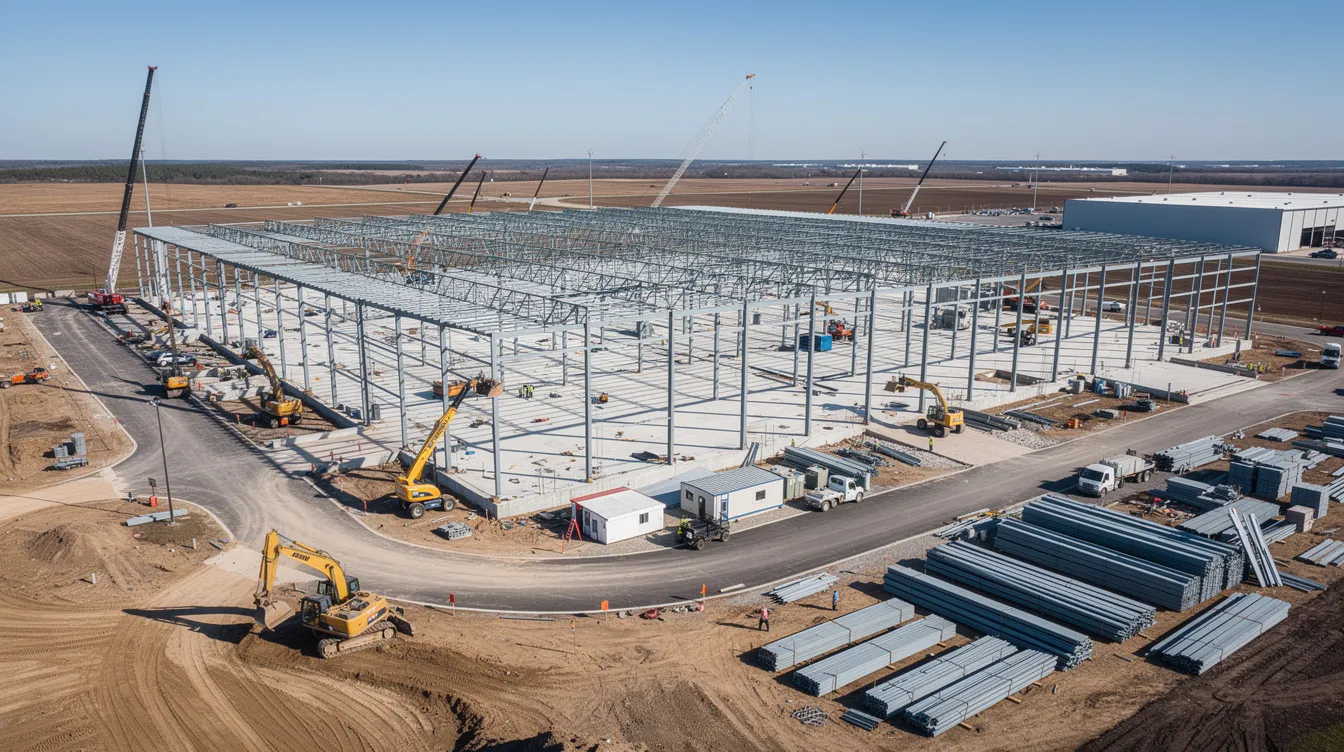
- Data centers and logistics/warehouse buildings. These sectors are driving the most aggressive timeline compression nationally and locally. Along the I-78 corridor in the Lehigh Valley and I-81 in NEPA, owners expect fast-turn pricing. AI estimating software can produce estimates up to seven times faster than traditional methods, and builders using AI can complete estimates up to seven times faster than manual workflows allow.
- Healthcare and institutional work. Standardized components (labs, clean rooms, patient wings) lend themselves to repeatable cost models. In Suburban Philadelphia, public health and education projects with tight grant deadlines reward firms that submit accurate estimates quickly.
- MEP, concrete, steel, and repetitive commercial scopes. Trades where drawing symbols are standardized (outlets, conduit, pipe runs, structural members) benefit most from takeoff automation. AI-powered estimating tools can cut estimating time by over 50%, and in some cases, by up to 70%. Automation can cut estimating time by over 50% on complex projects with high quantities.
For mid-size merit shop construction businesses, these gains are especially significant. AI tools can improve bid-to-win ratios by 17% within eight months, allowing firms to pursue multiple projects without adding headcount. AI construction estimating software can provide 99%+ accurate takeoffs when drawing quality is high, enabling smaller estimating teams to compete with larger preconstruction departments.
What AI Construction Estimating Cannot Do
No construction software, regardless of how advanced, can replace the judgment that comes from building things. Here is where human oversight is essential to balance AI reliance:
- Constructability judgment. AI cannot evaluate site access, soil conditions, staging constraints, mechanical interferences, or coordination challenges that experienced project managers and field supervisors recognize instantly.
- Prevailing wage compliance and labor classification. Pennsylvania’s prevailing wage rates vary by county, trade, and funding source. AI cannot reliably determine whether a project falls under the PA Prevailing Wage Act, Davis-Bacon, or a local Project Labor Agreement. Those determinations require human expertise and carry legal consequences.
- Scope judgment on exclusions, alternates, and risk allocation. AI can flag scope gaps but cannot decide which risks to carry, which to exclude, and which to price as alternates. That is the estimator’s role.
Consider this: 88% of spreadsheets contain errors affecting estimates. AI addresses that problem through automation, and automation reduces human error in cost calculations by 88%. But replacing one source of error with another (blind trust in AI outputs) is not progress. Resistance to change is a common challenge in AI adoption, but so is uncritical acceptance. Every AI-generated estimate requires a qualified estimator’s sign-off.
How To Pilot AI Construction Estimating Software Without Creating Risk
Implementing AI can be expensive for construction firms, and a failed rollout wastes both money and credibility. The responsible path is a controlled pilot:
- Start with one repeatable project type. Choose a scope your firm bids frequently (speculative warehouse, school addition, clinic renovation). Your existing cost history and expectations are strong enough to benchmark AI performance against.
- Build a clean historical cost library first. Without reliable data, AI tools will project using generic national averages that missprice your local project costs. Normalize past project costs by trade division, labor burden, material, and geographic area.
- Pair estimator with operations reviewer. The estimator applies AI output; the operations reviewer checks site realities, field constraints, and constructability assumptions. This dual review prevents AI confidence from outrunning ground truth.
- Set a six-week review cadence. After every pilot bid, convene estimating, operations, and leadership to compare outcomes. Comprehensive training is crucial for effective AI integration, and this feedback loop helps streamline processes during the pilot.
AI can generate estimates in 24 to 72 hours with 99% accuracy on well-documented, repeatable scopes, and the pilot can also test automation capabilities when your inputs are reliable. But that accuracy depends entirely on data quality and workflow discipline.
Data And Workflow Preconditions For Effective AI Estimating
Before any AI tool delivers value, your firm needs:
- Usable project data inventory. Drawings in legible digital format (PDF or BIM), complete spec sections, addenda, past takeoffs, and subcontractor quote histories. Poor scanned drawings or missing documents immediately degrade AI accuracy.
- Normalized cost database. Align divisions (CSI MasterFormat or equivalent), separate labor, material, subcontractor, equipment, overhead, and profit. Capture fringe benefits and burden rates distinctly, especially for prevailing wage work.
- Integration with existing bid management tools. Takeoff outputs must feed into your Schedule of Values templates, accounting software, job costing, and proposal workflows. Construction management software and accounting software (Sage, QuickBooks, ERP systems) should accept AI tool exports without manual data entry or reformatting.
- Access controls and backups. Cost and bid data are sensitive. Role-based access ensures estimators, reviewers, and leadership see only what they need. Maintain version control and backups of all takeoff sheets and historical databases.
Bid Management, Security, And Integrations To Prioritize
When evaluating advanced estimating and takeoff software, prioritize these capabilities:
- Vendor integration with your existing stack. The best estimating software connects natively with the tools you already use. Platforms like Sage Estimating, developed for construction businesses since 1981, and STACK, which has enhanced productivity since its launch in 2011, represent the kind of established ecosystem your AI layer must complement, not replace. ProEst has served over 8,000 construction firms since 1976 and demonstrates the depth of integration mature platforms can offer.
- Encrypted data transfer and role-based access. Public work and proprietary designs require encryption in transit and at rest.
- Live pricing or dealer-pricebook sync. AI systems that connect to live pricing feeds help avoid underestimating during material cost spikes. Demand this capability for any tool handling resource allocation on volatile commodities.
- Rapid addendum and change-order workflows. AI-driven tools enable quick scenario modeling for cost and schedule impacts when addenda arrive close to bid day. Plan project workflows that allow your team to update takeoffs and cost models in hours, not days.
Risk Controls And Guardrails For Merit Shop Construction Professionals
Merit shop construction professionals competing in Eastern Pennsylvania need documented guardrails before deploying AI-powered estimating:
| Control |
What It Protects |
| Approval thresholds for AI-generated estimates |
Prevents submission of unreviewed bids above defined dollar amounts |
| Estimator sign-off on all final bids |
Preserves professional accountability and credibility with owners and general contractors |
| Field verification before every bid |
Catches site conditions, access constraints, and constructability issues AI cannot see |
| AI confidence flag training |
Ensures estimating teams recognize when AI outputs require manual review due to low confidence or poor drawing quality |
These guardrails protect your construction business from the risk of treating AI outputs as final prices. They also protect your reputation with owners, general contractors, and public agencies that expect accurate cost estimates backed by professional judgment.
Workforce And Training Considerations For Eastern Pennsylvania Firms
AI adoption is a workforce development issue, not just a technology purchase. For Eastern Pennsylvania firms, the path forward includes:
- Align pilots with apprenticeship and upskilling programs. Estimators often come from the trades. ABC Eastern Pennsylvania’s registered apprenticeship programs across ten trades produce personnel who understand both field work and office workflows. Incorporate AI tools into ongoing education.
- Create internal estimator training modules. Use resources from ABC’s construction training programs to build modules on plan reading, specification interpretation, AI tool operation, and local prevailing wage mapping. Buildxact’s AI tools, for example, can cut estimating time by 50%, but only if the team knows how to validate outputs.
- Cross-train estimating and project leadership. Operations leaders help estimators understand site realities and decision-making context. Estimators help leadership understand the data analysis behind bid schedules and price pressure.
- Measure productivity before and after. Track hours per bid, bid accuracy, win rate, margin variance, error rates, and number of bids processed per month. Compare pilot data against your baseline using traditional estimating methods. These metrics justify continued investment and reveal where the quantification process still needs human attention.

Practical Next Steps For ABC Eastern Pennsylvania Members
The construction industry is moving. Here is what contractor leaders should do this quarter:
- Audit estimating pain points and repetitive manual tasks. Identify where manual effort and time-consuming processes are costing you bids or margin.
- Select a pilot project type and assign a champion. One estimator, one operations reviewer, one repeatable scope. Keep the initial setup simple.
- Budget training time and leverage membership-supported resources. ABC Eastern Pennsylvania’s membership and business support programs, workforce development pipeline, and construction training programs exist to help member firms navigate exactly this kind of operational shift.
- Schedule an ABC webinar or demo session. Bring your estimating team, your operations leaders, and your finance people into the same room. Evaluate AI tools on integration, security, and estimator time savings rather than marketing claims.
Risk Disclosure And Source Attribution
This article draws on reporting from Construction Executive (September 2026) as the industry research trigger for national context, particularly regarding data center timeline compression and AI adoption trends. All AI-generated estimates require local prevailing wage verification, county-specific fringe benefit checks, and compliance review by qualified professionals before submission on public or prevailing wage work in Pennsylvania.
Appendix: Estimator Pilot Checklist
Use this checklist to launch a controlled pilot within your firm:
- [ ] Choose one repeatable project type for pilot (warehouse, school addition, clinic)
- [ ] Export ten similar past projects and normalize costs for model training with reliable data
- [ ] Assign estimator and operations reviewer roles with clear approval thresholds
- [ ] Schedule two demo reviews within the first month to calibrate accuracy against detailed estimates
- [ ] Compare AI outputs to manual takeoffs on the same scope to validate accurate quantities
- [ ] Document lessons learned and adjust construction workflows before expanding to more complex projects
Merit shop firms that invest in data discipline and controlled AI adoption now will bid faster, protect margin, and deploy experienced construction professionals where they matter most. The firms across Philadelphia, the Lehigh Valley, and Northeast Pennsylvania that move first and move carefully will set the pace for better decision-making and stronger project budgets across the region.


