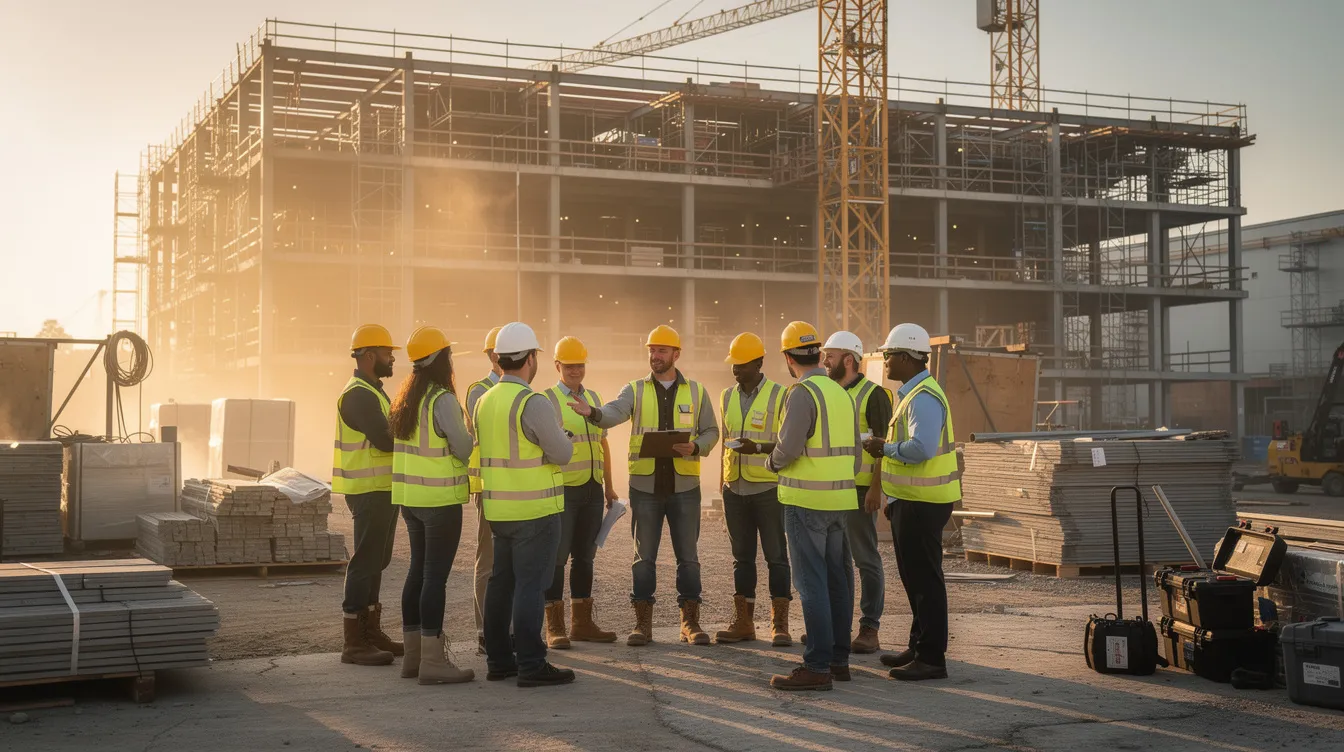
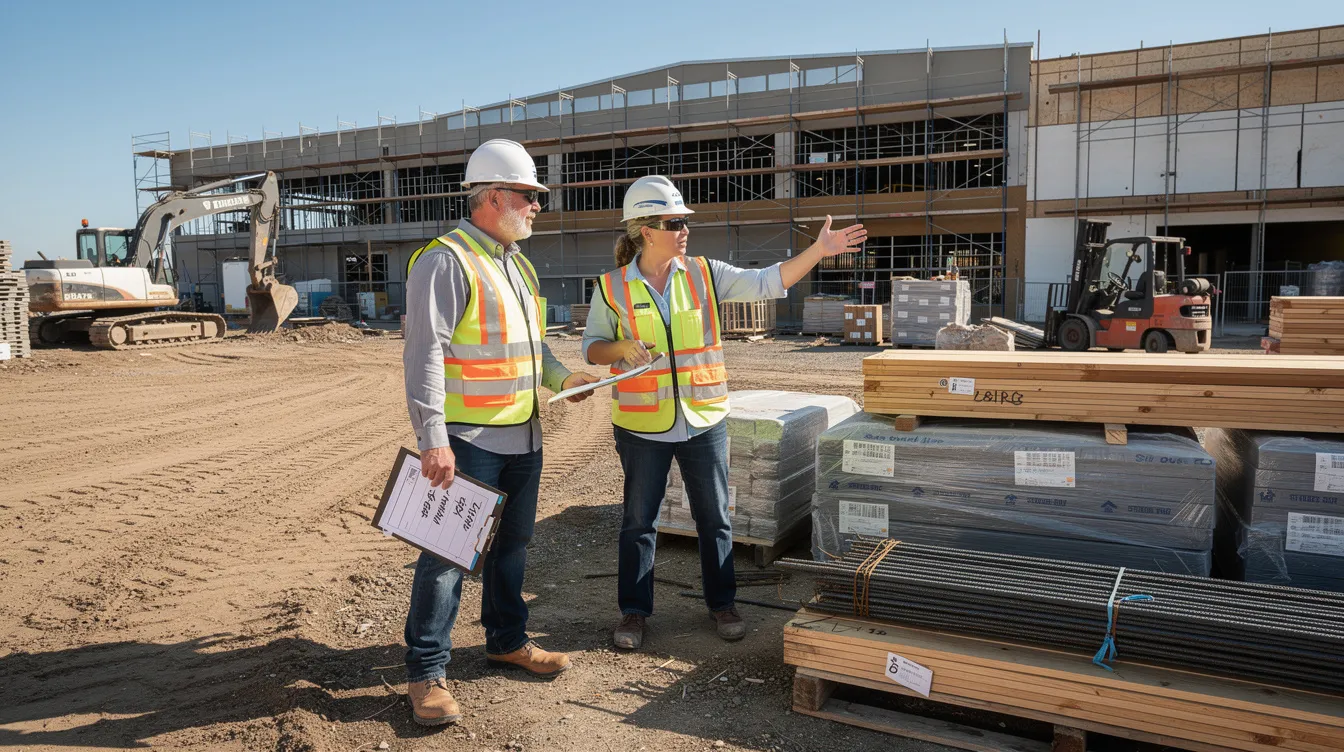
Every safety program in Eastern Pennsylvania covers fall protection, trenching, and electrical hazards. Fewer treat mental strain with the same operational seriousness, even though suicide risk in construction is well documented. When STEP program mental health practices become part of daily jobsite leadership, suicide prevention stops being a poster on a trailer wall and becomes a routine crews can actually trust. This article gives owners, project executives, safety directors, superintendents, and foremen a field-ready framework for passing that message down.
Key Takeaways
This step-by-step program integrates mental health as a safety issue, not an HR afterthought, giving Eastern Pennsylvania construction leaders a practical way to build the topic into systems they already run.
CDC analysis shows construction has one of the highest suicide rates among major U.S. industries, making mental health a legitimate workplace safety concern for contractors across Philadelphia, the Lehigh Valley, and Northeast Pennsylvania.
Leaders should pass down four things: permission to talk, visible resources, consistent follow-up in safety meetings, and accountability inside the safety program.
ABC Eastern Pennsylvania members can use STEP, Total Human Health resources, and free materials from OSHA and CPWR as ready-made tools.
Every contractor, regardless of size, can take at least one concrete action during Construction Suicide Prevention Week each September and continue that habit year-round.
Why STEP Program Mental Health Belongs In Everyday Jobsite Safety
STEP program mental health practices belong in the same operating rhythm as JHAs, pre-task planning, and safety meetings. Mental health affects attention, judgment, communication, and risk tolerance on active job sites in Philadelphia, the suburban collar counties, the Lehigh Valley, and Northeast Pennsylvania.
CDC analysis of 2021 mortality data shows construction is among the industries with elevated suicide rates, so this is not an abstract issue for the trades.
When mental strain goes unaddressed, distraction, withdrawal, fatigue, and risk-taking can show up in day-to-day field performance.
Integrating the topic into safety routines gives supervisors one more practical tool to protect crews.
Treating mental strain as a hazard-awareness issue lets leaders use existing systems such as STEP, JHAs, toolbox talks, orientations, and supervisor check-ins instead of building a separate program no one follows.
This conversation is especially relevant for owners, project executives, safety directors, superintendents, and foremen, because the tone set by leadership determines whether workers believe support is real.
Understanding Mental Health Risk In The Construction Industry
Construction is physically demanding, schedule-driven, and often unstable in ways office work is not. Long hours, travel, injury exposure, weather pressure, layoffs, overtime, and time away from family can stack up over weeks or months. In that environment, silence from leadership can become part of the risk.
CDC analysis of 2021 data found elevated suicide rates in construction compared with the broader working population, including a reported rate of 56.0 per 100,000 for men in the construction industry.
CPWR has also reported that construction workers are disproportionately represented in overdose deaths relative to the industry’s share of the workforce, underscoring the overlap between mental health struggles and substance-use risk.
For contractors, the operational takeaway is simple: mental health deserves attention because it can affect safety and day-to-day crew stability long before a crisis becomes visible.
Connect that reality to Eastern Pennsylvania: overtime on I-78 warehouse work, compressed healthcare schedules in Philadelphia, and long travel stretches on industrial and infrastructure projects along the I-81 corridor can all intensify stress. A leadership culture that never addresses mental health reinforces stigma and keeps workers from using available help.
What Leadership Must Pass Down: A Four-Part Framework
Suicide prevention becomes practical when leaders pass down specific, repeatable expectations. The framework below gives each level of the organization a clear role.
Permission to talk about mental health. When owners and executives acknowledge mental strain as a real safety concern, supervisors are more likely to address it directly with crews. Without that signal from the top, the culture usually defaults to silence.
Clear, visible resources. Workers need to know where to turn for confidential support: the 988 Suicide & Crisis Lifeline, company EAP options if available, health-plan resources, and posted local or national support materials. If no one can point to those resources, permission to talk leads nowhere.
Consistent follow-up in safety meetings and huddles. A one-time mention in September does not build trust. Regular toolbox talks, crew reminders, and brief check-ins make the subject normal instead of exceptional.
Accountability inside the safety program. When companies document training, post resources, and follow up with supervisors as part of their broader safety effort, leadership commitment becomes visible and repeatable.
Owners and project executives can model this in orientations, company messages, and supervisor expectations so foremen and superintendents do not feel they are carrying the topic alone. Common missteps to avoid include sarcasm about “toughing it out,” dropping the issue when schedules tighten, or treating suicide prevention as a once-a-year compliance message.
How To Run A Mental Health Toolbox Talk On Monday Morning
A construction mental health toolbox talk does not need to be long or clinical. The goal is to normalize awareness and resource-sharing, not to turn supervisors into counselors.
Basic structure:
Open by stating that mental health can affect jobsite safety and that speaking up is encouraged.
Share two or three warning signs the crew should watch for in themselves and teammates, such as unusual withdrawal, performance changes, or increased risk-taking.
Point to the actual resources posted on site: 988, company support options, and any OSHA or CPWR materials on the board.
Close by reinforcing that reporting mental strain is part of looking out for one another, just like reporting a fall hazard or damaged equipment.
Sample talking points a foreman in Allentown or Northeast Pennsylvania could use:
“If something feels off with you or someone on your crew, say something. We treat it like any other safety concern.”
“The 988 number on the safety board is a 24/7 resource for anyone who needs it.”
“You do not need to fix everything yourself. Start by checking in and helping connect the person to support.”
Construction employers can download free construction-specific materials from OSHA and CPWR, including posters, toolbox talks, and other awareness resources. That means most firms do not need to build content from scratch.
Using STEP And Total Human Health To Integrate Mental Health
ABC’s STEP safety program already pushes companies to think in systems: leadership commitment, employee participation, training, safety meetings, recordkeeping, and substance-abuse policies. Each of those areas creates a natural entry point for jobsite mental health practices.
ABC’s Total Human Health resources include leadership tools, employee materials, and toolbox-talk support that can reinforce the message.
Contractors can document mental health topics the same way they document other safety activities: orientation content, posted resources, supervisor reminders, and toolbox talks.
This approach helps companies treat mental health as part of safety culture, not a disconnected initiative.
A useful way to think about this is not as clinical treatment, but as a layered support system. At the jobsite level, the first layer is awareness: a toolbox talk, a posted resource sheet, a private check-in, or a supervisor who knows how to respond calmly. The next layer is referral: connecting a worker to 988, an EAP, HR, or a healthcare provider according to company procedures. That structure keeps expectations realistic. Supervisors are not diagnosing anyone. Their role is to notice, ask, respond, and connect.
Construction Suicide Prevention Week: Making September Count
September is National Suicide Prevention Month, and the construction industry also marks Construction Suicide Prevention Week. CPWR and industry partners promote jobsite participation through activities such as a stand-down, awareness messaging, and a moment of silence.
Eastern Pennsylvania contractors can participate by adding a suicide-prevention topic to weekly safety meetings, holding a toolbox talk at each jobsite, or observing a brief companywide pause.
Use the week as a checkpoint to review posted mental health and substance-use resources, refresh toolbox-talk materials, and remind field leaders what support paths exist.
Companies that want lasting impact should treat the week as a launch point, not the entire plan.
Practical Jobsite Actions: From Posters To Private Check-Ins
Here is a concrete action list a safety director or superintendent can turn into an implementation plan:
Post OSHA and CPWR suicide-prevention materials where other safety notices are displayed. Include the 988 number on every safety board.
Add a mental health slide or handout to new-hire orientation so the topic is introduced like any other safety expectation.
Schedule periodic one-on-one check-ins with crew members, especially after incidents, layoffs, overtime stretches, schedule disruptions, or major project stress points.
Address substance use as part of a broader conversation about safety, stress, and available help rather than as a stand-alone disciplinary topic.
Make clear that any immediate risk of self-harm should trigger the company’s emergency response procedures and outside professional help right away. Supervisors are not expected to provide clinical care.
Supervisor Skills: Recognizing And Responding To Warning Signs
Many Eastern Pennsylvania supervisors already know how to spot physical hazards. Extending that habit to mental health means observing changes, checking in respectfully, and using the company’s referral path when needed.
Common observable signs worth a private check-in:
Unusual irritability, withdrawal, or conflict
Sudden performance changes or repeated missed steps
Noticeably increased risk-taking
Frequent absences or signs that substance use may be affecting work
Fatigue, distraction, or a change from the worker’s normal behavior
A simple, respectful conversation approach:
Ask privately: “I noticed you seem off this week. How are things going?”
Listen without trying to diagnose the issue.
Remind the worker of the support resources available.
If there appears to be immediate danger, follow emergency procedures without delay.
Add a short supervisor orientation on mental health and suicide prevention to existing safety leadership training. Small firms without in-house HR can lean on ABC Eastern Pennsylvania’s safety resources and OSHA, CPWR, and Total Human Health materials for topic-specific content.
Aligning Company Systems: HR, Safety, And Operations
Jobsite mental health efforts work best when HR, safety, and operations are aligned.
HR, safety, and operations should coordinate so EAP information, health-plan support, crisis resources, and emergency procedures are accurate everywhere they appear.
Workers should hear the same message from their foreman, project manager, safety director, and HR contact.
Companies should know in advance how a supervisor escalates a concern, who documents it internally, and who handles outside referrals.
Industry groups can support consistency by providing practical resources individual firms may not want to build alone.
ABC Eastern Pennsylvania supports members with safety training, STEP participation, and broader workforce resources. Firms that want more ongoing access to those resources can explore chapter membership benefits.
A Simple Checklist For Eastern Pennsylvania Supervisors
Use this list as a starting point for your next supervisor meeting.
[ ] Mention mental health in at least one regular safety meeting each month.
[ ] Post at least one suicide-prevention or mental health resource sheet in a visible location.
[ ] Know your company’s escalation path for urgent situations, including 988 and internal contacts.
[ ] Include a brief mental-strain reminder in recurring huddles or planning conversations.
[ ] Schedule periodic one-on-one conversations with crew members after major disruptions.
[ ] Use at least one mental-health toolbox talk each quarter from OSHA, CPWR, or ABC Total Human Health resources.
[ ] Document those steps so the effort becomes repeatable instead of informal.
[ ] Share what is working with peers at ABC Eastern Pennsylvania events or safety roundtables.
How ABC Eastern Pennsylvania Can Help Member Firms
ABC Eastern Pennsylvania can help contractors turn this issue into a repeatable field practice instead of a one-time campaign.
Members can use the chapter’s safety resources to support STEP participation, toolbox talks, and stronger safety culture.
The chapter’s training ecosystem can reinforce leadership habits, communication expectations, and craft professionalism across the workforce.
Contractors looking for deeper support can explore membership benefits tied to training, safety, advocacy, and peer connection across Eastern Pennsylvania.
Leaders should monitor the events calendar for safety roundtables and related programming.
The message crews hear this week is the one they carry onto the next jobsite. Start with one toolbox talk, one posted resource, and one honest conversation. Then build the routine from there.
FAQ
Below are answers to common questions about this topic.
How is mental health different from normal job stress in construction?
Stress is a normal response to pressure, and every construction worker experiences it. The concern rises when strain becomes persistent, affects sleep, behavior, focus, or relationships, or starts to interfere with safe work. This article doesn’t aim to diagnose people, but to treat visible mental strain as something leadership should notice and address early.
Will talking about suicide increase the risk on my job sites?
This article does not suggest supervisors act as clinicians. It recommends respectful awareness, visible resources, and clear referral paths. OSHA and CPWR both provide construction-specific suicide-prevention materials designed to help employers and workers address the topic directly and connect people to support.
What if my crews push back and say mental health is not a jobsite issue?
Frame it in terms of safety, judgment, fatigue, distraction, and looking out for teammates. Avoid turning it into abstract wellness language. Start with short toolbox-talk mentions and visible resources, then build consistency over time.
How can a small contractor without HR or in-house safety staff get started?
Start with three low-cost steps: download free OSHA and CPWR materials, post 988 where other safety notices go, and schedule one mental-health toolbox talk in the next month. Small firms can also use ABC Eastern Pennsylvania’s safety resources and member support network for practical guidance.
What should I do if I believe a worker is in immediate danger of self-harm?
Follow your company’s emergency procedures immediately. Stay with the person if it is safe to do so, contact emergency services as appropriate, and use the 988 Suicide & Crisis Lifeline or 911 based on the situation and company protocol. Supervisors are not expected to provide treatment; their role is to respond quickly and connect the person to professional help.