


Steel prices in construction drive the decisions explored in this guide. Steel prices in construction are moving fast enough in 2026 to reshape how Eastern Pennsylvania contractors estimate, procure, and protect margin on every metal-intensive scope, with regional data showing a sharp year-over-year increase that is hitting structural steel, rebar, and metal framing especially hard. For contractors, estimators, project managers, executives, subcontractors, and suppliers working across Eastern Pennsylvania, that pressure shows up directly in bid accuracy, procurement timing, and profit margins.
This article breaks down what the latest data means for your bids, your backlog, and your bottom line across Philadelphia, the suburban collar counties, the Lehigh Valley, and Northeast Pennsylvania. It also looks at regional market differences, practical estimating and buying strategies, labor and workforce constraints that compound material risk, ways to communicate steel price exposure to owners and partners, and how ABC Eastern Pennsylvania Chapter supports members navigating the current market.
Steel prices in construction, as tracked by the producer price index and mill benchmarks, are moving enough month to month in 2026 to erase profit on structural, rebar, and metal-framing scopes across Eastern Pennsylvania. Steel prices rose 16.9% from June 2025 to June 2026, while contractors’ bid prices rose only 3.5% year over year in May 2026, and input costs rose 8.4% over the same period. That gap is where margin disappears.
Between mid-2025 and mid-2026, national producer price index data for construction inputs showed persistent increases, and local fabricator quotes in Philadelphia, Lehigh Valley, and NEPA markets often moved faster than headline numbers. Seventy percent of contractors reported being affected by tariffs in 2026, and the pressure is not easing.
Contractors must tighten bid validity windows, coordinate closely with suppliers, and build escalation or contingency language into proposals to protect margin on steel-intensive work. Public, prevailing-wage jobs across the 17-county Eastern Pennsylvania region leave little room to adjust labor costs, so steel and other material costs become the main levers for protecting financial stability.
ABC Eastern Pennsylvania supports over 14,000 construction employees and provides market intelligence, Eastern Pennsylvania construction workforce development resources, and ABC Eastern PA apprenticeship and training that help member firms keep bids competitive and deliver successful projects safely despite volatile material costs.
A 5% to 10% swing in steel prices on structural shapes, bar joists, and metal deck can wipe out profit on a mid-rise project in Center City Philadelphia, an industrial warehouse in the Lehigh Valley, or a distribution center along the I-81 corridor in Northeast Pennsylvania. On a project with $500,000 of fabricated steel, even a moderate increase can mean a six-figure difference between the estimate and the actual cost at delivery.
Steel is a core driver of overall construction costs because steel products are made from crude steel and are embedded in structural frames, reinforcing bar, stairs, railings, metal studs, mechanical supports, roofing systems, electrical wiring supports, and many specialty items across virtually every commercial building type. Construction material prices rose 6.2% in 2025, and steel prices increased by 16.9% in 2026 due to tariffs, confirming that steel price volatility is a significant risk for ongoing and future construction projects. Construction input costs have been rising faster than contractors’ selling prices in recent years, compressing margins on every bid.
Eastern Pennsylvania contractors don’t buy at the national average. They buy from specific mills, service centers, and fabricators whose quotes can shift rapidly in response to trade policy, energy costs, and demand from large regional projects. In a union-dense market with prevailing-wage rules on public work, merit shop contractors need especially disciplined estimating practices. Labor cost is largely fixed on these jobs, so steel and other material prices become the primary variables firms can control.
Estimators should look beyond headline steel prices and monitor several concrete indicators: the producer price index for steel mill products, the producer price index for construction inputs, the tariff rate, and local mill or service center mill-sheet announcements. Relying on a single number can mask the real risk sitting inside your bid.
Key signals to track right now:
Consider a practical example: a 4% increase in fabricated steel between schematic pricing and GMP submission on a large warehouse or hospital addition can add hundreds of thousands of dollars to the project budget.
Steel price volatility doesn’t hit all project types equally, and Eastern Pennsylvania’s three main sub-markets feel the impact in different ways.
Lehigh Valley (I-78 Corridor): Large industrial projects and logistics facilities with long spans of structural steel, bar joists, and metal deck are highly exposed to even small increases in mill and fabricator pricing. Manufacturing construction spending was $196.2 billion nationally in January 2026, and the Lehigh Valley captures a significant share of regional warehouse and distribution demand. Structural steel lead times can exceed 12 weeks on these scopes, compounding the risk of price movement during procurement.
Northeast Pennsylvania (I-81 Corridor): Distribution centers, manufacturing retrofits, and data-center shells are similarly steel-heavy. Remote sites can face added freight and lead-time risk that multiplies steel cost swings. Structural steel demand is strong due to large-scale projects such as data centers and manufacturing plants, and increased demand from specialized sectors strains fabricator capacity and drives costs higher.
Philadelphia Metro and Collar Counties: Healthcare, higher-education, and life-sciences projects often combine complex structural steel frames with heavy mechanical and electrical steel content, including fixed assets like lab equipment supports. These project types are acutely sensitive to both steel prices and other material prices.
Public Work Across All Sub-Markets: Public schools, municipal buildings, and transportation projects under Pennsylvania’s prevailing wage rules offer limited flexibility on labor rates. Material costs like structural steel, metal studs, and fabricated stairs become the primary place where contractors either protect margin or lose it.
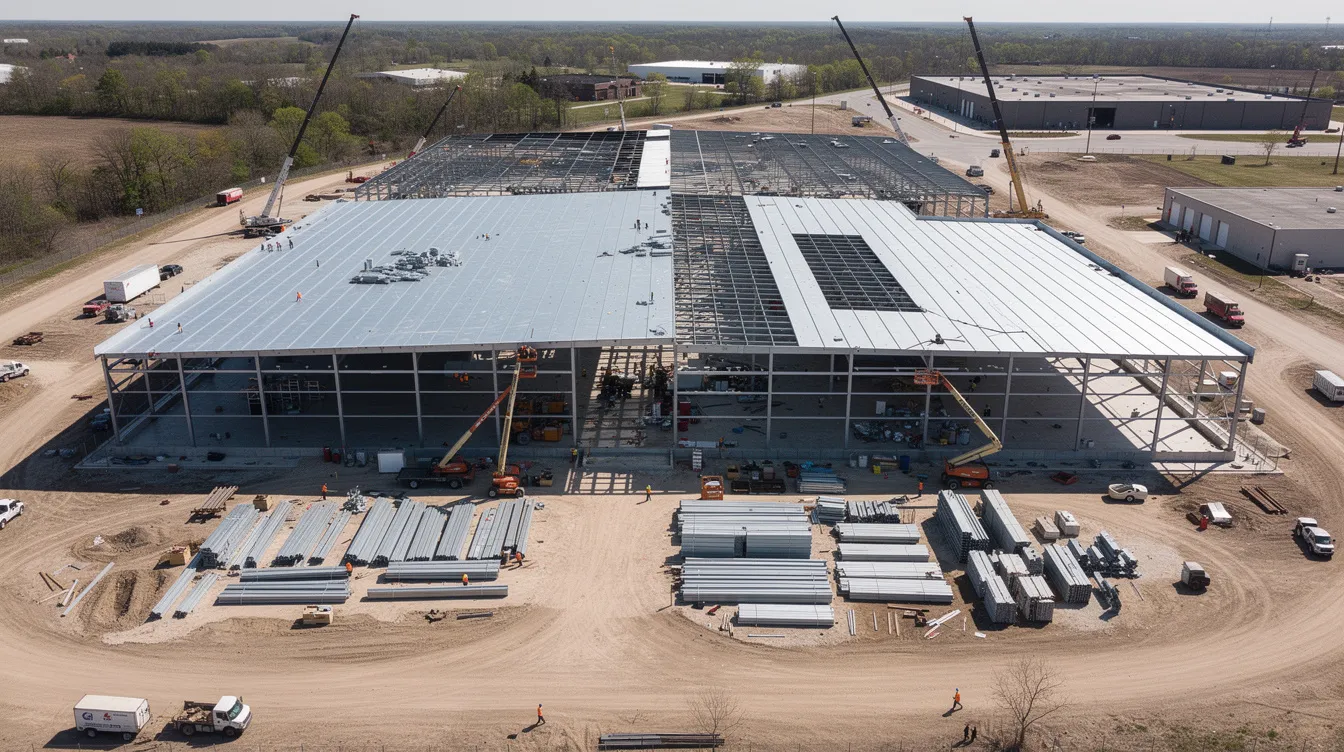
A bid based on outdated steel pricing can be obsolete by the time it is reviewed, especially when project owners or agencies take 60 to 90 days to award work. A fixed-price contract can cause severe profit-margin compression during unexpected material cost increases, turning an apparent win into a project-lifecycle problem that drains resources for months.
Budget overruns frequently occur when steel prices increase unexpectedly during projects. Tariffs and trade policies are major drivers influencing domestic steel availability and pricing while also pressuring domestic producers through tighter supply conditions, higher input costs, and margin strain. International trade measures are limiting imported steel volumes and raising domestic prices. Tariff rates on some materials now reach 50%, and tariffs create bidding uncertainty when costs shift unexpectedly. Forty percent of contractors raised bid prices because of tariffs in 2026, but many still haven’t adjusted enough.
Here is what the current environment demands:
Without disciplined contract language, contractors may be forced to absorb increases on long-lead steel items, leading to aggressive value engineering, tense owner conversations, and disputes over change orders that consume time and revenue.
Estimators across Philadelphia, the collar counties, the Lehigh Valley, and NEPA should respond to 2026’s construction cost environment by tightening processes now, not waiting for prices to settle. Every delay in adapting your process is a bet that the market will cool, and the data does not support that bet.
Actions to take immediately:
Tie estimating discipline back to collaboration with project management and procurement teams so that job-specific assumptions about steel prices, lead times, and escalation are documented and revisited during project kickoff. This process is what separates companies that manage risk from those that absorb it.
Once a contract is signed, the focus shifts from pricing risk to execution risk. Proactive procurement strategy for steel and other critical materials is the main lever for preventing cost overruns.
Key procurement moves:
Procurement discipline is especially important on prevailing wage and public work where pricing flexibility is limited, and the ability to pass increases to clients is constrained.
In a market where steel prices are volatile and construction costs are rising, field productivity matters as much as unit price when it comes to protecting margin on steel-intensive work. You can negotiate the best steel price in the region and still lose money if your crews cannot install it efficiently.
Labor shortages in Eastern Pennsylvania, particularly for ironworkers, welders, and experienced layout crews, magnify steel cost risk. Delays or rework consume contingency that was originally allocated for material inflation. The numbers tell the story: 82% of firms reported difficulty filling qualified craft positions in 2026, and 80% reported difficulty filling salaried openings. These labor constraints are not abstract; they show up on every project as slower erection, more punch list items, and thinner margins.
Firms investing in Eastern Pennsylvania construction workforce development through apprenticeship, upskilling, and stable crews are better positioned to handle complex steel erection, coordination, and safety requirements without costly mistakes. ABC Eastern PA apprenticeship and training offers ten-trade craft training, management education, and support services that help member firms build reliable teams that can plan and execute steel-heavy scopes efficiently.
Productivity gains, better planning, and fewer injuries on steel work often save more money than chasing the lowest material price, especially when paired with a strong safety culture and participation in the STEP program or ABC-OSHA Partnership.
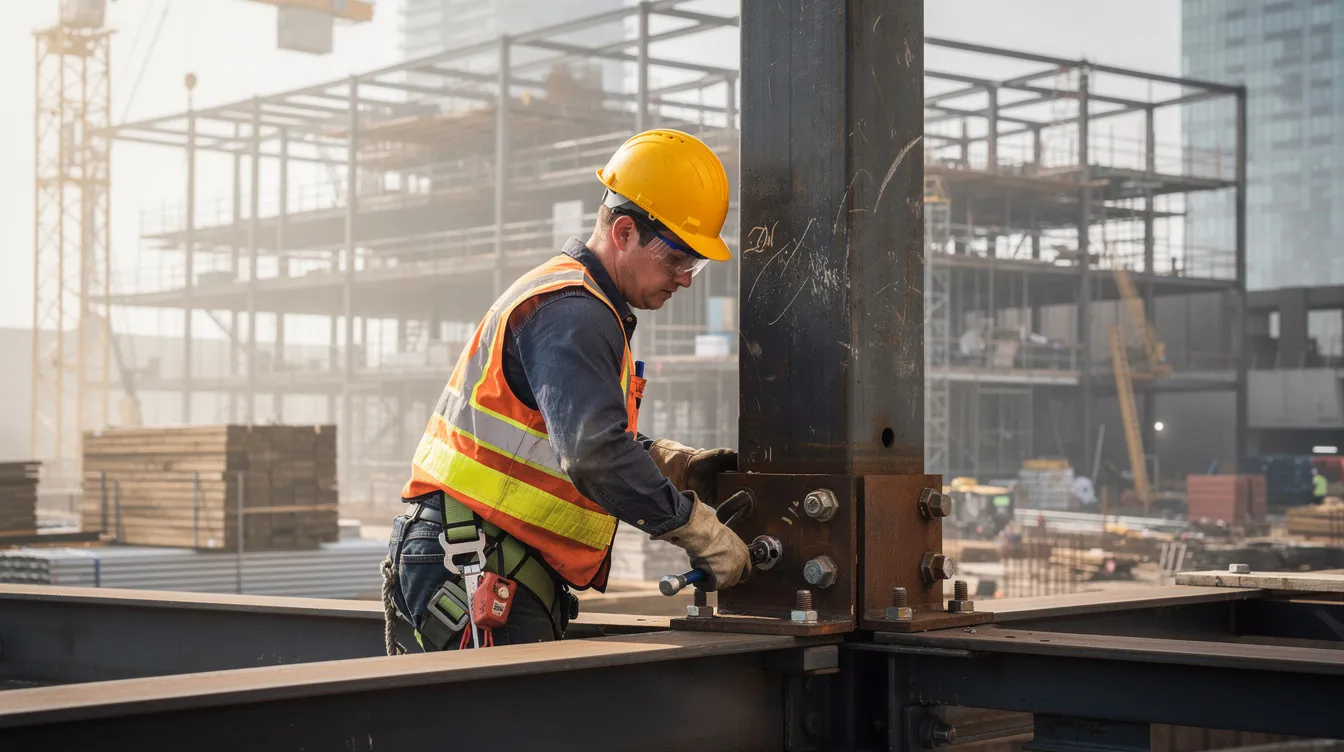
Clear communication about steel prices and other material prices is a competitive advantage for merit shop contractors in Philadelphia and the broader Eastern Pennsylvania region, especially on public and institutional work. The contractor who can explain the market wins more trust than the one who simply submits a change order.
Practical communication tactics:
Eastern Pennsylvania contractors can lean on ABC Eastern Pennsylvania’s membership benefits and resources, which include peer networking and education that help firms refine how they present and negotiate material-cost risk with clients.
ABC Eastern Pennsylvania serves as a hub for market intelligence, safety expertise, and workforce development that directly supports better decisions on steel procurement and bidding. Members gain access to regional briefings, management education, and economic updates that clarify how national material cost data translates into conditions in Philadelphia, the Lehigh Valley, and Northeast Pennsylvania.
About ABC Eastern Pennsylvania: The chapter’s footprint spans 17 counties, and its advocacy on procurement fairness and regulatory compliance has supported merit shop contractors in a union-dense market since 1962. The chapter’s investment in Eastern Pennsylvania construction workforce development, including school-to-career partnerships and the Alliance Partner Consortium, is one of the most reliable ways to counteract steel price volatility through higher productivity and safer job sites.
Firms that want deeper support, benchmarking, and networking should consider becoming a member. Membership helps protect margins through training, advocacy on trade policy impacts, and best-practice sharing on procurement strategies that reduce costs over time.
This practical, time-bound checklist helps estimators, project managers, and executives respond to current steel price and construction pressures over the next 30 days.
Companies that tighten controls now will defend their margins and reputation better than competitors waiting for the next data release. The difference between a profitable year and a painful one is often determined by the decisions made in the next 30 days.
Below are answers to common questions about this topic.
During volatile periods, Eastern Pennsylvania contractors should refresh major steel quotes at least every 30 days in active preconstruction, and more frequently (every 15 to 20 days) for projects where bid dates or award decisions keep sliding. Seventy percent of contractors report being affected by tariffs in 2026, which means the old practice of holding quotes for 60 to 90 days carries unacceptable risk in the current market environment.
Escalation mechanisms can be used on some public projects, but they must be clearly written, tied to objective indices like the Producer Price Index for labor statistics and steel, and accepted by the owner or agency during procurement. Not every public entity will agree, but more are open to the conversation as construction costs continue to outpace budget assumptions. Consult legal and procurement advisors familiar with Pennsylvania public work rules before submitting.
Practical steps include partnering with general contractors to structure allowances, using shorter bid validity periods, seeking multiple quotes from regional service centers, and discussing staged releases so suppliers are not asked to hold risk for months without committed volume. Even small efforts to shorten the gap between quote and commitment can make a meaningful difference in financial instruments available on the job.
Early procurement can make sense on programmatic work or repeat building types where quantities are predictable, but it also creates design-coordination and storage risks. Run scenario analyses involving insurance, sureties, and owners before committing to large advance buys. The goal is to reduce costs tied to price escalation without creating a different set of problems around storage, handling, and design changes.
Pursue a twin-track strategy. On the material side, monitor market data and producer price index signals regularly, tighten procurement discipline, and build risk management into every proposal. On the people side, invest in Eastern Pennsylvania construction workforce development through regional partnerships and ABC Eastern PA apprenticeship and training so that productivity and safety gains offset some of the pressure from rising material costs. The firms that treat these as connected efforts, not separate problems, consistently outperform in demand cycles like the one the construction industry is navigating in 2026.


