


The construction workforce gap across Eastern Pennsylvania is no longer a slow burn. It is a measurable, accelerating constraint on project delivery, and the latest federal data makes the case impossible to ignore. For contractors across Philadelphia, the Lehigh Valley, and Northeast PA, NEPA construction workforce development has moved from a planning priority to an operational emergency. The July 2026 Job Openings and Labor Turnover Survey revealed 326,000 construction openings nationally, a jump of 28,000 from June and the highest rate in nearly two years. Eighty-three percent of construction companies struggle to find qualified workers, and the pressure is compounding in regions like ours where industrial, institutional, and infrastructure pipelines are all active simultaneously. What follows is a regional action brief: what the data means, where it hits hardest, and what merit shop contractors should do right now.

The Bureau of Labor Statistics reported approximately 7.27 million total job openings across the U.S. economy in July 2026, with construction claiming 326,000 of them. As reported by Construction Executive, that figure represents a near two-year high and a year-over-year increase of 21,000 openings. ABC’s Chief Economist Anirban Basu attributed the acceleration to strong pipelines in data centers, power-related construction, and contractors expecting to expand staffing over the next six months.
Why does a national number matter to a contractor in Harleysville, Allentown, or Scranton? Because national upward pressure ripples into regional labor markets. When demand intensifies everywhere, skilled workers in Eastern PA face competing offers from projects in New Jersey, Delaware, Maryland, and beyond. Wages rise, hiring friction increases, and project timelines stretch.
Two terms define this environment:
Pennsylvania’s construction employment has held around 260,000 to 265,000 jobs statewide in mid-2026, but the distribution is uneven. Philadelphia’s construction employment has been flat or slightly declining, while suburban counties and the Lehigh Valley sustain steadier activity driven by industrial and institutional projects. The trades under greatest pressure include electricians, plumbers, HVAC/R mechanics, pipefitters, masons, and laborers. Supervisory and foreman roles are also strained, particularly in the Lehigh Valley where five-year data shows growth in construction supervisors even as trades workers’ numbers dipped modestly.
For bidding and scheduling, the implications are direct:
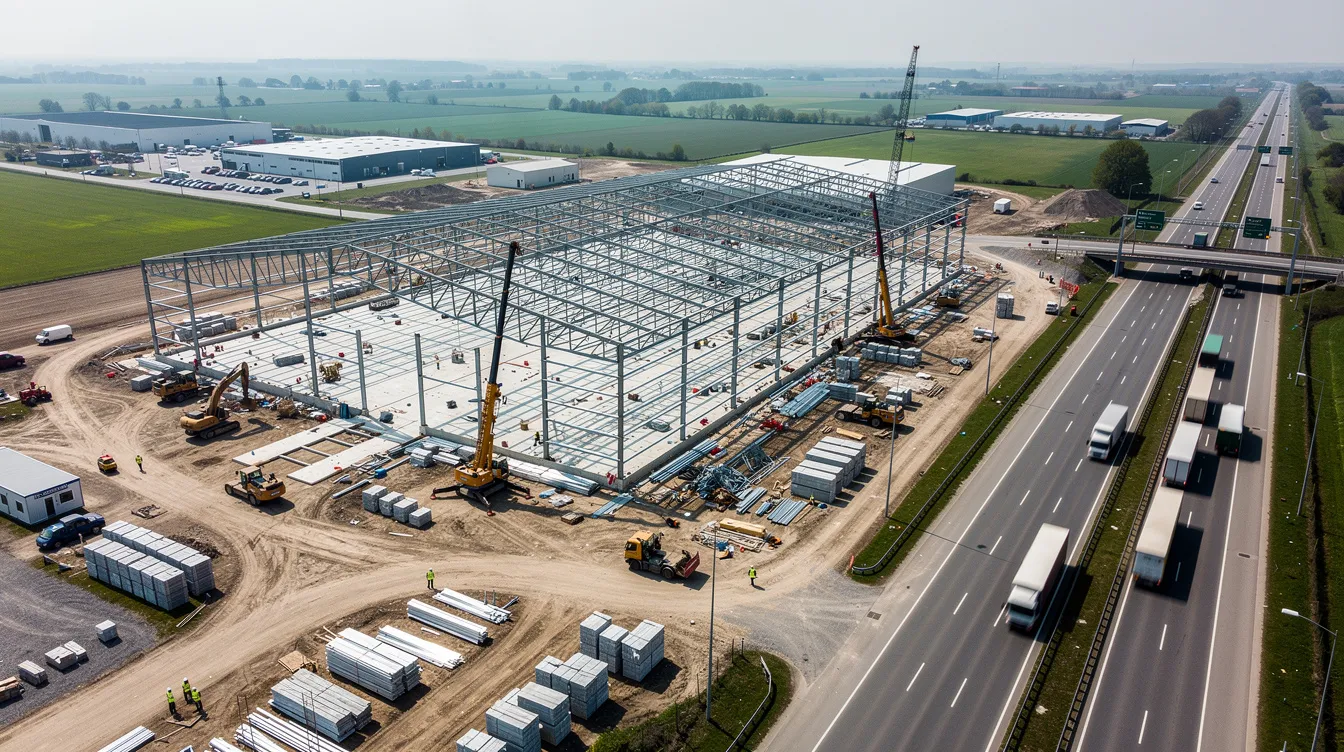
The I-78 corridor continues to absorb heavy industrial and warehouse development, logistics expansion, and e-commerce fulfillment assets. These projects demand large crews of laborers, electricians, roofers, and sheet metal workers. Training should align with local project pipelines and employer needs, and county permit filings, municipal approvals, and developer announcements can improve access to demand signals before crews are needed. Outreach to training partners at the Allentown training center and Lehigh-Northampton technical schools can scale intake in electrical, HVAC, and carpentry to match corridor demand.
The Scranton and Wilkes-Barre region is absorbing logistics facility activity alongside institutional projects in hospitals, universities, and healthcare centers. Demand centers on plumbing, mechanical/HVAC, electrical, and general labor. However, labor density in NEPA is thinner, and barriers like transportation and childcare impact workforce participation in construction for workers and their families, making recruitment harder. Regional recruiting priorities should target veterans, career changers, and rural populations. Satellite instruction, mobile training labs, and flexible scheduling are essential to reach NEPA candidates who cannot commute to Philadelphia or Allentown for classes.
Thirty percent of construction employees report feeling burned out, and construction workers seek better work-life balance and growth opportunities. Ignoring these realities while scrambling to fill positions is a losing strategy. Here is where to focus immediately:
Open communication with management is crucial for worker satisfaction. Firms that build feedback loops between field crews and company leadership retain workers longer and identify problems before they become departures.
Apprenticeships help employers train and retain their future workforce. In a market where eighty-three percent of construction companies struggle to find qualified workers, sponsoring registered apprentices is not charity; it is a capacity investment. Registered apprenticeships offer structured on-the-job learning experiences that combine classroom and lab instruction with hands-on field work, building the knowledge needed for specific trades and producing workers who are loyal, credentialed, and productive.
ABC Eastern Pennsylvania’s Apprenticeship Trust, active since 1967 and created to support employer-sponsored trade training across the region, covers ten trades: carpentry, construction craft laborer, electrical, HVAC, masonry, pipefitting, plumbing, roofing, sheet metal, and sprinkler fitting. Training centers in Allentown and Harleysville serve contractors across all seventeen counties. Pennsylvania statewide hosts 1,648 registered apprenticeship programs with 17,007 active apprentices. That scale shows both maturity and room for growth.
Accredited training programs ensure workforce quality and consistency. Federal agencies recognize training through accredited programs, which matters for contractors pursuing federally funded projects. For employers ready to strengthen their workforce development programs, the registered apprenticeship program is the most direct path to building reliable, credentialed crews.
Target trades for immediate apprenticeship intake based on current demand: electrical, HVAC, plumbing, and pipefitting.

Understanding the distinction is critical for workforce planning:
| Registered Apprentice | Craft Trainee | |
|---|---|---|
| Sponsorship | Employer-sponsored, registered with U.S. DOL and PA | Self-enrolled or employer-sent, not registered |
| Credential | Earns journeyperson status upon completion | No formal credential or portable record |
| Wage progression | Mandated pay increases tied to training milestones | No guaranteed wage progression |
| Public work eligibility | Meets prevailing wage and apprenticeship contract requirements | May be ineligible for public contract classification |
| Retention | 94% of apprentices retain employment after completing their program | Lower retention, less employer loyalty built |
Apprenticeship programs provide progressive wage increases as skills improve, which creates a built-in retention mechanism that craft trainee arrangements lack. For contractors pursuing prevailing wage or PLA-governed work, the registered path is not optional.
Developing a construction workforce requires collaboration among educators, unions, and employers. ABC Eastern Pennsylvania’s Alliance Partner Consortium connects high schools, colleges, and training organizations with member firms to create direct pathways from education to employment. Local partnerships facilitate career exploration and vocational training for students, and educational institutions are modernizing construction trade curricula to align with industry needs.
Practical actions for member firms:
Apprenticeship programs reflect the communities they operate in. Workforce development emphasizes pathways for underrepresented populations in construction, including women, minorities, and career changers who may not hold a high school diploma but possess the aptitude and commitment to succeed. Employers and training providers should collaborate on curriculum design to meet labor demand, ensuring that what students learn matches what contractors need on active projects.
State funding initiatives support expanding apprenticeship and pre-apprenticeship opportunities. Messaging that resonates with Gen Z and career changers should emphasize earn-while-you-learn economics, debt-free credentials, career development pathways, and the proficiency that comes from mastering a skilled trade.

OSHA ranks construction as one of the most dangerous jobs, which means safety credibility is not just a compliance requirement; it is a recruiting tool. Many candidates specifically target employers with strong safety records and credible training programs.
Safety training and consulting capabilities differentiate employers in a competitive hiring environment. Every safety credential you earn makes the next hire easier.
In one of the most union-dense construction markets in the country, workforce execution determines competitive position. Philadelphia’s new ordinance, effective July 2026, requires that for city construction contracts over $300,000, at least 70% of onsite workers must be apprentices or enrolled in certified apprenticeship programs. Prevailing wage rules, project labor agreements, and responsible contractor ordinances add layers of complexity.
Merit shop contractors who can demonstrate registered apprenticeship capacity, journeyperson depth, and documented safety performance are better positioned to:
Conduct an internal audit of PLA readiness now. If your firm cannot meet apprenticeship thresholds or demonstrate workforce composition compliance, you are leaving work on the table.
The Lehigh Valley’s construction economy, with approximately 11,152 workers earning average annual wages of $79,000 to $81,000, demands focused attention. Three immediate actions for member firms and the chapter:
What gets measured gets managed. Track these metrics monthly:
Project crew capacity needs by analyzing your upcoming bid pipeline. If a major warehouse or data center project along I-78 will require 100 to 200 additional electricians or laborers, that forecast must drive apprenticeship intake and recruiting activity six to twelve months ahead.
Funding for training often focuses on infrastructure and heavy highway projects in Pennsylvania. Construct PA provides workforce development grants to support infrastructure projects, and workforce boards coordinate service delivery and align training with regional projects. Budget for apprenticeship hires, training hours, supervision and mentorship time, and required credentialing. These are investments in capacity, not expenses to minimize.
The July 2026 JOLTS data is not a forecast. It is a signal that has already arrived. Run a 30-day hiring process audit: measure every step from posting to start date, identify where candidates drop out, and fix the friction points. Enroll field leaders in ABC management education to strengthen the inclusion and development culture that retains workers.
Explore member benefits and membership to connect your firm to the tools, resources, and supportive services that build workforce capacity. Learn more about ABC Eastern Pennsylvania and contact the chapter to identify where your workforce systems need strengthening. The contractors who act on this data build the crews that win the work. The ones who wait absorb the cost.


