


The layout your crew walks into on Monday morning will not look the same by Friday. Across Eastern Pennsylvania, from Philadelphia high-rise renovations to Lehigh Valley warehouse projects and I-81 corridor infrastructure work, jobsite safety planning can no longer be a document created at project start and filed away. It must function as a living system that covers personal protective equipment, emergency action plans, fall protection, safety training, and communication, and it must adapt as conditions change.
Jobsite safety planning relies on a structured framework designed to anticipate hazards, and a proactive safety plan helps prevent accidents, injuries, and property damage. But the framework only works if it keeps pace with the site’s physical reality. A safety plan must align with federal and state safety regulations, such as OSHA standards, and proper planning supports a safe response as conditions change, yet compliance alone is not the goal. The goal is keeping people safe when the ground shifts under your feet.
This article is a practical briefing for contractors, project managers, safety directors, and field supervisors across Eastern Pennsylvania. It translates five forward-looking planning themes into concrete steps you can apply now: dynamic plans, emergency planning and wayfinding, communication across rotating crews, heat and extreme weather controls, and mental health integration into safety leadership.

A static safety plan is written before work begins and rarely revisited. On a Philadelphia interior build-out where temporary walls go up weekly, egress routes change, and new trades mobilize every few days, that static plan becomes fiction within a week. A dynamic plan is reviewed and updated in response to changing conditions: new trades entering, layout changes, weather shifts, equipment relocation, and altered access points. Develop a site-specific safety plan for each construction project, and use continuous site inspections to determine when changing conditions require updates before hazards become incidents.
Dynamic planning does not mean a separate layer of paperwork. It means embedding safety updates into your existing project rhythm. Core elements of safety planning include management leadership and commitment, and leadership’s ability to sustain the update cycle depends on proper resourcing and enforcement. The practical expectation: supervisors re-check plans daily at the start of each shift. Safety leaders review weekly and verify that maps, routes, and responsibilities reflect the current site. Executives verify systems quarterly to confirm the process is working across all active projects.
By Wednesday on a Lehigh Valley distribution center project, temporary walls, stair towers, and material laydown have shifted so much that Monday’s emergency action plan is no longer accurate. Emergency action plans reduce injuries during workplace emergencies, but they help employers and workers deal with them only when the plan matches the site as it exists today. OSHA requires written emergency action plans for certain workplaces, and construction sites are among the most dynamic.
Emergency plans should include current evacuation routes and procedures, areas of refuge, alarm methods, first aid and AED locations, assigned roles, fire extinguishers, and external emergency contact numbers. Regular drills improve response times during actual emergencies, and employers must train workers on their roles in emergency plans so they practice response under pressure rather than improvise.
Triggers that require revising the plan include:
Who owns updates on typical Eastern Pennsylvania projects? The superintendent or general foreman handles daily adjustments in the field and communicates changes at tailgate talks before each shift. The safety director and project managers review at least weekly. Employers must report work-related fatalities to OSHA within eight hours, reinforcing that emergency planning is not optional paperwork. Many firms will need to audit their current standard operating procedures so that emergency planning is treated like schedule management: a continuous process, not a one-time submittal.
Picture a Scranton health-care addition with temporary signage taped to columns, a blocked stairwell with no redirect, and a muster point that no longer exists because the parking area was repurposed for material storage. That is what inadequate wayfinding looks like in practice, and it puts lives at risk during an evacuation.
Clear communication enhances situational awareness on construction sites, especially under stress. Visual controls for 2027-ready plans should include color-coded floor plans, standardized icons, directional arrows to exits, high-visibility signage posted at five to six feet high, and labeled assembly areas with unique names crews can reference without confusion.
Wayfinding must keep up with demolition and build-back. On urban Philadelphia sites where public sidewalks and street closures change access patterns, the assembly point that worked last month may now sit behind a barrier. Daily briefings help crews stay current with changing site conditions, and workers’ understanding of signs and route changes must be verified, not assumed.
Review wayfinding at least weekly on smaller projects and at each major phase shift on larger ones. Document updated maps digitally so that remote safety managers and visiting inspectors see the same information as field crews. Test your wayfinding by walking the actual egress paths during a drill, timing evacuations from upper levels and enclosed areas, so new workers can focus on exits instead of guessing under stress. If a new worker cannot find the exit in 90 seconds, the signage has failed.
Rapidly rotating subcontractor crews on Eastern Pennsylvania interiors and fit-outs make informal word-of-mouth safety communication unreliable. A new crew arrives Monday, unfamiliar with the site, the hazards, or the emergency plan. If the only safety communication is “ask the foreman,” you have a gap.
A jobsite communication plan is a safety-critical document that specifies what gets communicated, when, by whom, to whom, and in which formats. Multilingual communication reduces workplace safety risks, while language barriers can lead to misunderstandings and safety incidents. Bilingual employees improve communication flow and reduce delays, which is why recruiting bilingual employees strengthens workplace communication on diverse crews.
Practical strategies include bilingual pre-task plans, translated core safety signs, pictograms for universal hazard recognition, and using competent bilingual leads rather than ad hoc interpreters. Structured language training improves organizational performance across crews, and supervisors should account for different communication styles when training and coaching. Effective communication and training ensure all workers understand site-specific safety requirements from their first shift.
Structure daily and weekly safety communications around a consistent rhythm: start-of-shift huddles focused on that day’s top three potential hazards, weekly coordination meetings that include safety topics alongside schedule items, and incident or near-miss debriefs that capture lessons before the next shift. Assign one communication owner per shift or per area, usually a foreman or assistant superintendent, and list these owners on the posted safety board so every person on site knows who to approach, especially when crews rotate in and out and need clear direction to complete tasks safely.
A typical mid-rise commercial project in Center City Philadelphia or Allentown may have 15 to 20 subcontractors and many other organizations cycling through the building at peak. A general contractor may manage 10 to 30 subcontractors simultaneously, and coordination between contractors and subcontractors is essential on multiemployer worksites. When scopes overlap above and below each other, the risk for falls, struck-by incidents, and access conflicts multiplies.
What must be built into jobsite safety planning for subcontractor coordination:
Job Hazard Analyses identify potential risks before work begins, and trades should complete them jointly when they share space. Coordination failures lead to schedule overruns and cost disputes, but more critically, they lead to incidents. BIM coordination can reduce rework costs by 5 to 15 percent, and the same coordination discipline applies to safety. The AIA defines the GC’s obligation to subcontractors in AIA Document A201, but contract language alone does not prevent accidents. Effective coordination includes pre-construction meetings and weekly updates, with safety as a standing agenda item rather than an afterthought, and a review of management practices that affect how subcontractors communicate, staff work areas, and train crews.
Align contract language, pre-job meetings, and field enforcement so that safety requirements for subcontractors mirror the prime contractor’s obligations under OSHA standards and company policy. Review subcontractor onboarding checklists before 2027 so that safety expectations and communication methods are established before mobilization, not after the first near miss.
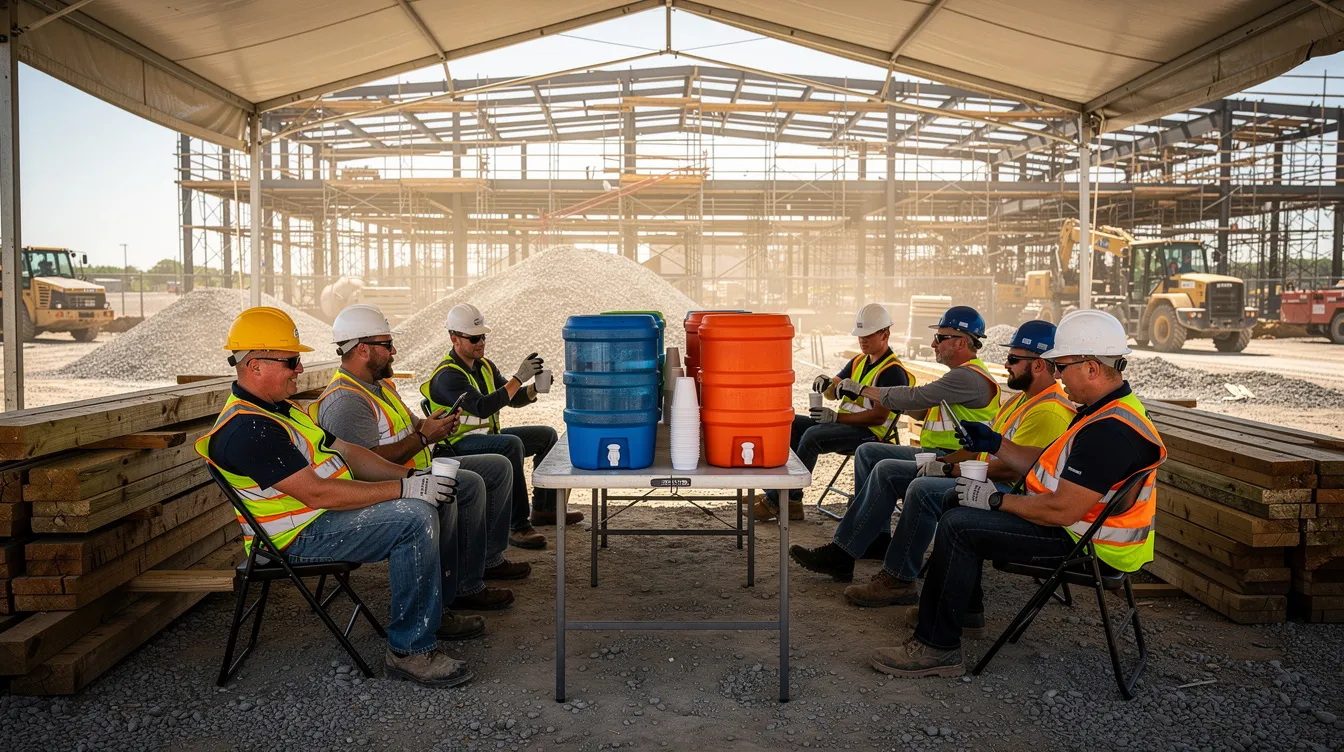
A June concrete pour in Montgomery County or July roofing work in Wilkes-Barre can push heat stress to dangerous levels faster than most plans account for. Even in a mid-Atlantic climate, humidity amplifies heat index readings, and enclosed interior spaces under construction can trap heat far beyond ambient temperatures.
Apply the Hierarchy of Controls to heat-prevention strategies, just as you would for any other hazard. Personal protective equipment is considered a last line of defense against hazards, not the first response. OSHA’s guidance is clear: start with engineering and work-practice controls (ventilation, shade structures, mechanizing strenuous tasks), then administrative changes (adjusted schedules, work-rest cycles, acclimatization), and only then consider PPE.
Safety planning must include hazard identification and risk assessment for heat conditions. Specific controls Eastern Pennsylvania contractors should plan for include shaded or cooled rest areas, adjusted work-rest schedules on high heat index days, staggered start times in summer months, and longer acclimatization periods for new workers or those returning from time off. Effective safety training should match actual jobsite hazards, and training on site-specific hazards is crucial for worker safety, including training supervisors to recognize heat illness symptoms and act immediately.
Heat conditions can change rapidly. Supervisors must be authorized to slow or stop work if controls are inadequate, with clear triggers written into the plan. Embed heat planning into pre-task planning forms, daily huddles, and emergency action plans so the response to heat stress is as practiced and clear as the response to a fall or equipment incident.
Industry research consistently shows that many contractors still have gaps in mental health support and preconstruction safety planning. Real-world stressors on Philadelphia and Lehigh Valley projects, including night work, long commutes, tight schedules, and overlapping scopes, contribute to fatigue and distraction that directly increase incident risk around fall protection, equipment operation, and traffic control.
Worker participation through reporting unsafe conditions is essential for safety culture, and that participation depends on workers feeling safe enough to speak up. Documenting incident reports is vital for analyzing root causes and preventing repeats, including near misses driven by fatigue or distraction. Developing a comprehensive safety plan requires input from workers and safety professionals, which means supervisors need to create space for honest reporting.
Planning actions that work without turning foremen into counselors:
Normalize asking “Are you okay?” and give supervisors a step-by-step response checklist: listen, refer, document, follow up. Regular audits and feedback loops help evaluate and improve safety programs, including how well mental health awareness is being integrated into daily field operations. ABC Eastern Pennsylvania’s construction safety consulting services can help contractors review how existing safety systems address mental health and stress.
When sites change quickly and multiple parties work in tight proximity, unclear responsibility is a recipe for missed hazards. Clear safety responsibilities improve accountability on construction sites, and a clear safety policy is vital for effective safety management at every level.
Typical ownership structure:
| Role | Responsibility | Cadence |
|---|---|---|
| Company leadership | Set expectations, allocate resources, verify systems | Quarterly |
| Safety director | Develop programs, audit field execution, lead training | Weekly review |
| Project managers | Integrate safety into schedule and budget, enforce with subs | Weekly coordination |
| Superintendent/foreman | Execute and update plans in the field, communicate at shift start | Daily |
| Subcontractors | Follow unified protocols, participate in pre-job meetings, report hazards | Daily |
Regular safety inspections are needed to maintain compliance and identify new hazards as conditions evolve. Appoint a “plan steward” for each active site to keep maps, emergency plans, and communication protocols current and posted. Document responsibilities in project kickoff materials and orientation sessions. Tie safety-planning performance to supervisor evaluations and recognition programs so that adaptive planning is treated as a core leadership responsibility, not an extra duty.
Philadelphia and its collar counties feature urban infill, institutional renovations, and high public exposure, and elevated work such as structural framing can change planning needs from one project type to another. Tight egress, street closures, and coordination with city fire marshals define the planning environment. The Lehigh Valley’s logistics and industrial corridor along I-78 brings large open footprints, heavy equipment traffic, and multi-trade overlap on flat-roof structures. Northeast Pennsylvania infrastructure and energy-related work along I-81 faces terrain challenges, weather exposure, and limited emergency service access.
Falls caused 43.6% of fatal injuries in building construction in 2024, and the fatal injury rate in building construction rose 4.4% from 2012 to 2024. OSHA requires fall protection in construction at six feet in many situations, a standard that applies equally across all three sub-markets. Nonfatal injury rates fell 46.9% in heavy civil engineering over a similar period, suggesting that proactive planning in civil work is making measurable progress.
Prevailing-wage and project-labor-agreement dynamics can shift subcontractor mixes and enforcement expectations across regions, but federal OSHA standards still hold employers responsible for safety regardless of the labor model. Contractors working across multiple regions should standardize their safety-planning framework but customize site controls, emergency routes, and communication strategies to each project’s physical realities. ABC Eastern Pennsylvania offices in Suburban Philadelphia, Allentown, and Northeast Pennsylvania are positioned to support local context for training and consulting.
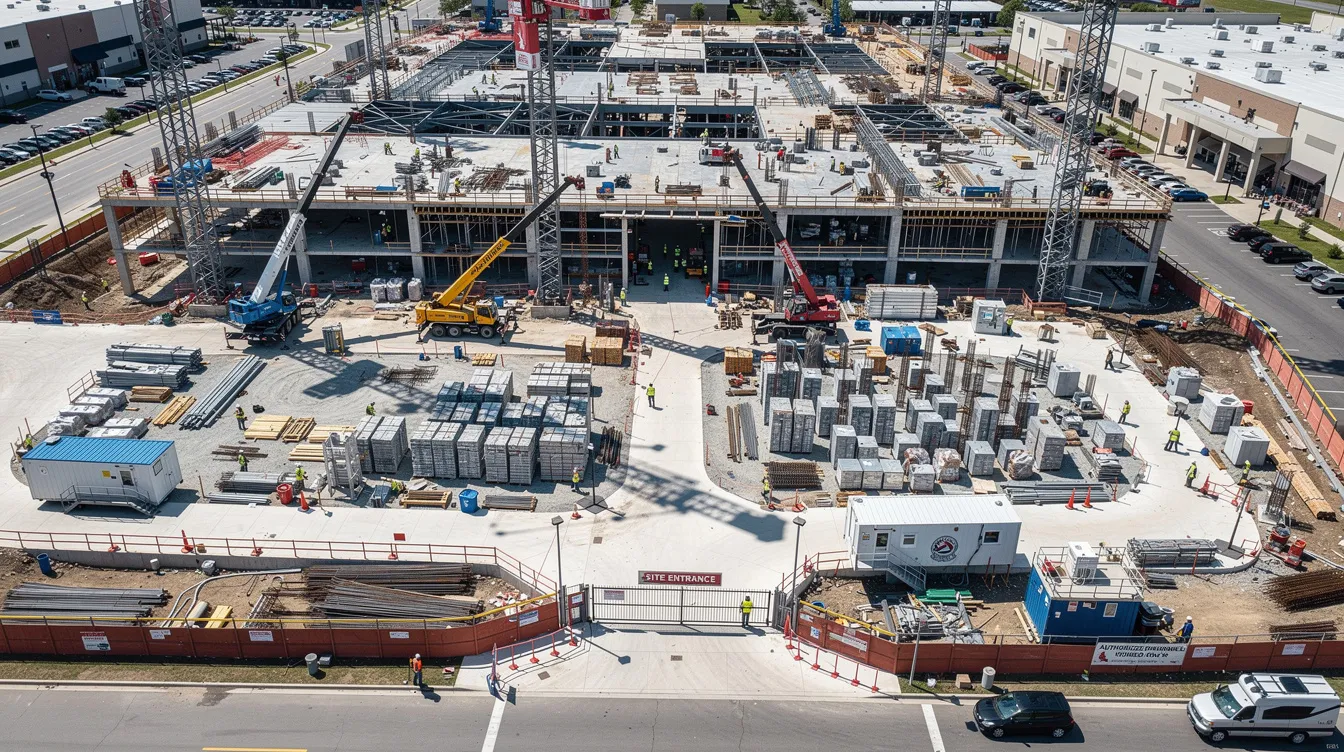
Before your next project mobilization or major phase change, review these items as a team.
Emergency and evacuation maps. Confirm that posted maps reflect the current site layout. Walk the routes. Verify that assembly points are accessible and clearly marked.
Fall protection and access planning. Audit guardrails, floor openings, ladder access, and anchorage points. Confirm that fall protection plans match the current scope of elevated work.
Communication and multilingual strategies. Verify that translated safety signs, bilingual leads, and daily huddle formats are in place. Confirm that every person on site knows who to report hazards to.
Heat and extreme weather controls. Confirm rest area locations, water stations, work-rest schedules, and supervisor authority to slow or stop work. Review acclimatization procedures for new workers.
Mental health and fatigue checks. Post-referral resources. Confirm that supervisors have been trained to recognize warning signs and respond. Add fatigue awareness to toolbox talk rotations.
Roles and escalation paths. Document who owns plan updates, who reviews weekly, and who escalates when conditions change faster than the plan. Post the decision-making chain on the safety board.
ABC Eastern Pennsylvania supports registered apprenticeship programs and recognizes that construction career pathways are essential to workforce development, including developing safety-competent field leaders who can manage these responsibilities from their first day on site. Pilot this checklist on one active project in 2026, then refine based on lessons learned before rolling it out companywide for 2027 bids and mobilizations. Capture your revised process in written programs, but remember: the real test is whether field crews can explain the plan quickly and act on it under pressure. This checklist is both a safety tool and a business tool, reducing lost productivity, improving client confidence, and protecting workforce investment across Eastern Pennsylvania.
ABC Eastern Pennsylvania serves as a practical partner for merit shop contractors who want to strengthen jobsite safety planning before 2027. The chapter offers STEP safety benchmarking, the ABC-OSHA Partnership with area offices in Allentown, Philadelphia, and Wilkes-Barre, customized safety training on topics including fall protection, emergency action planning, and personal protective equipment, and consulting support for program development and gap analysis.
Members can request support to review one active project’s plans, use incident data to prioritize improvements, or train workers and supervisors on dynamic planning and effective communication practices. The chapter’s programming and events team provides training resources and safety programming.
Schedule an internal review meeting within the next 30 days to compare your current jobsite safety planning approach with the trends outlined in this article. The physical jobsite, the workforce, and the risk profile will keep changing. Eastern Pennsylvania contractors who adapt their planning now will protect workers, reduce disruptions, and strengthen their competitive position in 2027 and beyond.


