


Every superintendent on every active project faces the same question at the start of each shift: who is on site right now, and are they cleared to be here? Jobsite access control technology helps construction teams answer that question in real time across every entry point, moving well beyond the clipboard era with stronger visibility and control.
For contractors operating across Philadelphia, the Lehigh Valley, and Northeast Pennsylvania, construction site access control is becoming a foundation of modern construction site security. Dense urban projects, multi-subcontractor logistics sites, and remote industrial work all demand reliable identity verification and attendance tracking. AI and biometric access control, especially facial recognition, offer tools that go beyond keycards and manual headcounts. Modern access control systems enhance security and safety across job sites of every size.
This article focuses on practical decisions: what problems this technology actually solves, how it works at entry points, and what to consider before rolling it out. ABC Eastern Pennsylvania views access control as part of a broader strategy for safety, workforce management, and compliance, with practical gains in site accountability, crew visibility, and recordkeeping rather than hype. Job site access control technology helps manage who can enter a site and when, and the contractors who understand its real capabilities will make better decisions about whether and how to adopt it.
Picture a typical morning on a busy project: an open gate, a paper sign-in sheet clipped to a post, and workers streaming in while a foreman tries to verify credentials from memory. Visitors walk on site without documentation. Someone swipes a buddy’s badge. Equipment disappears overnight.
The U.S. construction industry loses over $1 billion annually to theft, much of it from sites with loose perimeter control. Temporary fencing and locked gates deter casual trespassers, but they do nothing to verify identity or track who comes and goes during working hours, and they do not control every door or interior access point beyond the perimeter gate.
In this context, an “entry point” means any controlled opening: turnstiles, swing gates, man doors, or building access points inside a secure perimeter. Physical barriers like turnstiles restrict entry to one person at a time, creating an accountability checkpoint rather than just a physical obstacle. Fewer access points increase security on construction sites by concentrating traffic where it can be monitored. Effective access control requires monitored entry points and visitor logs, and security guards verify identification, check visitor authorization at staffed gates, and may also lock or unlock controlled points as part of site access procedures.
On construction sites with multiple subcontractors and deliveries, especially in tight urban locations like Center City Philadelphia, unmanaged access quickly becomes a safety and security risk. That same risk applies on remote jobsites along the I-78 and I-81 corridors, where crews change frequently, and equipment theft risk is high.

At its core, every access control system performs three functions at the gate: capture a credential or biometric, make an access decision in real time, and record the event.
Access control systems can integrate with RFID and biometric technologies, combining badge readers, cameras, PIN pads, and mobile devices into a single workflow. Automated gates control site entry using badge readers or biometrics, while some readers are NFC- or RFID-enabled. Digital credential systems reduce reliance on paper sign-in sheets, and mobile credentials and QR code access streamline entry management for visitors and short-term subcontractors who may not need full enrollment.
These systems often combine hardware (cameras, turnstiles, tablets, card readers) with a cloud platform that stores data and provides dashboards for construction teams. Access control systems track every entry event for audits, giving project managers a defensible log of who entered and when.
This differs from traditional construction site security cameras, which focus only on live video or recorded footage after an incident. CCTV integration supports incident investigation and deters theft, but access control adds the identity layer. AI video cameras can alert operators to intrusions in real time, with camera-linked monitoring generating alerts when activity is detected on the premises, and access control supports real-time monitoring and incident response across the entire premises.
Access control technology improves project visibility and labor coordination by linking attendance, safety records, and compliance documentation. Some solutions integrate with time and attendance systems, safety training records, and compliance platforms to give a fuller picture of who is on site and why. The same workflow can also help track a high-value asset as people and equipment move through the site.
Facial recognition is a specific type of biometric access control that uses a worker’s face as their credential, either instead of or alongside cards and PIN codes. While fingerprint scanning is the most common biometric method used across industries, facial recognition is gaining ground on construction sites because it works without physical contact and can operate at walking speed.
The enrollment process is straightforward: capture a reference image, tie it to the worker’s identity and role, and store the resulting template securely for future matching. Biometric access control uses unique biological characteristics for verification, making each enrolled template unique to the individual.
On site, the workflow looks like this:
For example, a worker may match successfully at the gate but still be denied access because their profile shows an expired OSHA 30 card.
The goal is to answer a concrete question at entry points: is the person standing at the gate the enrolled worker, and do they meet current project requirements? Biometric systems can authenticate individuals in under a second when conditions are right, and biometric access control creates unchangeable records of access events that cannot be altered after the fact.
Facial recognition can operate in real time, reducing friction when the system design accounts for the environment (lighting, camera angles, PPE).
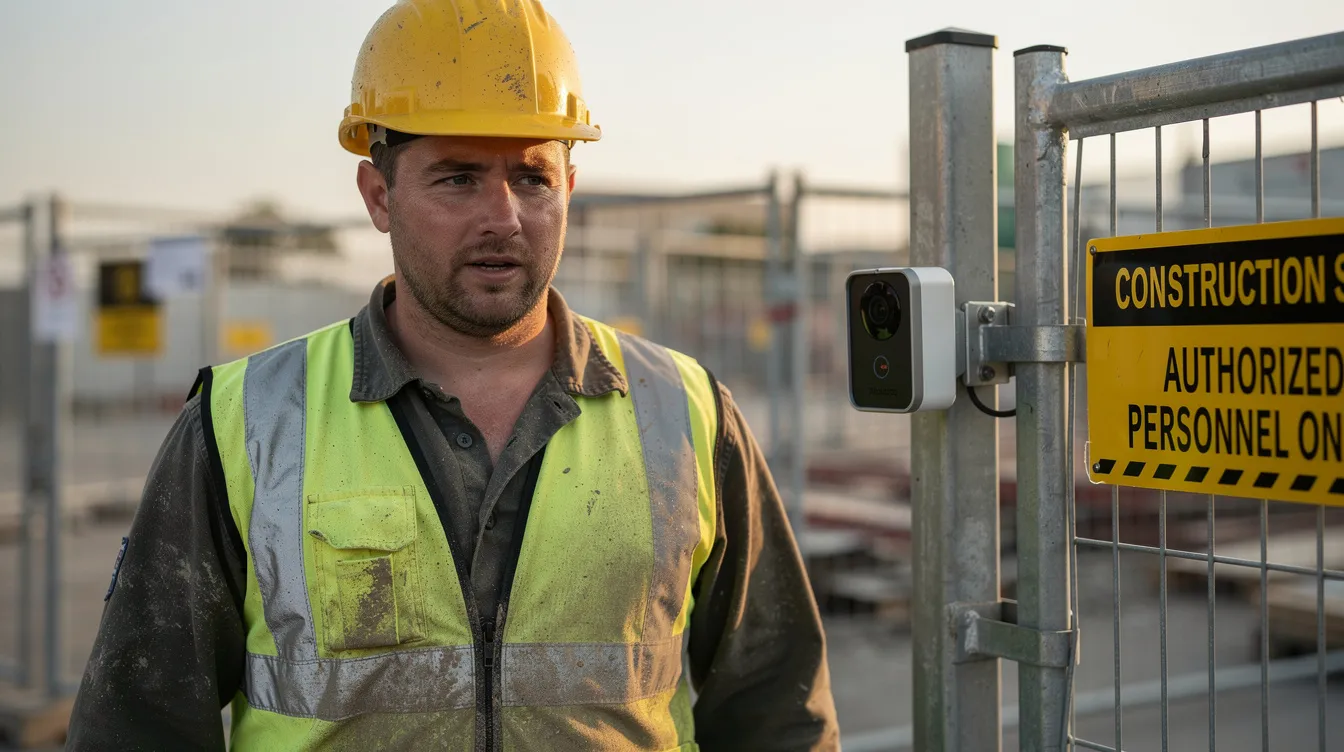
AI does more than facial matching. Behind the scenes, it can also help read and organize information from licenses, certifications, and training records that workers carry or submit during onboarding.
AI tools use optical character recognition (OCR) to extract data from documents such as OSHA cards, equipment certifications, or state licenses and push that data into a structured worker profile. Once captured, the system can flag expired credentials, missing training, or workers who should not be scheduled on a particular construction site. Access control systems improve compliance with OSHA safety standards by automating checks that were previously manual and error-prone.
Supervisors and safety leaders can view these records through dashboards to see, in real time, which workers on site meet site-specific training or security requirements. Real-time attendance tracking supports compliance and payroll verification by connecting who is present with whether they are qualified to perform the assigned work.
Job site access control supports contractor management and compliance verification across multiple subcontractors, making it easier to show that everyone on the premises has current, valid credentials. Common credentials on Eastern Pennsylvania projects include OSHA 10 or 30 cards, trade-specific licenses (electrical, plumbing), equipment operator certifications, and site-specific orientation records.
The most immediate payoff from access control technology is more accurate time and attendance, which improves payroll records by tying each clock event to a verified identity. Biometric systems eliminate buddy punching by linking each clock event to a verified identity rather than a shareable badge or PIN. This matters on projects with large subcontractor crews where attendance disputes can stall payment and erode trust.
Accurate logs can support investigations after safety incidents, insurance questions, or disputes over who was on site at a specific time, including claims involving non-employees or site employees present during an incident. Access control systems can generate real-time muster reports during emergencies, giving safety teams an immediate headcount. Access control lets safety teams restrict access to high-risk areas, adding an extra layer of protection during active operations like crane lifts or confined space entries.
Controlled gates help manage busy shift changes and deliveries, reducing the chaos of dozens of workers and vehicles arriving within minutes. On prevailing wage or highly regulated projects in Philadelphia and surrounding counties, clean documentation is not optional; it is a condition of doing business. Mobile surveillance units can operate on sites without power, extending security coverage to remote areas or temporary laydown yards.

Technology should fit how the company already runs the job, not force superintendents and foremen into IT roles. The best system in the world fails if it creates a 20-minute bottleneck at the gate during shift change.
Practical issues to plan for include:
Start simple. A single main gate with a proven solution is better than multiple scattered checkpoints that nobody trusts. Involve field leaders, not just office staff, in evaluating whether the system slows down crews or creates confusion. Contractors can reference ABC Eastern Pennsylvania’s proactive safety technology report to align access control decisions with broader jobsite technology choices.
Biometrics, as defined by NIST, refers to automated recognition of individuals based on biological and behavioral characteristics such as facial features. These systems raise legitimate privacy questions that contractors must address before deployment, not after.
Key concerns workers may raise, and what your policy should cover:
Federal nondiscrimination laws still apply when employers use AI or biometric access tools. EEOC guidance identifies workplace AI that tracks location, evaluates facial expression, or monitors movement as surveillance that triggers legal obligations. Contractors must avoid using these systems in ways that unfairly impact protected groups.
Trust-building steps include clear written policies, visible notices at entry points, limiting data collection and retention to what is necessary, and giving workers a channel to ask questions or raise concerns. A safety or HR manager in Eastern Pennsylvania can adapt these principles into an internal policy draft before any pilot begins.
Do not roll out facial recognition and AI access control across every construction site at once. Run a limited pilot with a clear need and measurable goals.
Good candidates for a pilot include:
Practical pilot goals to measure:
Form a small internal team for the pilot: project management, safety, HR, and IT or data security voices. Gather feedback from foremen and craft professionals who use the system daily. General contractors overseeing multiple projects often pilot one repeatable access workflow before scaling. ABC Eastern Pennsylvania’s construction safety training resources can help supervisors communicate changes clearly and address questions during the pilot phase.
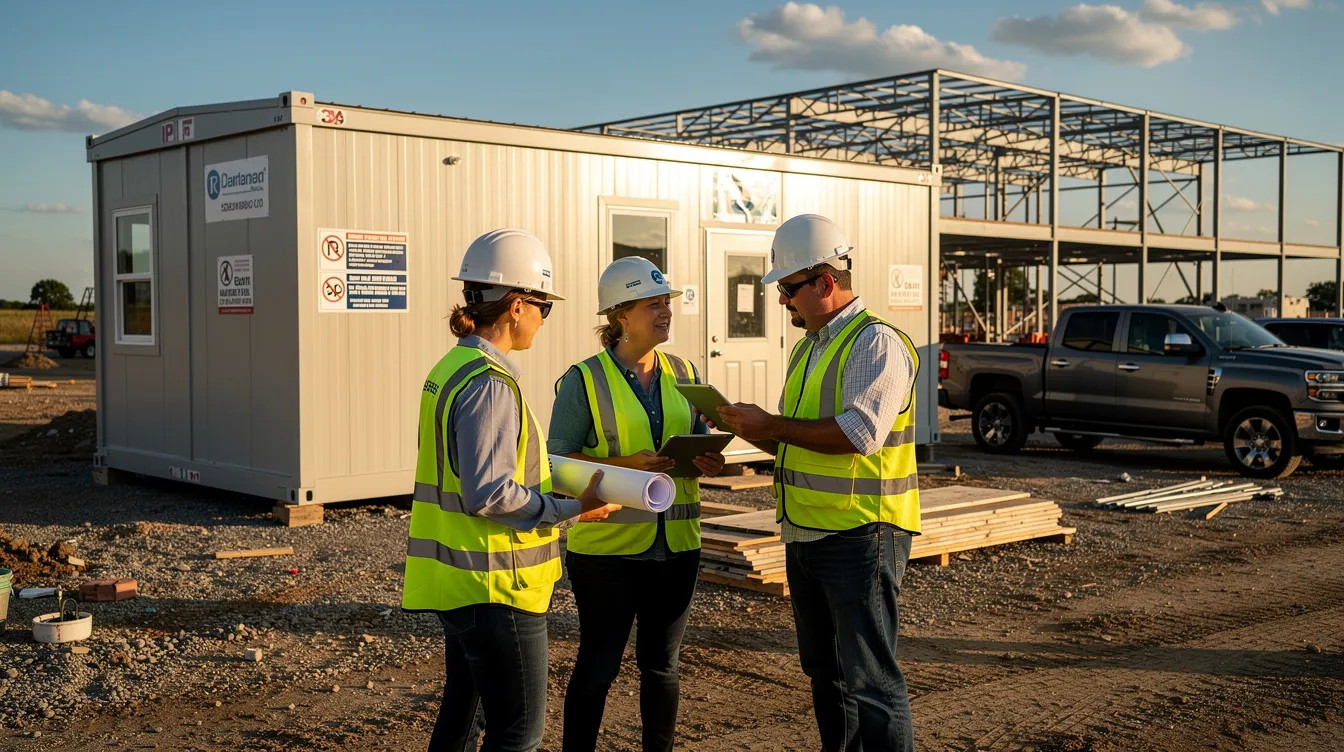
Before committing to a vendor, executives and project leaders should explore detailed questions during demos:
Enrollment and accuracy:
Data and integration:
Operations:
Governance:
Once attendance and access data are reliable, they can support broader workforce planning and compliance programs. Accurate logs of who is on site make it easier to verify that only properly trained or certified workers operate equipment or perform restricted tasks. Access data can help validate participation in toolbox talks or required safety orientations when those events are tied to specific days and times.
Registered apprenticeship programs strengthen skilled-worker recruitment, and craft training improves workforce skills in the construction industry, but both depend on accurate tracking of who completed what and when. Leadership development is crucial for retaining skilled construction workers, and workforce planning addresses labor constraints in construction projects by connecting training records to real deployment data. The merit shop philosophy promotes qualifications-based hiring in construction, and access control tools can help document that qualifications are verified at the gate, not assumed.
Access control tools support, but do not replace, supervision, mentoring, and formal training. ABC Eastern Pennsylvania connects safety, workforce development, and technology decisions for member companies across the region.
Jobsite access control technology, including facial recognition and AI tools, is valuable when it improves real-time visibility, security, and compliance on construction sites. It is not valuable when adopted for its own sake.
A simple three-step action path:
Involve both office and field leaders early to evaluate how technology will affect day-to-day operations and workforce trust on site. ABC Eastern Pennsylvania can help members stay informed about evolving access control technology, safety best practices, and regulatory expectations affecting construction sites in the region.
As AI and biometric access control mature, contractors who adopt a thoughtful, proactive approach will be better positioned to protect projects and people by controlling access before weak processes open the door to theft, noncompliance, or avoidable risk. The technology is ready. The question is whether your process is.


