


Extreme weather poses major hazards to construction sites across Eastern Pennsylvania, and the firms that treat weather as a planning variable rather than a surprise will be better positioned to protect workers, schedules, equipment, and margins. This guide explains how Eastern Pennsylvania contractors can approach extreme weather construction site safety before mobilization, during daily operations, and after site conditions change quickly in the field.
Extreme weather construction site safety is not just a seasonal concern for Eastern Pennsylvania contractors. It affects daily production planning, crew exposure, access, temporary works, and recovery sequencing across active job sites.
Construction Executive has highlighted this broader issue in its coverage of managing extreme weather risks on construction sites: weather planning should go beyond a quick forecast check and become part of how contractors evaluate specific activities, define tolerances, and decide when work should continue, shift, pause, or stop.
That approach fits current conditions. EPA says heavy precipitation events have become more frequent in the Northeast over recent decades, and Pennsylvania’s 2024 Priority Climate Action Plan identifies increasing extreme precipitation, inland flooding, and extreme heat as important statewide risks. For contractors, that does not mean every project needs a climate discussion. It means field leaders should assume weather volatility is a normal operating condition and plan accordingly.
Weather itself is not one of OSHA’s Focus Four hazards. But wind, heat, lightning, flooding, and heavy rain can make familiar hazards worse by increasing slip risk, destabilizing lifts and scaffolds, reducing visibility, affecting trench conditions, and raising electrocution risk around temporary power and water intrusion. Treating weather as a real decision point helps reduce confusion when conditions change quickly.
Consider a summer storm moving across the I-78 corridor. A slab crew may face lightning exposure, standing water, wind-sensitive materials, and changing access conditions almost at once. Without predefined roles and triggers, the site loses valuable time deciding who can stop work, who secures materials, and who accounts for crews.
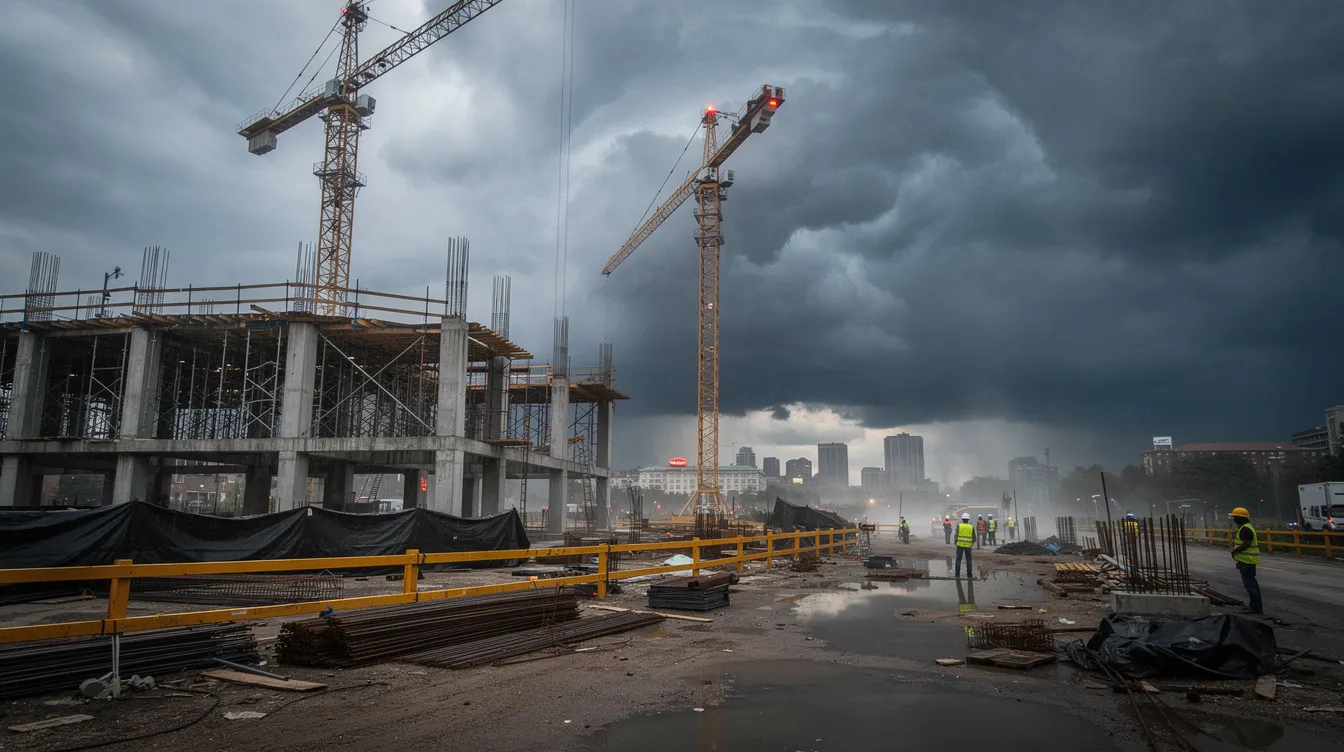
The value of this source topic is not simply the reminder that bad weather exists. The more useful point is that severe-weather planning should tie to the actual work happening on site.
That means contractors should not ask only, “What is the forecast?” They should also ask:
That activity-based approach is more useful than a generic weather warning because different operations tolerate weather differently. A crane operation, a roof crew, a trench, and interior finish work may all respond differently to the same forecast. The larger theme is resilience through planning: weather management belongs inside scheduling, pre-task planning, equipment protection, and communication protocols.
For Eastern Pennsylvania contractors, that is especially useful because regional projects often combine multiple exposures at once: tight urban logistics, open industrial parcels, hillside runoff, temporary road access, and multi-employer coordination.
The same storm system does not create the same field conditions everywhere in ABC Eastern Pennsylvania’s footprint. Contractors should translate forecasts into site-specific decisions based on terrain, density, drainage, and access.
Philadelphia and the suburban collar counties: Dense infill sites, neighboring structures, and narrow staging areas can intensify wind effects, limit shelter options, and complicate evacuation or material protection. Short, intense downpours can also overwhelm local drainage and flood low staging areas, access points, or partially enclosed spaces.
Lehigh Valley and the I-78 corridor: Large industrial and warehouse sites often have broader exposure to wind, lightning, and surface ponding. Open sites can leave crews, lifts, loose materials, and temporary works with fewer natural breaks from weather. Drainage planning becomes especially important when large disturbed areas are active at once.
Northeast Pennsylvania and the I-81 corridor: Hillside construction, longer site approaches, and variable soil conditions can raise concerns about runoff, slope stability, muddy access, and delayed emergency movement. Winter weather, freeze-thaw cycles, and reduced visibility can also affect equipment startup, walking surfaces, and temporary protection.
These are not separate safety theories. They are regional variations on the same management question: what conditions on this site make a forecasted event more dangerous for today’s work?
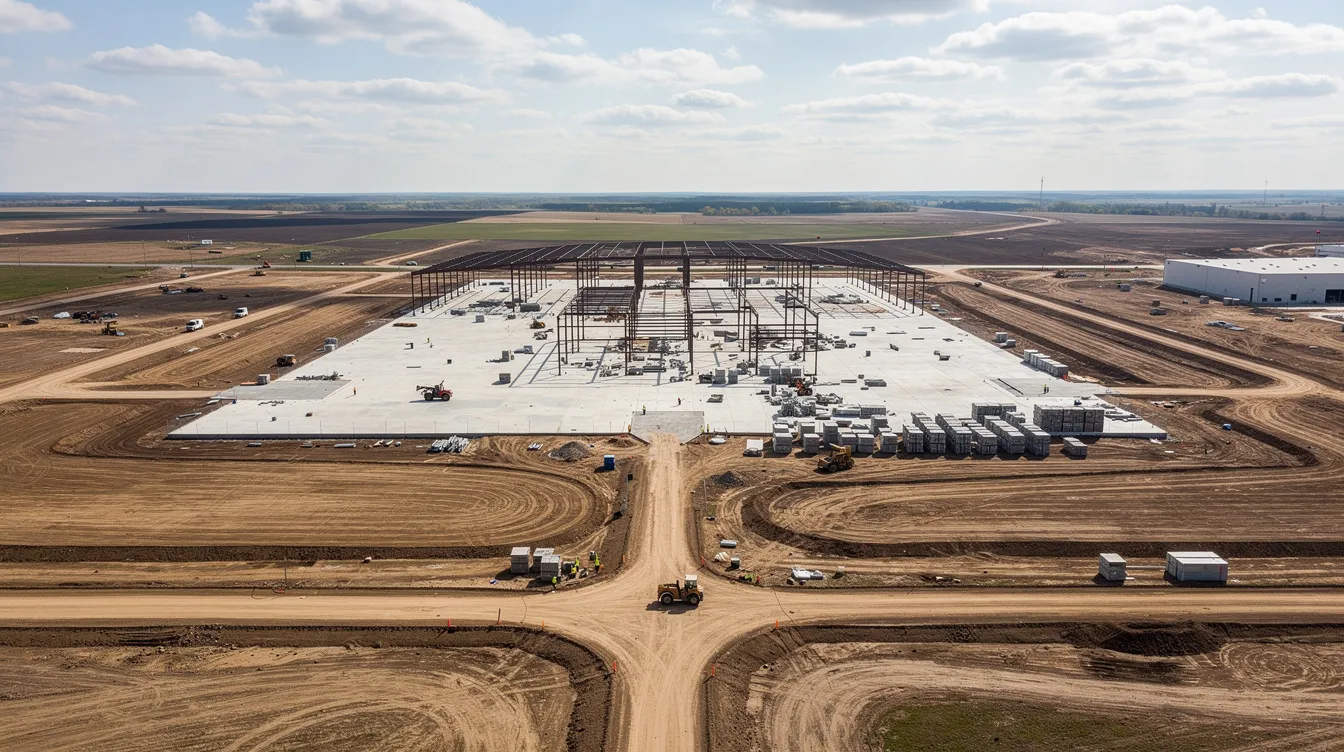
The best place to apply this planning approach is preconstruction and pre-mobilization.
Before the first major weather event hits, project teams should review:
The output should be a project-specific weather component inside the emergency action plan and site safety planning, not a vague instruction to “watch the weather.”
One of the most useful ways to manage extreme weather is to tie decisions to the work itself. That does not require every project to use the same numeric threshold. In fact, many projects should not.
Some limits belong to manufacturers. Others depend on the competent person’s inspection, contract requirements, site exposure, or the phase of work. The goal is to define likely triggers in advance so the field doesn’t improvise under pressure.
| Activity | What to define before work starts | Who typically informs the decision |
|---|---|---|
| Crane and lift operations | Manufacturer wind limits, shutdown steps, load restrictions, and who verifies conditions | Operator, superintendent, lift director, manufacturer guidance |
| Roofing and elevated exterior work | How wind, lightning, slick surfaces, and visibility affect start/stop decisions | Foreman, superintendent, competent person |
| Scaffold use | Inspection requirements after weather changes, tie-in checks, and access restrictions | Competent person, scaffold guidance, site leadership |
| Excavation and trenching | Inspection triggers after rainfall, runoff, seepage, or freeze-thaw change | Competent person, excavation plan, site safety lead |
| Concrete placement and finishing | Protection steps for rain, temperature extremes, access, curing, and sequencing adjustments | Project team, supplier guidance, superintendent |
That structure gives the field a planning tool without pretending there is one universal rule for every project. It also addresses one of the biggest operational failures during severe weather: everyone assumes someone else has the authority to make the call.
Stop-work authority should be explicit. Superintendents, foremen, competent persons, and others identified in the plan should understand when they are expected to act and how they communicate that decision across the site.
Once conditions shift, the site needs simple, repeatable actions.
Extreme heat: NIOSH guidance for construction emphasizes acclimatization, hydration, work-rest planning, training, and access to shade or cooler recovery areas. It also notes that heat illness risk depends on more than air temperature alone; humidity, radiant heat, workload, and protective clothing all matter. New and returning workers may need time to acclimatize over several days. Hydration planning should match current guidance and the work being performed rather than rely on a one-size-fits-all rule.
Lightning and thunderstorms: Suspend exposed outdoor operations when lightning threatens the site, move crews to safer shelter, and avoid rushing people back out too soon. A common field practice is to wait at least 30 minutes after the last sound of thunder before resuming exposed work. The plan should clearly address crane operations, roof work, scaffold access, and elevated tasks.
High winds: Review manufacturer instructions and site procedures for cranes, lifts, temporary enclosures, and unsecured materials. Wind decisions should consider not only the equipment but also flying debris, unstable sheeting, visibility, and worker exposure at open edges and elevations.
Heavy rain and localized flooding: Inspect trenches, excavations, slopes, temporary drainage, electrical protection, and access routes. Standing water can change footing, hide hazards, affect temporary power, and create access problems even after rainfall slows.
Winter weather and cold exposure: Snow, ice, freezing rain, and freeze-thaw changes can affect walking surfaces, equipment reliability, temporary structures, and excavation conditions. Cold-weather planning should address deicing, access, startup reliability, and exposure management for crews working in wind and wet conditions.
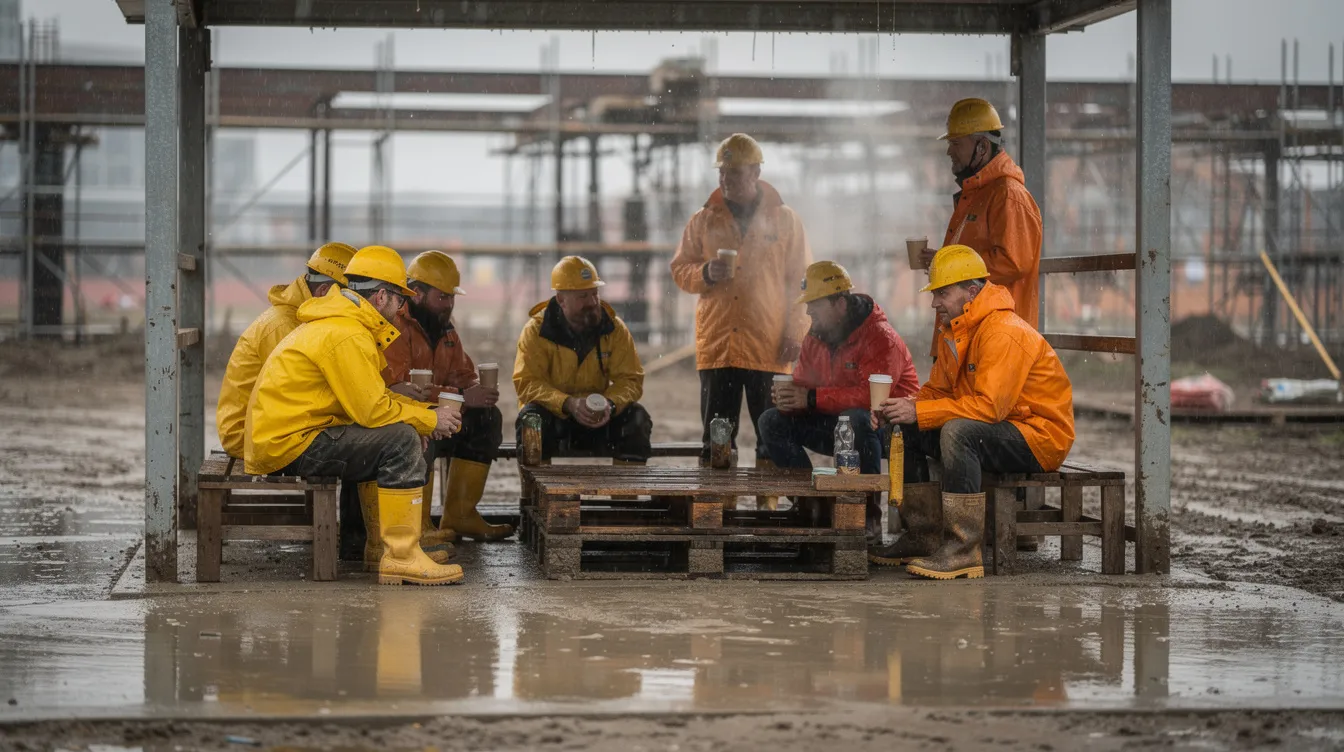
This same resilience mindset also applies before the storm arrives. Severe weather can create hazards long after the event if materials shift, temporary works loosen, or water undermines access and support conditions.
Pre-storm actions may include:
In practical terms, this is where safety, operations, and schedule protection overlap. A site that cannot secure materials or stabilize temporary conditions quickly will usually lose more time after the event.
An emergency action plan is only useful if everyone knows how it works under actual field conditions. Multi-employer sites especially need a weather communication process that quickly reaches general contractors, subcontractors, delivery drivers, and visitors.
At minimum, the plan should define:
Daily huddles should include any weather-sensitive tasks on the schedule, expected condition changes, and reminders about who makes the call if thresholds are reached. The goal is not to create an elaborate script. It is to remove uncertainty.
Use this checklist as a field planning tool to support extreme weather construction site safety on projects across Philadelphia, the Lehigh Valley, and Northeast Pennsylvania.
Before mobilization
At the start of the shift
When severe weather is approaching
Before work resumes
ABC Eastern Pennsylvania serves contractors across 17 counties in Philadelphia, the suburban collar counties, the Lehigh Valley, and Northeast Pennsylvania. While the chapter does not present itself as a stand-alone severe-weather program, its broader safety support can help firms build stronger weather readiness into company and project safety systems.
Member firms can use ABC Eastern Pennsylvania’s safety resources for training, gap analysis, written program development, hazard assessment support, project-specific planning, and STEP-related improvement efforts. The chapter’s ABC-OSHA Partnership and consulting resources can also support companies that want to strengthen field communication, inspections, and emergency planning practices.
Companies looking for broader access to safety, workforce, and business-development support can also review ABC Eastern Pennsylvania membership information or follow the chapter’s news and trends page for additional construction updates relevant to the region.
Below are answers to common questions about this topic.
Review it before major seasonal changes, before high-exposure phases of work, after a significant weather event, and anytime the site layout changes enough to affect shelter, drainage, evacuation, or accountability procedures.
No. Some limits come from equipment manufacturers, while others depend on the specific task, exposure, temporary conditions, and competent-person judgment. The better practice is to define project-specific triggers before work starts rather than assume a universal number applies everywhere.
Usually it is not lack of a forecast. It is lack of a decision process. Crews lose time when no one is sure who can stop work, how to notify subcontractors, where people should go, or what needs inspection before restarting.
Use current heat guidance as a framework, then adapt it to the workload, humidity, protective clothing, worker acclimatization, and available recovery space on the actual site. Build hydration, shade, rest planning, and training into the daily plan, especially for new or returning workers.
Focus on access routes, trenches and excavations, temporary works, scaffolds, lifts, electrical protection, drainage paths, water intrusion, loose materials, and any equipment or structure affected by wind or flooding. Restart decisions should follow the site’s documented procedures, not pressure to make up lost time.


