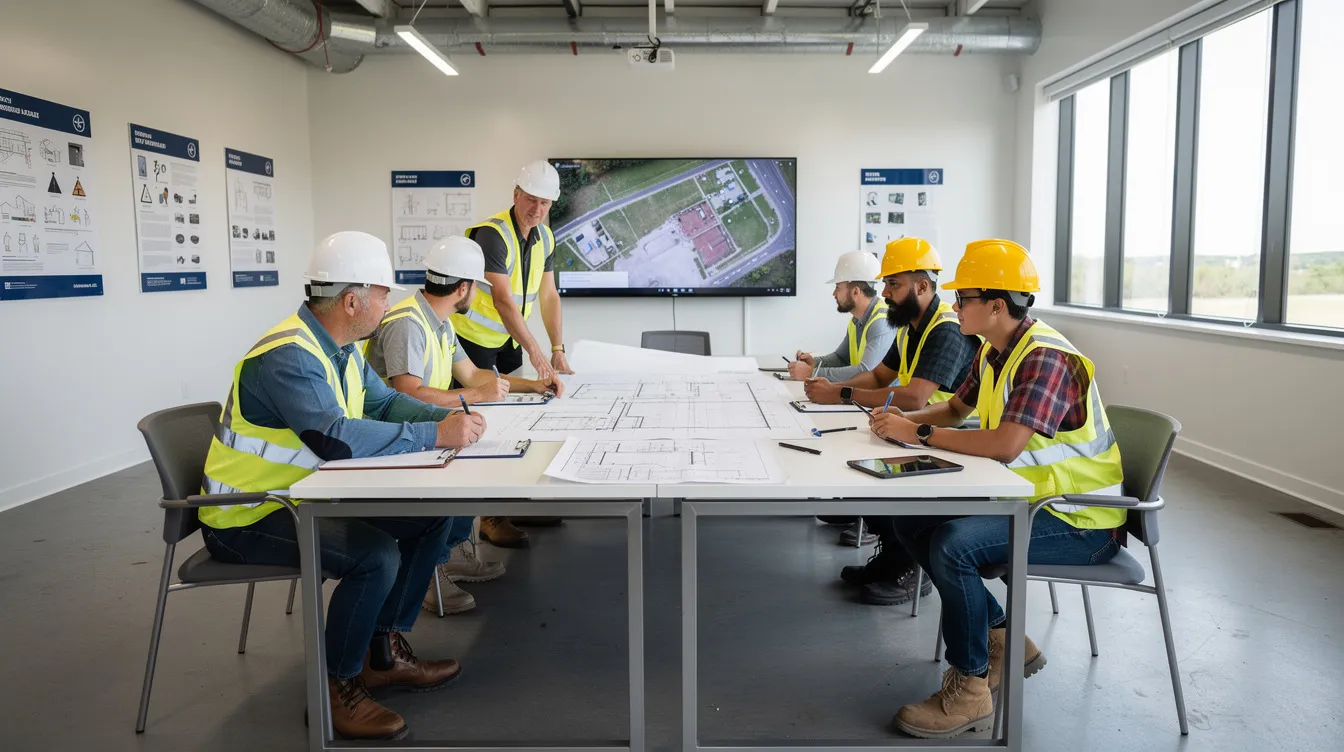
Cranes on Eastern Pennsylvania job sites look different than they did five years ago, and equipment operator training now has to cover more than basic crane operation. Onboard cameras, load moment indicators, telematics dashboards, and digital lift planning software have changed how lifts are planned, executed, and documented. For merit shop contractors, crane operators, training coordinators, and construction firms across the Philadelphia metro, the Lehigh Valley, and Northeast Pennsylvania, that changes what a current training program needs to include.
This article looks at how operator training is evolving, including OSHA certification and qualification requirements, classroom and hands-on instruction, apprenticeship and simulation options, site-specific operating risks, and practical ways to evaluate and update your program. Because modern crane work is closely tied to safety, compliance, efficiency, bidding strength, and workforce retention, training that hasn’t kept up with technology creates real risk on today’s job sites.
The construction industry across Eastern Pennsylvania is layering technology into crane operations at an accelerating pace. In Philadelphia, tower cranes on high-rise and institutional projects now carry anti-collision systems, synthetic vision cameras, and integrated safety computers. Across the Lehigh Valley, where logistics and distribution facilities line the I-78 corridor, mobile cranes and boom truck operations rely on load-monitoring sensors and ground-pressure calculations fed through digital lift plans. In Northeast Pennsylvania and along I-81, energy, warehouse, and utility work demands the same level of precision from crane operators who may be running equipment with more computing power than they had in the cab two years ago.
Training is essential for safe heavy equipment operation, and the business stakes are direct. Fewer incidents and accidents mean lower TRIR, stronger insurance credibility, and fewer schedule disruptions. On the bidding side, owners and general contractors increasingly evaluate safety performance, documented planning discipline, and operator qualification as differentiators. Merit shop firms that invest in technology-aware crane operator training gain a measurable edge in a market where safety credibility and project delivery reliability determine who wins work.
Heavy equipment operator training combines classroom learning with hands-on field practice, but the classroom content and the field exercises must now reflect what operators actually encounter. When a crane is equipped with cameras, load moment indicators, angle sensors, overload alarms, and telematics feeds, the operator needs to know what each system does, what the alerts mean, and what to do when something flags as abnormal.
Training programs should incorporate classroom instruction on safety regulations and machinery operation, including how digital lift plans work. A digital lift plan models the job site in three dimensions, mapping terrain, obstructions, load paths, crane placement, and access for equipment transportation. Operators, riggers, and signal persons all need sufficient familiarity with these plans so communication is aligned before the lift begins. Reading and interpreting a digital lift plan is no longer optional for crews working complex lifts.
Camera systems present their own training gap. Operators must learn to interpret blind-spot feeds, swing-radius views, and synthetic overlays without becoming dependent on them to the exclusion of direct observation. Telematics dashboards require data literacy: understanding hours on the machine, maintenance alerts, idle events, and hard stops. Operators must still read and apply load charts correctly, but now they interact with onboard software that cross-references boom angle, radius, and capacity in real time.
Effective training enhances operators’ judgment and hazard awareness. Technology improves situational awareness, but it does not replace the knowledge and skills a qualified operator brings to every lift. Industry training standards may vary and should match specific equipment and hazards. The human factor remains central to safe operations.
Not all cranes are the same, and training programs must reflect different machine types and the distinct risks each presents. OSHA guidelines require a crane operating license for each crane type, meaning a single certification does not cover every piece of equipment on a contractor’s fleet.
Effective programs include separate tracks for:
| Crane Type | Key Training Focus Areas |
|---|---|
| Tower cranes | Setup, climbing sequences, anti-collision systems, load charts at height |
| Mobile cranes | Outrigger setup, ground conditions, boom configuration, capacity at radius, rigging |
| Boom truck | Stabilization on uneven ground, roadside operations, outrigger deployment |
| Overhead cranes and hoists | Runway alignment, pendant controls, load swing management |
Quality training programs include substantial hands-on training with various equipment, and hands-on field experience is essential to operate heavy machinery safely. Operators must practice on the exact crane model, with its specific control layout and installed technology, before operating it on a live job site. Hands-on practice in realistic conditions prepares operators for job-site challenges that no manual or classroom session fully replicates.
Crane operator training can take a few weeks to several months depending on the equipment and the operator’s related experience. Initial crane operator training can take a few months for those entering the field. Programs must separate novice curricula, which require full classroom instruction, simulation, and supervised cab time, from experienced operator tracks that focus on technology refreshers when equipment is upgraded or new safety devices are introduced.
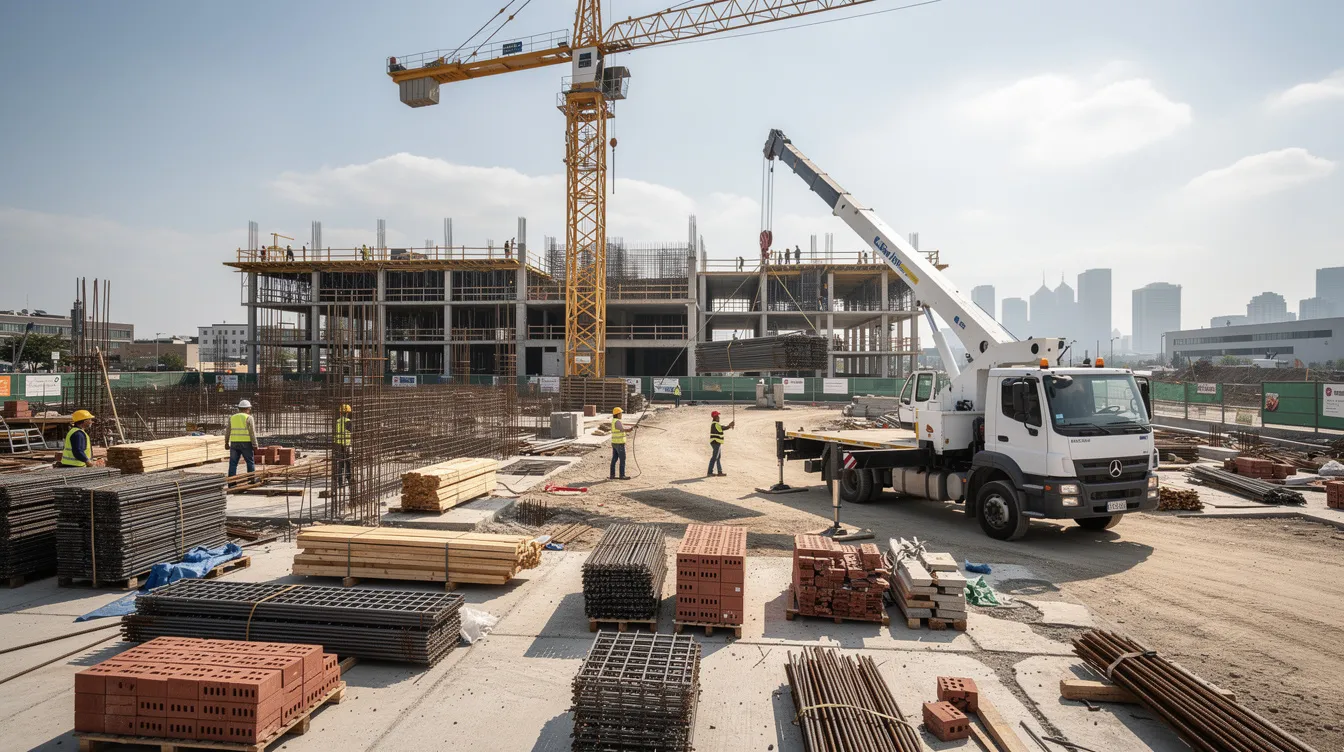
OSHA requires crane operators to be certified and trained under 29 CFR 1926.1427. Crane operators need an NCCCO certification to operate, and NCCCO certification requires passing written tests and a practical exam that covers the operator’s knowledge and skills for the specific crane type.
A critical distinction exists between certification and qualification. Certification, whether through the National Commission for the Certification of Crane Operators or another accredited body, confirms that an operator passed a certification test. Qualification is the employer’s documented verification that the operator is competent on the actual crane, with its specific configuration, attachments, sensors, and operational aids. Attending a course and obtaining a certificate is not the same as demonstrating practical competency on the equipment used on the job.
Assessment and competency testing ensure operators can perform their tasks safely. Employers must evaluate each operator on the make, model, and configuration of the crane being used and document that evaluation with the operator’s name, evaluator, date, and equipment details. Safety protocols include understanding OSHA regulations and identifying hazards specific to the task and location.
Refresher training is required every five years for operators, and crane operators must recertify every five years. Crane operators must retake refresher training every five years to maintain their credentials. But OSHA also expects additional evaluation whenever new equipment is introduced, performance data reveals problems, or deficiencies are observed. Continuing education and recertification help operators stay updated on safety laws, but the employer’s obligation to evaluate competency is ongoing, not a five-year cycle.
Certification programs should meet recognized industry safety and operational standards, and accredited training programs often improve safety and regulatory compliance. Complete, current training records are your strongest defense during an audit or investigation. Incomplete documentation invites citations and weakens your position after an incident.
Start with an inventory. For every crane on every active project, document the model, control systems, installed cameras, sensors, telematics platform, and attachments. Map each crane to a specific training program that covers its technology package.
Proper inspection is vital for compliance and safety. Operators should perform thorough inspections before using heavy equipment, and proper inspections prevent equipment failure during operation. Update your pre-operation checklists to have operators inspect camera lenses, sensors, alarms, and connectivity before use. These are not extras; they are part of safe operation with current machinery.
Simulator training helps operators practice without risks associated with real machinery. One Mid-Atlantic contractor, Conewago Enterprises, cut onsite crane operator training time from six months to seven weeks and reduced per-operator training costs by more than 60% using simulation tools. That kind of efficiency matters when you need operators qualified on new equipment quickly without tying up production cranes.
Trained operators can reduce operational costs by minimizing wear and tear on equipment because they handle machines correctly from the start. Train signalers and riggers on camera feeds and alarm systems so the entire crew shares a common operating language. Update written procedures and operator checklists to reflect the technology actually installed on your fleet, not what was there three years ago.
Apprenticeship programs combine paid field work with classroom instruction, creating a structured pathway from entry-level to journeyperson status. Crane operator apprenticeships typically last three to four years, and apprentices earn a living wage while gaining experience. Learners can often complete related classroom or simulation components at their own pace when offered online or in blended formats. Apprenticeships require completion of initial training, ensuring each person enters the field with a foundation of knowledge.
While apprenticeship programs are often offered through unions, merit shop contractors in Eastern Pennsylvania have access to registered apprenticeship pathways through ABC Eastern Pennsylvania’s Apprenticeship Trust, which has operated since 1967 across ten trade areas. Aligning crane operator curricula with these pathways ensures that technology competency milestones, not just hours or attendance, drive advancement.
Incorporate STEP program benchmarks into training evaluation. STEP provides a framework for measuring safety performance that directly supports the documentation and continuous improvement OSHA expects. Use simulator sessions for critical lift scenarios, multi-crane lifts, and blind picks before operators attempt them on a live job site. Track competency milestones so that career development pathways are clear and operators see a reason to stay.
Structured training can boost productivity and lower accident rates. Contractors who document robust operator training and evaluation programs show the planning discipline owners and general contractors look for when evaluating bids. In regulated work across the Philadelphia market, Lehigh Valley, and NEPA, including prevailing wage, DOT, and PLA-influenced public projects, bid evaluators often explicitly credit documented safety programs.
Equipment failure can lead to serious injuries on job sites, and every incident carries schedule, insurance, and reputational consequences. One national crane company, Buckner HeavyLift Cranes, used a digital training platform to raise safety training completion from 75% to 99% and reduced recertification costs by approximately 87% over five-year cycles. The takeaway for Eastern Pennsylvania firms: investing in modern training infrastructure pays for itself in compliance rates and reduced administrative burden.
Workforce development benefits are equally direct. Workers who operate heavy equipment expect employers to invest in current tools and advancement. Merit shop firms that provide technology-aware training attract and retain operators who might otherwise leave for companies that offer better development. In a region facing real labor constraints, this is a measurable competitive advantage.
Boom truck operations carry distinct risks that require jobsite-specific lift plans. In congested Philadelphia metro sites, over public rights-of-way, and in the tight footprints common to Lehigh Valley warehouse construction, boom truck work demands careful outrigger placement, ground condition assessment, and coordination with the ground crew before every lift.
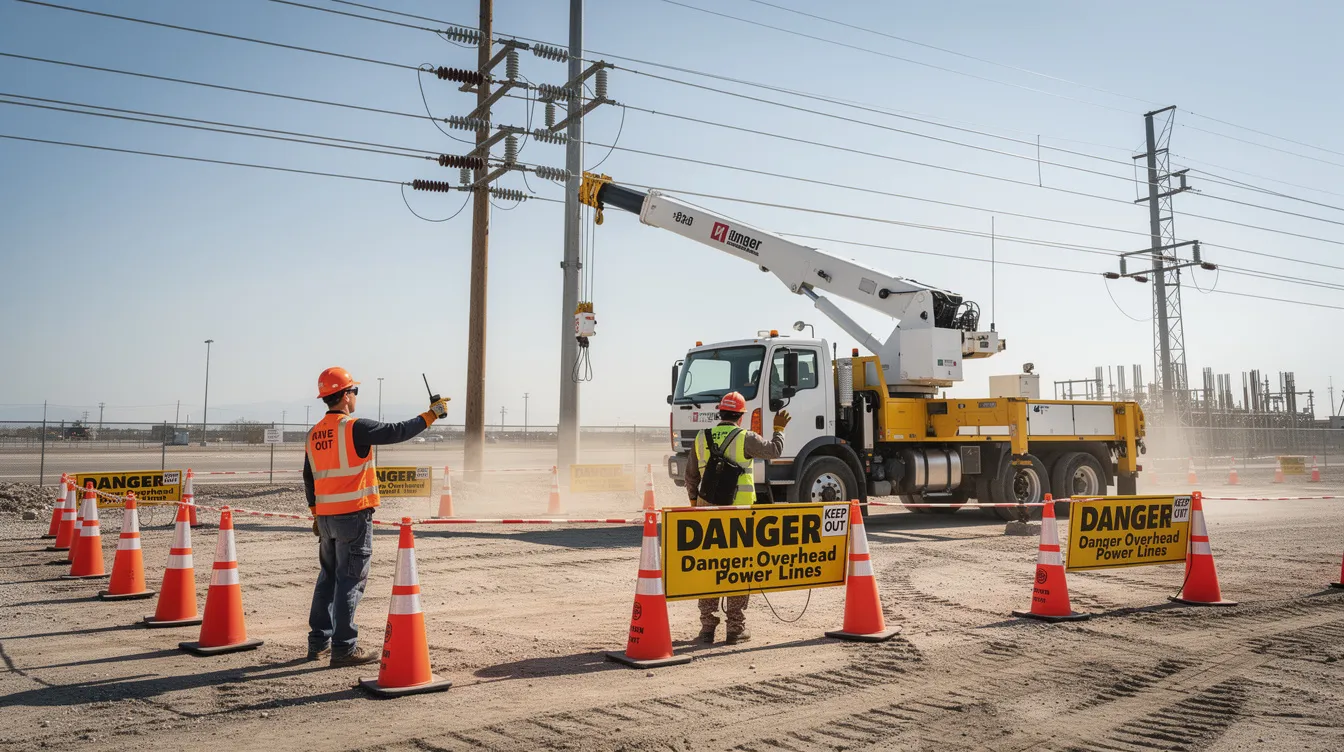
Operators must stay 10 feet from power lines, and every job site near overhead utilities requires power line clearance protocols and advance coordination with the utility provider. This is not a suggestion. It is a compliance requirement and a life-safety imperative. Require pre-lift verification to cover outrigger deployment, ground bearing capacity, and the location of every overhead obstruction.
Include emergency escalation steps for unexpected alarms. When a load moment indicator trips, when a camera feed goes dark, or when ground conditions change during a lift, the crew must know the procedure: stop, stabilize, communicate, and escalate to supervision before proceeding. Rehearse these steps in training and reinforce them in every pre-lift meeting.
Pull your training records and compare them against the equipment and technology currently deployed on your jobs. If your training content references older crane models or omits camera systems, sensor alarms, or digital lift planning, it is out of date.
Verify that practical exams and practical examinations include camera use, sensor interpretation, and load monitoring system checks. Written exams alone do not demonstrate that an operator can safely use the technology installed in the cab.
Confirm that supervisors and crew leaders can interpret telematics reports and act on the data. If your foremen cannot read a utilization dashboard or respond to a maintenance alert, the investment in telematics is not delivering its full value.
Audit your records for completeness before you bid work. An incomplete training file, missing an evaluation date, an equipment configuration note, or an evaluator signature, weakens your position in a compliance review and creates liability exposure after any incident. Document everything: the person, the machine, the date, the instructor or evaluator, and the outcome.
Use this checklist to begin updating your crane operator training program this quarter:
ABC Eastern Pennsylvania’s training centers in Allentown and Harleysville provide the facilities and instructor capacity for targeted operator workshops. Consider scheduling member-focused sessions on boom truck and tower crane technology, coordinated with the chapter’s safety consulting bench.
Leverage the ABC-OSHA Partnership with area OSHA offices in Allentown, Philadelphia, and Wilkes-Barre to support audit preparation and compliance documentation. Propose member-only simulation sessions and toolbox talks that reinforce how technology is used, verified, and escalated on the job site. The cranes have changed. Your training program should change with them.