


Construction accounts for a disproportionate share of workplace deaths in the United States, but those totals do not move evenly across every type of work. Recent national analysis shows a sharp split inside the industry: building construction has become more concerning on several key safety measures, while heavy and civil engineering and specialty trades have shown broader improvement over the longer trend line. For owners, executives, managers, safety directors, HR and workforce development leaders, project managers, and specialty contractors across Philadelphia and its suburban counties, the Lehigh Valley, and Northeast Pennsylvania, that distinction matters when you decide where the next safety dollar should go. This analysis looks at subsector-specific safety trends, the hazard patterns behind them, and what those patterns mean for Eastern Pennsylvania construction safety.
This analysis looks at subsector-specific safety trends, the hazard patterns behind them, and what those patterns mean for Eastern Pennsylvania construction safety. It also explains how to apply national subsector data carefully in a regional market where project mixes differ, but county-level injury rates are not publicly broken out in a way that confirms the same pattern locally.
If you run a construction company in Philadelphia, the Lehigh Valley, or Northeast Pennsylvania, you are likely managing a mix of building, industrial, infrastructure, and specialty trade work. Treating all of those scopes as equally safe, or equally risky, can misdirect limited time and resources. Recent federal data summarized by CPWR and reported by Construction Executive points to diverging safety outcomes among the three major construction subsectors.
Construction safety resources are finite. Training hours, supervisor attention, equipment budgets, and pre-task planning all compete for time on every project. The practical question is not whether safety matters. It is where more focused safety attention is most likely to reduce harm on the work your crews actually perform.
CPWR’s June 2026 data bulletin, covered by Construction Executive, compares injury trends across three major construction subsectors using federal labor statistics. Understanding the differences starts with knowing what each subsector includes.
Building construction (NAICS 236) covers new residential and nonresidential building work such as commercial offices, healthcare facilities, institutional projects, retail, and housing. Heavy and civil engineering construction (NAICS 237) includes infrastructure and public works such as roads, bridges, tunnels, utility lines, and highways. Specialty trade contractors (NAICS 238) perform trade-specific scopes like electrical, plumbing, roofing, masonry, HVAC, and sheet metal, usually as subcontractors.
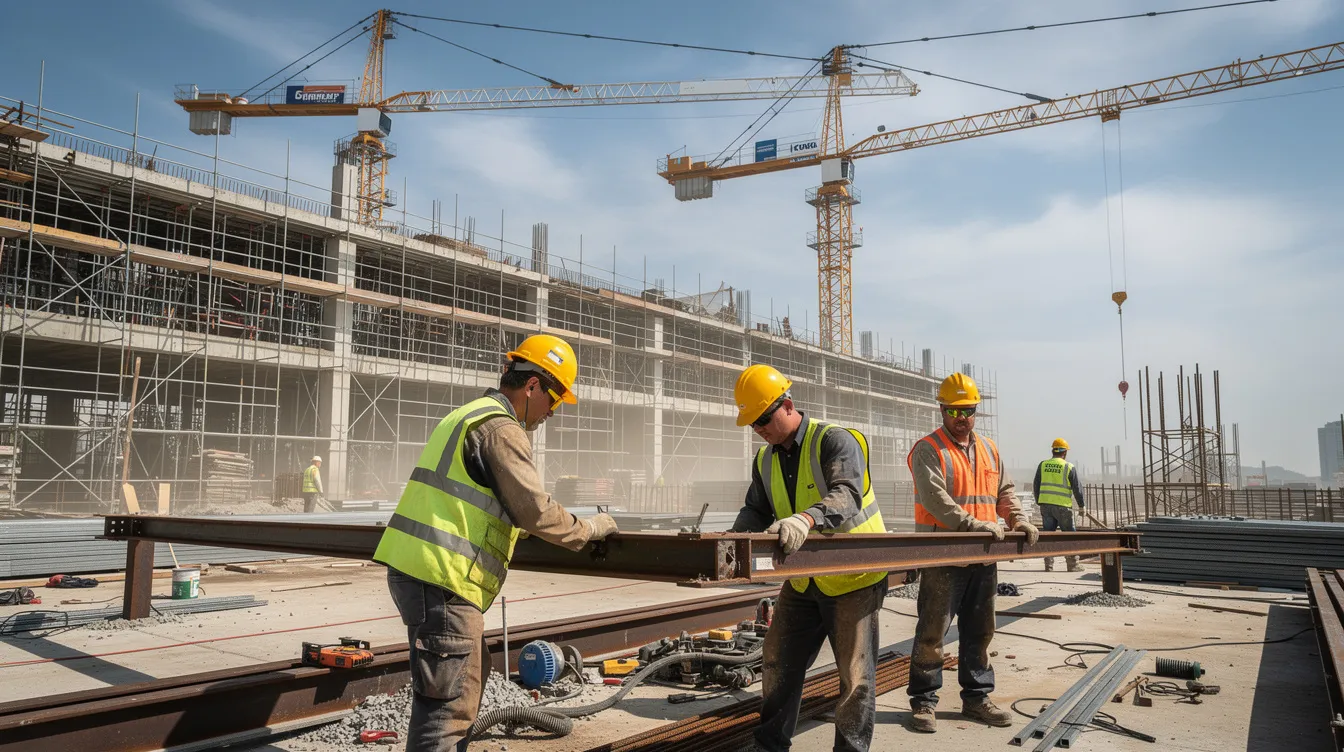
From 2011–12 through 2023–24, nonfatal injury rates fell across all three subsectors nationally. Heavy and civil engineering posted the largest decline at 46.9 percent. Specialty trades followed at 32.4 percent. Building construction improved by 32.2 percent over that same period.
However, the recent direction in building construction is more troubling. From 2021–22 to 2023–24, the nonfatal injury rate rose 13.1 percent, increasing from 71.7 to 81.1 incidents per 10,000 workers. Specialty trades remained the highest of the three on the latest nonfatal rate cited in the analysis, at about 96.5 per 10,000, while heavy and civil engineering was lower at about 60 per 10,000.
Building construction is the only subsector in the CPWR comparison where the fatal work injury rate increased over the study period. From 2012 to 2024, the rate rose 4.4 percent, from 11.4 to 11.9 deaths per 100,000 workers, and the raw number of fatalities increased from 142 to 220.
Heavy and civil engineering moved in the opposite direction: its fatality rate fell 35.6 percent, while specialty trades saw a 12.7 percent reduction in fatal injury rate. Specialty trades still recorded high absolute fatality counts in 2024, which is one reason the national picture should be read carefully rather than reduced to a single winner or loser.
The “Fatal Four” causes of construction fatalities are falls, struck-by incidents, electrocutions, and caught-in/between accidents. Falls continue to dominate overall construction deaths nationally, so elevated-work planning remains central to any serious safety program.
In the 2024 subsector breakdown cited in the CPWR analysis, falls, slips, and trips caused 43.6 percent of fatal injuries in building construction and 41.6 percent in specialty trades. These subsectors frequently involve roofs, ladders, scaffolds, framing, and other elevated work. In heavy and civil engineering, the leading pattern was different: transportation incidents accounted for 47.3 percent of fatal injuries, reflecting work-zone, mobile-equipment, and vehicle exposure.
These figures do not prove causation on any individual jobsite, but they strongly signal where to allocate resources. If your company does more building or specialty trade work, fall protection deserves sustained management attention. If your mix leans heavy civil, transportation controls, equipment movement, and work-zone planning should move higher on the list.
Fall exposure starts before anyone steps onto the site. Preconstruction planning should identify every scope involving elevated work, from roofing and structural framing to overhead mechanical and electrical installation. Complete job hazard analyses and pre-task plans before high-risk activities begin, not after a near miss forces the conversation.
For private-sector construction in Pennsylvania, federal OSHA standards govern fall protection requirements. OSHA generally requires fall protection in construction at six feet in many situations covered by Subpart M, and employers must train workers to recognize fall hazards and use the right controls for the task. Daily field checks should verify the condition and proper use of harnesses, lifelines, ladders, scaffolds, and other equipment tied to elevated work.
Excavation hazards also require separate planning. In Pennsylvania, excavators must contact PA One Call before digging, and a competent person must review excavation work as required under OSHA excavation standards.
Construction safety in Eastern Pennsylvania relies primarily on federal OSHA standards for private-sector worksites. That includes core construction rules on fall protection, ladders, scaffolds, excavations, hazard communication, personal protective equipment, and other task-specific exposures.
Pennsylvania also has related state requirements that can matter on construction projects, including the Uniform Construction Code for building standards and the Worker and Community Right to Know Act for hazardous-substance information in covered situations. Those rules should not be confused with primary private-sector workplace-safety enforcement, which remains under federal OSHA in Pennsylvania.
Employers are responsible for more than having a written program on paper. They must ensure controls are carried through in the field, whether that means guardrails at open sides, inspection routines for access equipment, or clear vehicle-exclusion zones around moving equipment.
Effective safety training should match the hazards crews actually face. For building and specialty trade work, that often means emphasizing fall protection, elevated-work planning, scaffold awareness, and ladder use. For heavy civil operations, transportation controls, work-zone traffic management, spotter practices, and mobile-equipment protocols may need more attention.
Supervisor training matters as much as craft training. Crews need task-specific instruction, but leaders need to recognize patterns across jobsites and respond before the same exposure repeats. OSHA 10- and 30-hour programs, trade-specific classes, and refreshers tied to current project hazards can all support that goal when the content matches the work.
National subsector data does not provide confirmed county-level injury trends for Eastern Pennsylvania. That means regional takeaways should be framed as practical inferences from local project mix and national hazard patterns, not as verified local injury-rate findings.
Philadelphia and its suburban counties have a substantial concentration of commercial, institutional, healthcare, higher-education, and mixed-use building work. Because the national data shows building construction moving in a worse direction on several measures, contractors with a portfolio weighted toward that kind of work may want to review elevated-work controls, supervision, and fall-protection execution first. That is an inference from project mix plus national data, not a statement of measured Philadelphia-area fatality rates.
The Lehigh Valley’s industrial and logistics pipeline often brings heavy specialty-trade involvement, especially in mechanical, electrical, roofing, and HVAC scopes. That aligns with the national pattern showing persistent fall exposure and a comparatively high nonfatal injury rate inside specialty trades.
Northeast Pennsylvania, including the Scranton and Wilkes-Barre corridor, includes a meaningful share of highway, utility, site, and infrastructure work alongside logistics and industrial development. In that environment, the national heavy-civil pattern reminds us that transportation exposure and equipment movement can remain the dominant fatal-risk categories even when overall subsector rates improve.
Regional weather adds another layer across all three markets. Summer heat, winter ice, rain, and wind can amplify both fall risk and vehicle or equipment hazards, which is one reason daily planning should account for changing site conditions rather than rely only on a baseline program document.
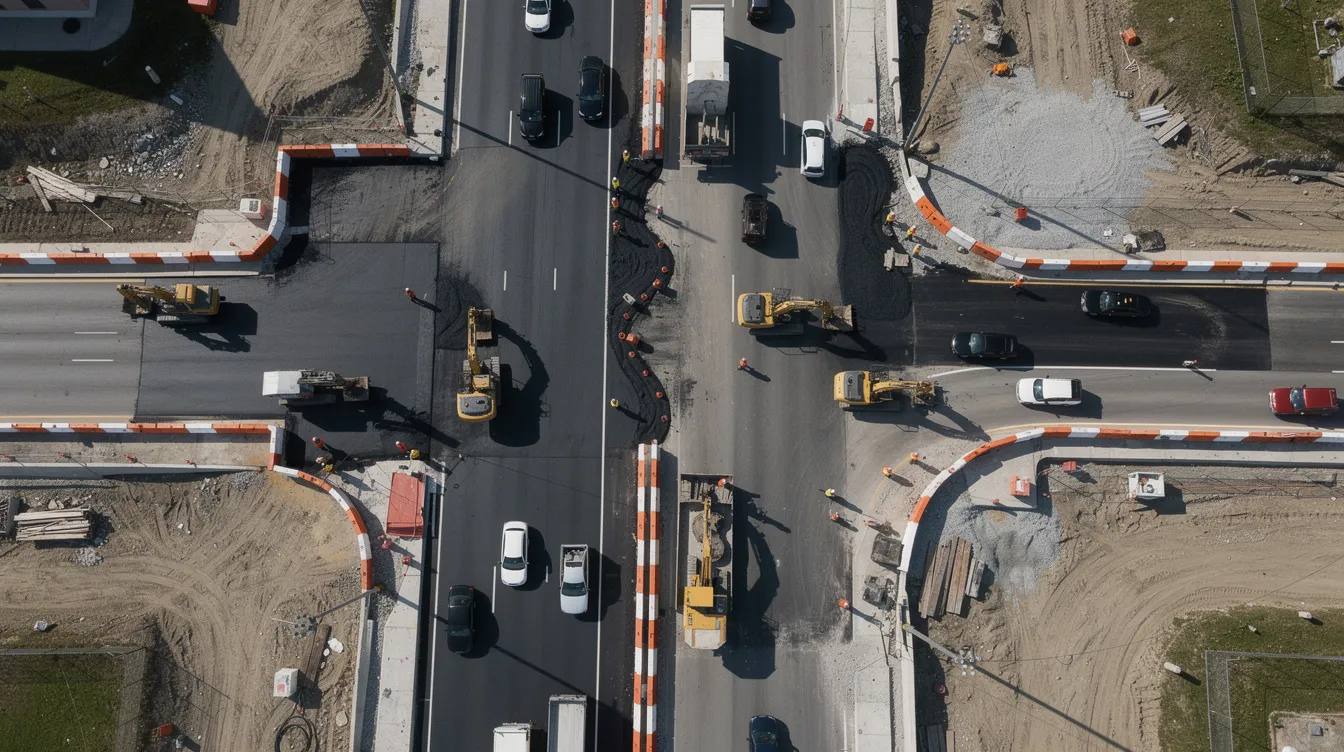
Pull your incident and near-miss data and compare it against your current project mix. If most of your revenue comes from building construction, but your recurring near misses cluster around trade-specific elevated work, your training and supervision may be aimed too broadly to solve the actual problem.
Identify the scopes that require stronger field oversight. The clearest patterns in the current national data are elevated work on building and specialty-trade projects and transportation exposure on civil work. Assign planning time, supervisor attention, and equipment budgets according to those exposures rather than distributing resources evenly across every project type.
Start with four internal actions:
Federal OSHA requires employers to report a work-related fatality within eight hours and an inpatient hospitalization, amputation, or loss of an eye within 24 hours. Pennsylvania employers may also have an incentive to formalize participation through a certified safety committee, because the state allows qualifying employers to apply for a workers’ compensation premium discount. Those requirements and incentives are not a substitute for field execution, but they do reinforce the value of a documented system.
Require task hazard reviews before high-risk work begins. Those reviews should identify fall exposure, equipment hazards, traffic-interface risks, and environmental conditions tied to that day’s scope.
Then verify controls in the field. Supervisors who confirm guardrails are installed, ladders are set correctly, and exclusion zones are maintained turn a written plan into a working safety process.
If the same exposure keeps returning across multiple projects, treat it as a system issue. Repeated hazards usually point to a planning, supervision, training, or accountability problem that needs more than another toolbox talk.
STEP safety benchmarking gives contractors a structured way to assess safety performance and management practices. Used well, it can help firms see whether certain parts of the business need more attention than others.
The ABC-OSHA Partnership connects ABC Eastern Pennsylvania members with area OSHA offices in Allentown, Philadelphia, and Wilkes-Barre, as well as the Pennsylvania OSHA Consultation Program. For contractors trying to translate broad hazard data into better field execution, that support can be more useful than reacting after an incident.
Construction safety training in Pennsylvania, from fall protection and scaffold safety to broader supervisor development, gives contractors a direct way to act on subsector-specific findings. ABC Eastern Pennsylvania also offers consulting and training resources that can help firms review gaps, strengthen planning, and build a more targeted response around the work they actually perform.
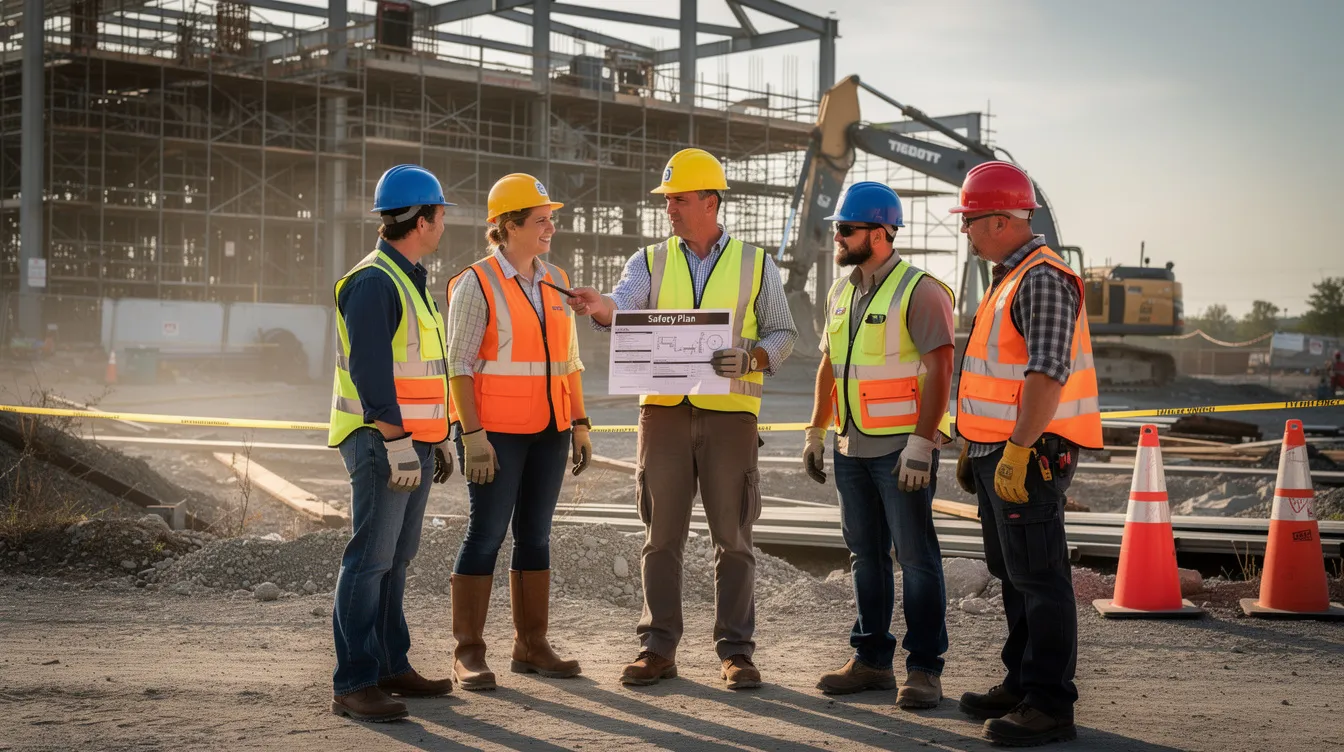
The national data points to an uneven picture. In the CPWR analysis, building construction appears to be the most concerning subsector trendline because its fatality rate increased and its recent nonfatal injury trend worsened. Specialty trades still carry high nonfatal rates and substantial fatality counts, especially where fall exposure remains routine. Heavy and civil engineering shows greater long-term improvement overall, but transportation incidents continue to stand out as the dominant fatal-risk category.
That does not mean every part of your business is moving in the same direction, and it does not mean national subsector results automatically describe any one Eastern Pennsylvania market. It does mean construction leaders should stop assuming that broad industry improvement applies evenly across all project types.
For Eastern Pennsylvania construction safety, the most useful next step is a documented prioritization review. Compare your current project mix, incident history, and near-miss patterns against the national subsector findings. Then adjust training priorities, planning routines, and field supervision where the exposure is highest.
The contractors that turn sector-level data into targeted action will be better positioned to protect workers, support prequalification conversations, and strengthen safety performance across Philadelphia, the Lehigh Valley, and Northeast Pennsylvania.


