


ABC National reported that its Construction Backlog Indicator reached 8.7 months in September 2026, based on a member survey conducted September 21 through October 5. That reading was up 0.2 months from both August 2026 and September 2025. For contractors in Eastern Pennsylvania, that is a useful national signal heading into 2027, but it is not a local forecast. The practical question is how much of your own signed work, staffing plan, and bid strategy can support growth without eroding margin or stretching field leadership too thin.
The current backdrop matters. ABC has tied recent backlog strength to data center activity, and related power-intensive work continues to influence contractor demand nationally. In Eastern Pennsylvania, those pressures are likely to land unevenly across Philadelphia and the collar counties, the Lehigh Valley, and Northeast Pennsylvania. That makes the latest backlog reading most useful as a planning tool, not a reason to assume every local segment is rising at the same pace.
The central question for merit shop leaders is not simply whether backlog is up, but how to respond with disciplined pursuit, realistic staffing, and stronger internal forecasting. That is why this review looks at backlog trends, labor constraints, regional market differences, pricing and project-timing risk, workforce development, and where ABC Eastern Pennsylvania can support contractors with practical resources.
Key takeaways:
Construction backlog reflects the value of work under contract that has not yet been completed. Under ABC’s methodology, backlog is converted into months of forward work by dividing current backlog dollars by the prior fiscal year’s revenue and multiplying by 12. The result gives contractors a simple way to compare their committed workload against the pace at which they performed work last year.
That makes the indicator useful, but it also has limits. It is a national ABC member measure, not an Eastern Pennsylvania-specific reading. It also measures contract volume, not whether that work will deliver the margin, schedule reliability, or labor efficiency your company expects.
A simple example makes this concrete. If your company reported $12 million in revenue last fiscal year and currently holds $9 million in signed, unfinished work, your backlog equals 9 months ($9M ÷ $12M × 12). Against the September national reading of 8.7 months, that would put you modestly above the reported average.
The September CBI reading of 8.7 months marked the second consecutive monthly gain after ABC reported 8.5 months in August 2026. Because September was also 0.2 months above the September 2025 level, the national signal suggests contractors are carrying slightly more committed work than they were a year ago.
ABC National has linked that recent strength to data center activity rather than to a broad-based surge across every type of commercial construction. That distinction matters for Eastern Pennsylvania readers. A national gain driven in part by one project type can still translate into a mixed local environment, especially when permitting, utility coordination, financing, labor constraints, and owner timing differ from one submarket to another.
Headline versus reality:
ABC’s August release reported that about one in six ABC members performs data center work nationally. That same release also found that contractors with data center work reported an average backlog of 9.9 months, compared with 8.3 months for contractors without that work. Those are national figures, not Pennsylvania-specific measurements, but they help explain why data-center-related demand has had an outsized effect on recent backlog readings.
For Eastern Pennsylvania contractors, the lesson is broader than whether your firm pursues a data center directly. Projects tied to large power loads and mission-critical performance can influence other markets by competing for the same electrical, mechanical, civil, utility, and supervisory talent. They can also affect procurement timing for specialized equipment and raise owner expectations around safety, coordination, and prequalification.
That influence does not land evenly. Some firms may feel it through direct pursuit opportunities. Others may feel it through tighter specialty-trade availability, longer lead times on critical equipment, or more aggressive competition for experienced field leadership.
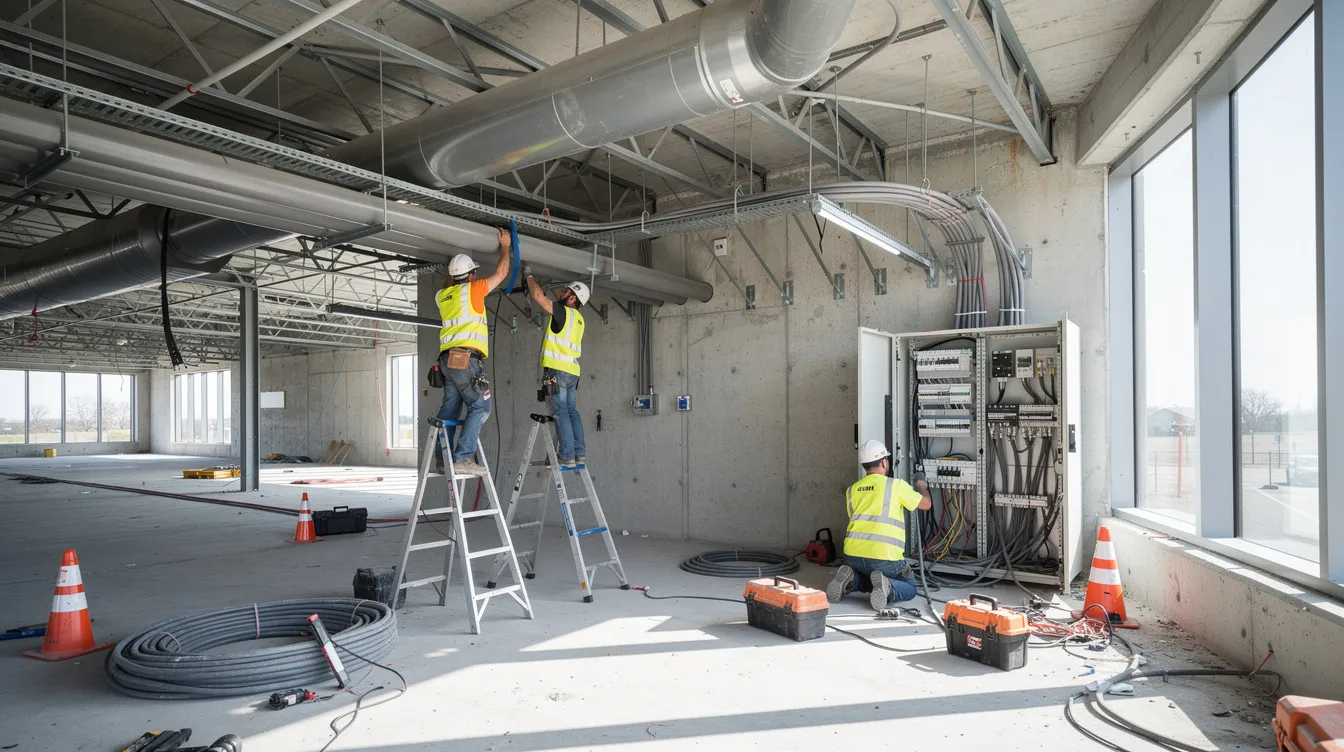
The same national backlog number can lead to different operating decisions across Eastern Pennsylvania’s three primary submarkets. That is why the Eastern Pennsylvania construction outlook should be treated as a practical interpretation, not a measured regional forecast. Philadelphia and the collar counties, the Lehigh Valley, and Northeast Pennsylvania each bring different mixes of project density, labor depth, travel demands, and competition for specialty scopes.
Philadelphia, Montgomery, Bucks, Chester, and Delaware counties remain a dense construction market with ongoing institutional, healthcare, education, infrastructure, and renovation activity. In a market like this, even a modest increase in power-intensive or technically demanding work can create ripple effects across overlapping labor pools.
For contractors in this submarket, the most important move is to watch start-date realism. A project may look attractive on paper but still create operational strain if procurement, approvals, owner decisions, or utility coordination drag into later quarters. Firms should pressure-test their staffing plan before assuming projected starts will line up exactly as expected.
The Lehigh Valley has long been shaped by industrial and logistics construction, and that still matters when national backlog trends point to technically dense, infrastructure-heavy work. Contractors here may not need many power-intensive projects to feel added competition. Even a small overlap in electrical, HVAC, civil, or site-supervision demand can quickly shift bid posture.
That makes workforce planning especially important. Contractors serving Allentown, Bethlehem, Easton, and the broader I-78 corridor should review how much new work they can absorb before field supervision, trade availability, or long-lead procurement creates execution risk. ABC Eastern Pennsylvania’s apprenticeship and craft training programs can support longer-term capacity planning for companies that need to strengthen their pipeline rather than rely only on the open market.
Northeast Pennsylvania, including the Scranton and Wilkes-Barre area, can experience sharper swings because labor pools are smaller and travel demands are often greater. In this submarket, one or two large projects can put visible pressure on workforce capacity, subcontractor coverage, and supervision depth.
Contractors here should think carefully about how regional commitments interact. A company attempting to cover Northeast Pennsylvania work while also supporting projects farther south may need to account for travel time, per diem policies, and leadership bandwidth before it decides to chase additional backlog. Early relationship-building can help, and ABC Eastern Pennsylvania’s regional offices, events, and member network can support that preparation.
Pennsylvania’s unemployment rate fell to 3.7% in August 2026, below the national 4.1% rate. That doesn’t measure construction labor directly, but it reinforces the broader operating reality: many contractors are making staffing decisions in a tight labor market.
That is why a higher backlog number should not automatically be treated as a green light to bid more work aggressively. Backlog only helps if your company has the people, field leadership, and systems to deliver that work safely and profitably. For many firms, the real constraint is not total demand. It is whether they can add another project without overloading foremen, superintendents, project managers, or key specialty-trade crews.
Eastern Pennsylvania contractors should review workforce capacity by role, not just by total headcount. Electrical, mechanical, civil, and supervision-heavy scopes often show strain first when multiple projects ramp up at the same time. ABC Eastern Pennsylvania’s training, apprenticeship, and workforce development resources can help member firms build a stronger long-term pipeline instead of relying only on last-minute hiring.
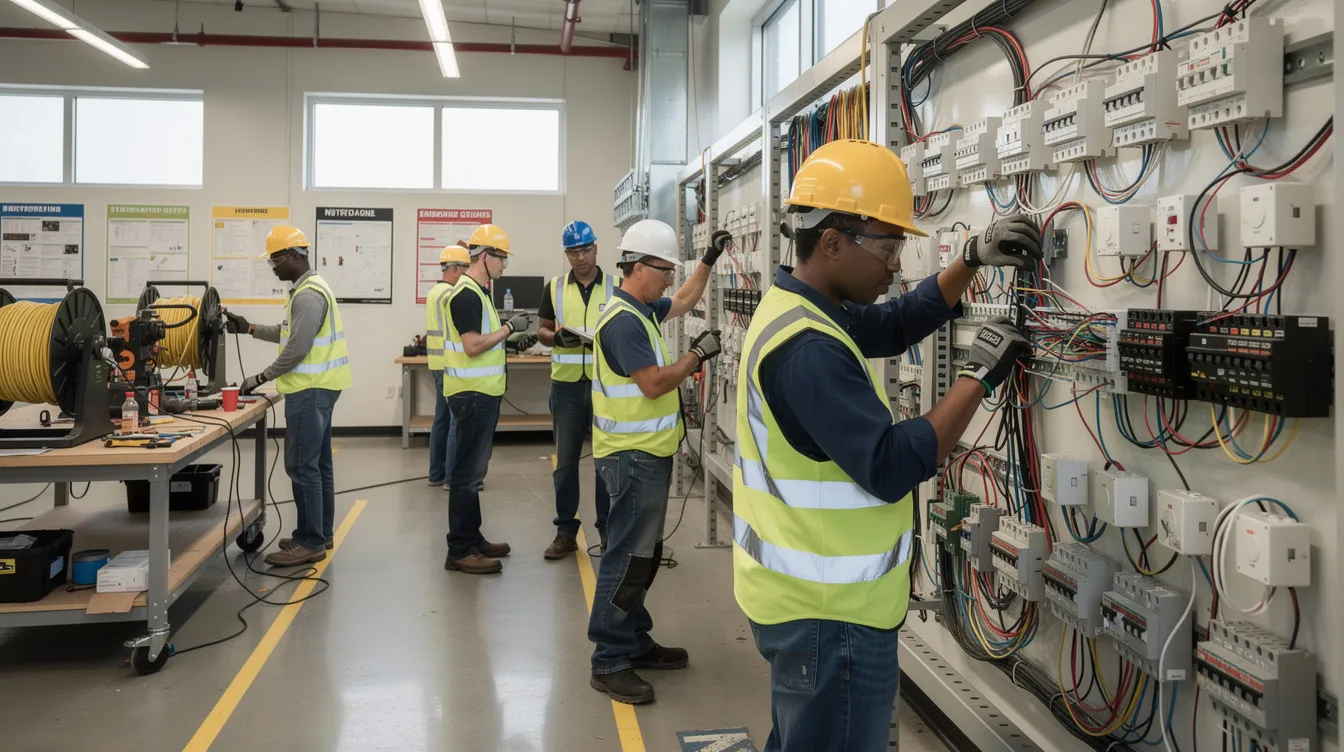
Backlog is only one planning signal. Contractors should read it alongside cost conditions, procurement exposure, and timing risk. The U.S. Producer Price Index for final demand rose 5.4% year over year through August 2026, a reminder that pricing discipline still matters even when work volume appears healthy.
In practice, that means contractors should test backlog against the assumptions inside it. Are your largest signed jobs vulnerable to delayed starts? Are long-lead items likely to create sequencing pressure? Are margins exposed if supplier pricing shifts before procurement? A strong backlog number can mask meaningful delivery risk if teams treat all awarded work as equally ready to execute.
Scenario planning helps here. Contractors should model two or three possible start-date outcomes for their largest projects and review how each version affects crew loading, procurement timing, cash flow, and supervisory capacity. That is a better use of the CBI than simply treating it as a confidence headline.
The latest ABC reading does not suggest that firms should chase every available opportunity. It suggests that selective, capacity-aware bidding matters even more as national backlog rises.
Use backlog data as a filter, not a green light. Focus first on sectors, owners, and delivery conditions where your company has repeat relationships, technical credibility, and realistic visibility into project timing. Then measure each pursuit against internal capacity.
That discipline matters most when a national market signal is being influenced by one high-demand project type. Your company does not need to be absent from that opportunity, but it does need to be honest about technical fit, staffing depth, and margin protection.
Use this checklist with your leadership team over the next two to three quarters:
A one-page monthly backlog review can keep these decisions grounded in current conditions, not momentum or rumor.
ABC Eastern Pennsylvania helps member firms translate national economic releases into regional business decisions. That includes practical support through workforce development, registered apprenticeship and craft training, safety resources, events, and business relationships across Philadelphia, the Lehigh Valley, and Northeast Pennsylvania.
For firms reading a stronger national backlog number and asking what to do next, the most valuable response is usually not more theory. Better internal planning, backed by better talent development and stronger field systems, is better. ABC Eastern Pennsylvania’s news and market updates, training programs, and member resources can support that work.
ABC National’s September 2026 Construction Backlog Indicator shows a modestly stronger national work picture, with data-center-related demand still supporting contractor backlogs. That matters for Eastern Pennsylvania companies. But it matters most as a decision tool, not as proof that every part of the regional market will expand evenly in 2027.
The smarter response is selective growth. Compare your own backlog to the 8.7-month national reading. Review where labor constraints, pricing pressure, procurement risk, and schedule uncertainty could weaken that backlog on the ground. Then decide where your firm can grow without sacrificing safety, margin, or delivery quality.
Priority actions:
The Eastern Pennsylvania construction outlook for 2027 should be read as a forward-looking interpretation of current conditions, not a guaranteed forecast. Contractors that pair the latest backlog reading with an honest internal capacity review will be better positioned to grow with discipline.


