


Data center construction in the Lehigh Valley is no longer a speculative topic. It is a fast-growing market, supported by industrial land access, major fiber routes, and robust power infrastructure, and it is already reshaping where demand concentrates, which trades get stretched first, and how contractors across Eastern Pennsylvania should allocate their estimating, staffing, and pursuit resources.
For owners, executives, and managers at construction companies, specialty contractors, and subcontractors in Eastern Pennsylvania, the shift matters because data center work is capturing a larger share of nonresidential spending and changing how firms need to compete for labor, plan crews, price risk, and pursue backlog. This article breaks down current spending trends, how the Lehigh Valley differs from Philadelphia-area and Northeast Pennsylvania submarkets, what workforce, safety, permitting, and trade-specific pressures contractors should expect, and the practical steps to take now to be ready for data center projects in this market.
As of mid-2026, data center spending accounts for roughly $85 billion of the approximately $773 billion in annualized U.S. private nonresidential construction spending. That represents a year-over-year increase of more than 73%. Remove data centers from the equation, and private nonresidential spending actually declined nearly 6% compared to the prior year.
This is not a broad construction expansion. It is a concentrated surge within one building type in the data center industry, pulling labor, materials, and contractor attention into power-dense, technically complex facilities. About one in six contractors nationally now report active data center contracts, the highest proportion on record, and more companies are shifting labor and attention toward this work. Contracted backlog for firms involved in this work has climbed to roughly 8.5 months.
For Eastern Pennsylvania contractors, the implication is direct: the rest of the nonresidential market is softer than headline numbers suggest. Data center construction must adapt to rising digital infrastructure demand driven by advances in technology, and firms that can credibly compete for this work are positioned in a fundamentally different market than firms that cannot. That gap will widen as spending accelerates.
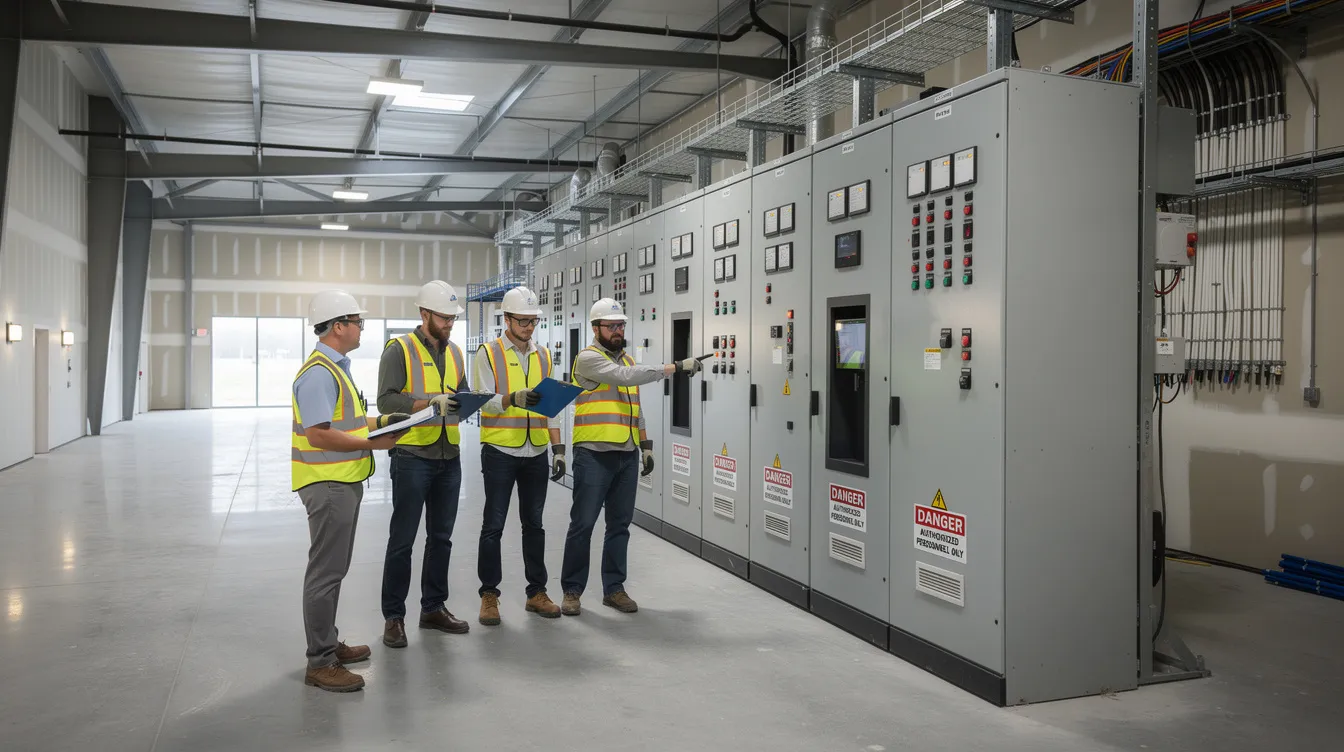
National momentum does not distribute evenly. Eastern Pennsylvania’s three distinct submarkets each face different conditions, and contractors need to understand where data center demand is landing, where it is likely to land next, and where the region’s advantages create real opportunity.
The Lehigh Valley is experiencing significant proposals for data center development, and the region has structural advantages that explain why. Industrial land access along the I-78 corridor, proximity to major fiber routes, and power infrastructure created decades ago for manufacturing and logistics operations all make the area attractive for power-intensive new construction.
Growing interest in data center proposals is driven by regional zoning updates and power access. Power capacity and availability are major considerations for data center developments, and the Lehigh Valley’s grid connections make it a viable landing zone for mission-critical construction that must operate reliably under heavy power loads. A proposed data center in South Allentown, for example, has a peak demand of 75 megawatts, and large facilities often include server rooms supported by UPS and emergency generator systems. If current proposals advance, the total daily demand for proposed data centers across the region could exceed one gigawatt.
However, data center construction faces challenges from local zoning dynamics and state oversight. Communities in the Lehigh Valley are revising data center ordinances to address local concerns around noise, traffic, water usage, and visual impact. Zoning laws for data centers vary by municipality in the Lehigh Valley, and many municipalities lack specific definitions for data centers in their zoning codes. That regulatory patchwork creates both delay risk and opportunity for developers and contractors who understand each township’s approval process.
Philadelphia and its suburban counties bring a different profile. The Philadelphia market’s strength in institutional, healthcare, and commercial construction means contractor capacity is already committed across competing project types. Data center work here competes for the same electrical, mechanical, and controls talent that hospitals, life sciences facilities, and office renovation demand.
Northeast Pennsylvania, including Scranton and Wilkes-Barre, has distinct industrial and infrastructure conditions. The region’s logistics growth along I-81 and available industrial space create potential for data center development, though proposals there are less concentrated than in the Lehigh Valley. Contractors should not treat all Eastern Pennsylvania markets as interchangeable; each submarket has its own approval dynamics, utility capacity, and competitive landscape.
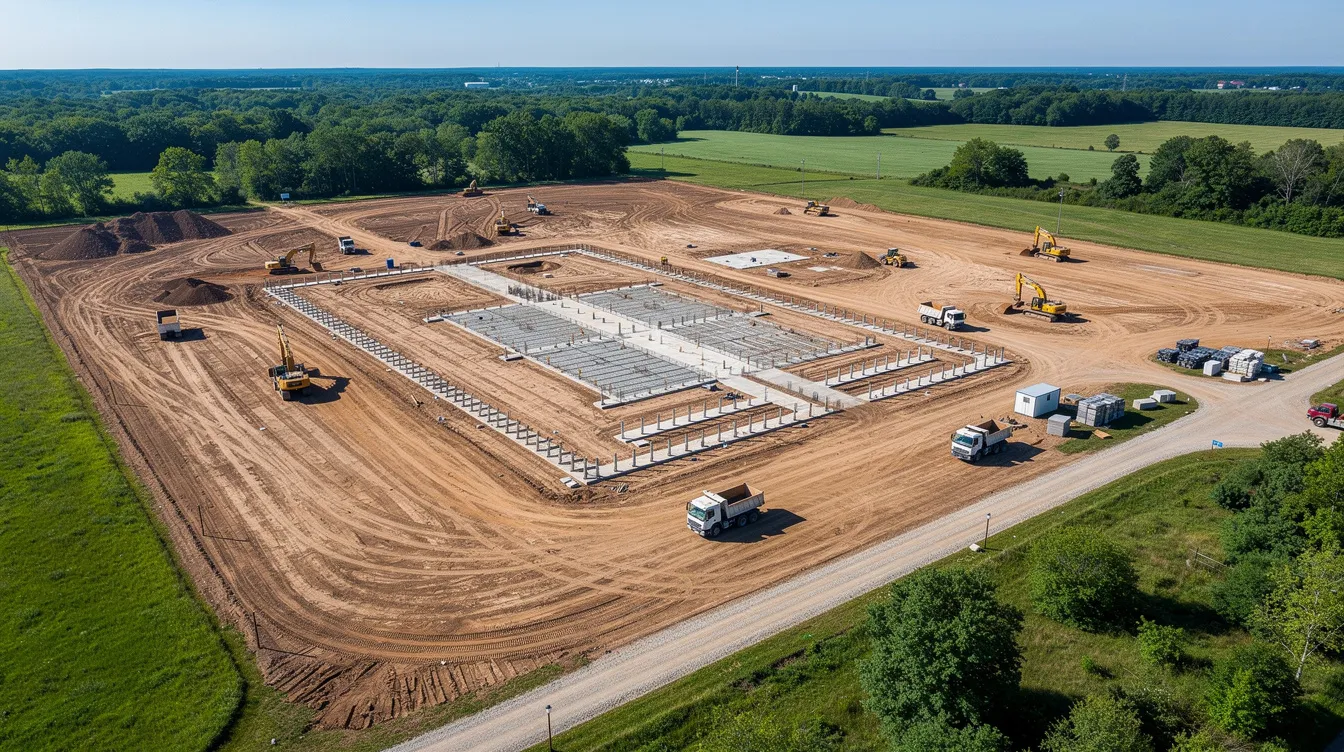
Not every scope on a data center project carries the same demand pressure. Understanding which trades get stretched first helps contractors decide where to focus first for the strongest job opportunities.
Electrical systems are the earliest and most intense pressure point. Data centers require peak electricity demands over 25 megawatts, and many proposed facilities far exceed that threshold. High-capacity main feeds, redundant power distribution, backup generation, transformers, and uninterruptible power supply installation all require electricians with experience in power-dense environments, and firms with hands-on experience there have an advantage. Electricians and HVAC professionals are in high demand for data centers, and that demand is competing directly with other mission-critical building types.
Mechanical coordination follows closely. Data center cooling systems often specify closed-loop or advanced liquid cooling, redundant HVAC systems, and strict temperature and humidity control. Mission-critical facilities require comprehensive fail-safe solutions, meaning mechanical contractors must demonstrate experience with redundancy, variable load management, and continuity under failure conditions.
Controls and low-voltage work represent specialized opportunities. Building automation, monitoring, networking equipment, fire detection, and physical security systems all require trades that can integrate with both electrical and mechanical scopes from preconstruction through commissioning, with the documentation needed to support that process.
Commissioning is a downstream role that touches every other scope. Data centers demand full systems testing, redundant failure mode verification, and coordinated handoff between trades. Fire protection, including clean agent systems, smoke detection, and emergency response coordination, must be integrated from the earliest project phases.
Data centers require skilled workers across multiple disciplines, and concentrating technically dense work on a single site means even moderately sized projects can absorb significant labor for the world these facilities support. Prefabrication accelerates data center construction and reduces site congestion, and concurrent design and construction improve project delivery and cost certainty, but both strategies require early planning and trade coordination that many firms are not yet set up to deliver.
The spending trend creates a clear decision framework for Eastern Pennsylvania contractors: pursue, partner, or prepare.
Pursue if your firm has documented experience on comparable projects, especially if you are specializing in mission-critical or power-dense work. Power-dense industrial, mission-critical healthcare, or large-scale electrical and mechanical installations all translate. If you can demonstrate quality, performance, and schedule reliability on technically complex work, data center developers and general contractors are actively looking for firms with that record. Merit shop construction emphasizes qualifications-based competition, and contracts should be awarded based on performance and value. Merit shop contractors who focus on efficiency and cost-effectiveness are well positioned to compete for this work on merit.
Partner if your firm has strong capabilities in one or two relevant scopes but lacks the full mission-critical record. Subcontractor and specialty trade roles on data center projects are opening faster than full general contractor roles. Data center construction recruitment is extremely competitive, and firms with a reliable partner relationship with a proven GC or developer, plus strong in-house estimating or coordination capacity, gain access to work they could not win independently. The merit shop model can enhance contractor performance when firms align with partners whose strengths complement their own. Merit shop philosophy supports non-union labor participation, meaning firms qualify on capability rather than affiliation.
Prepare if neither capacity nor experience matches current requirements. That is not a reason to ignore the market; it is a reason to close the gaps now.
Labor constraints are a supporting consequence of the spending trend, not a separate issue. Data center projects are expected to double or triple workforce needs compared to standard commercial construction per square foot. That pressure hits electrical, mechanical, controls, and fire protection trades hardest.
Contractors should evaluate their supervision depth before pursuing data center work. These projects run faster, with tighter milestones and less tolerance for coordination failures. If your firm’s field leadership bench is thin, adding a data center pursuit without adding supervision capacity creates schedule and safety risk.
Prefabrication strategies improve workforce efficiency in data center construction, but prefab requires planning, shop space, and trained assemblers. Firms that invest in prefab capability now create a competitive advantage on future bids.
Registered apprenticeship programs, including those available through regional craft training centers in Allentown and other Eastern PA locations, offer a practical path to building the journeyperson pipeline that data center work demands. Planning your workforce two to three years ahead is not optional for this building type.
Safety performance is not just a compliance requirement on data center projects. It is a selection criterion. Developers and general contractors screen subcontractors on total recordable incident rates, OSHA compliance history, and documented safety programs before issuing invitations to bid.
Construction safety includes preventing common jobsite hazards, but mission-critical work adds layers: confined space entry, arc flash exposure, energized electrical work, and coordinated commissioning sequences all demand safety planning that goes beyond standard commercial practice. Safety leadership is essential for evaluating construction performance on these projects, and firms without a documented safety culture will find themselves excluded from the bidding process entirely.
Investing in safety training, incident-investigation capability, and site-specific safety planning is a preparation step that pays off whether your next project is a data center or another complex building type.
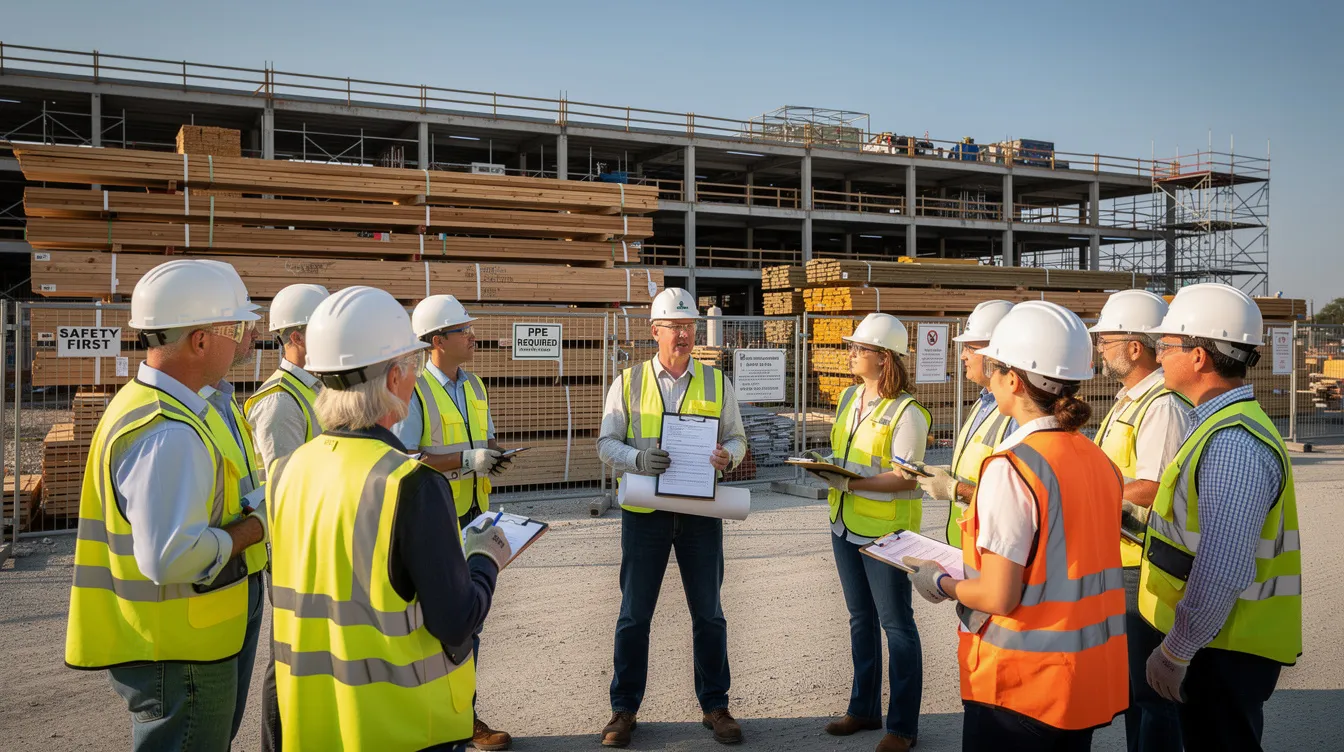
Before assigning estimating staff or making hiring commitments, contractors should monitor four signals that determine whether a data center project is real, permitted, and buildable.
Power availability. Developers must coordinate high-capacity electric service with regional grid operators. If utility interconnection is uncertain or generation permits are pending, the project timeline is speculative. Power capacity and availability are significant considerations for data center developments, and projects without confirmed grid access are not ready for contractor pursuit.
Local approvals. The Pennsylvania DEP won’t issue permits without local approvals first. Developers must address site selection criteria related to zoning and land use, and township planning commissions are the critical early gating item. Watch for conditional use hearings, special exceptions, and zoning text amendments in municipalities where proposals are active. New Pennsylvania regulations require community engagement and transparency in data center projects, and developers must comply with strict noise limits and environmental controls.
Regulatory compliance. Governor Shapiro signed an executive order for tougher data center requirements. Data centers must comply with the Governor’s GRID guidelines, and GRID standards apply to data centers with peak demands over 25 megawatts. Pennsylvania’s GRID standards block irresponsible data center projects by requiring developers to pay full energy costs, meet environmental protections including scrutiny over water availability and management, and commit to hiring and training local workers. Data centers with peak demands over 25 megawatts must meet strict standards and follow specific reporting requirements for energy and water consumption. Developing data centers involves extensive environmental review, and the Pennsylvania DEP won’t issue permits to non-compliant data centers.
Backlog and capacity. Data centers generate substantial tax revenue but create limited permanent jobs, so the construction phase is where the economic impact concentrates and where local companies can see added work. Local economic impacts of data centers include construction investment and property tax revenue. Contractors should review their current backlog before committing to aggressive pursuit schedules. If your firm is already running at 8+ months of contracted work, adding a data center pursuit without a staffing plan creates risk across your entire portfolio. Contractors and workers should avoid sharing project-specific details that may be restricted by customer agreements.
Use this checklist before your next bid meeting or pursuit decision:
Data centers remain the dominant force driving nonresidential construction spending in 2026, and that demand is reshaping the competitive landscape for contractors across Eastern Pennsylvania. The Lehigh Valley sits at the center of this shift, with its combination of industrial land, power infrastructure, and logistics access making it a natural focus for mission-critical development.
The right response is not to chase every proposal. Make a disciplined decision: pursue if you have the experience and capacity, partner if you bring complementary strengths, or prepare if gaps remain. Start this week by auditing your comparable project experience and reviewing your supervision bench. The firms that position now will be the ones selected when these projects move from proposal to construction.


