


The construction workforce gap in Pennsylvania is an immediate business problem, not a future concern. With statewide unemployment at 3.6% in September 2026 and construction employment edging down, fewer available workers are showing up in crew rosters, bid assumptions, and project timelines right now.
For owners, executives, and managers at construction companies, specialty contractors, and subcontractors across Eastern Pennsylvania—as well as safety directors, HR and workforce development leaders, project managers, craft professionals, and industry partners—this affects crew availability, bidding accuracy, scheduling, and the ability to stay competitive in distinct markets such as Philadelphia and its suburban counties, the Lehigh Valley, and Northeast Pennsylvania.
Here is what the latest labor data means for those regional markets, where trade and supervisory pressure is building, and what practical steps contractors can take on hiring, retention, apprenticeship and training pathways, workforce partnerships, and safety- and merit shop-focused strategies to strengthen their teams.
According to U.S. Bureau of Labor Statistics data, Pennsylvania’s overall unemployment rate was 3.6% in September 2026, down from 4.4% a year earlier. Meanwhile, construction employment across the state held at roughly 262,900 jobs, reflecting a slight 0.5% decline over 12 months. That combination tells a clear story: fewer people are available to hire, and the construction industry is not adding headcount even as project demand continues.
Nationally, the picture is equally tight. An ABC National analysis highlighted by Construction Executive found that every state had a construction unemployment rate below 10% in September 2026, with most states coming in below 6%. National construction payroll employment was up 103,000 jobs from September 2025, meaning contractors nationwide are already hiring aggressively. Yet approximately 83% of construction companies struggle to find qualified workers, and around 88% of construction firms struggle to fill hourly craft positions. Pennsylvania construction faces a pronounced skilled workforce gap, and the construction workforce gap could exceed 300,000 skilled workers nationally by 2030. As of July 2026, 326,000 construction job openings existed across the country, underscoring the depth of unfilled demand. Project delays are primarily driven by workforce needs in Pennsylvania, and they are getting harder to plan around.
Low construction unemployment plus steady or slightly declining headcount means the labor market is tightening, not loosening. For Eastern PA contractors, three decisions need attention now:
The national construction unemployment rate in September 2026 was about 3.5% on a non-seasonally adjusted basis, down about 0.3 percentage points from September 2025. All 50 states came in below 10%, and all but three states (Alaska, Minnesota, and North Dakota) were below 6%. That represents a historically tight labor market for the construction industry.
When construction unemployment is this low everywhere, contractors cannot rely on surplus labor from other regions to fill gaps. Demand for skilled construction workers has increased as growth expands across sectors, from data centers to logistics facilities to infrastructure. Competition for skilled labor is increasing between construction and other sectors, including manufacturing, energy, and transportation, which draw from similar talent pools. Infrastructure initiatives at the federal and state level require a skilled workforce to meet economic demands, but the pipeline of qualified construction workers is not keeping pace.
A generational transition compounds the problem. Many workers over age 55 are nearing retirement in the construction industry, and approximately 41% of the construction workforce is projected to retire by 2031. An estimated 20% of construction workers will retire within the next decade, further widening the demand-supply gap.
By comparison, the broader U.S. unemployment rate in September 2026 was approximately 4.2%, meaning the construction labor market is tighter than the economy as a whole. For Eastern Pennsylvania contractors, the takeaway is straightforward: labor constraints are not a passing problem. They are now a baseline operating condition that every hiring, bidding, and scheduling decision must account for.
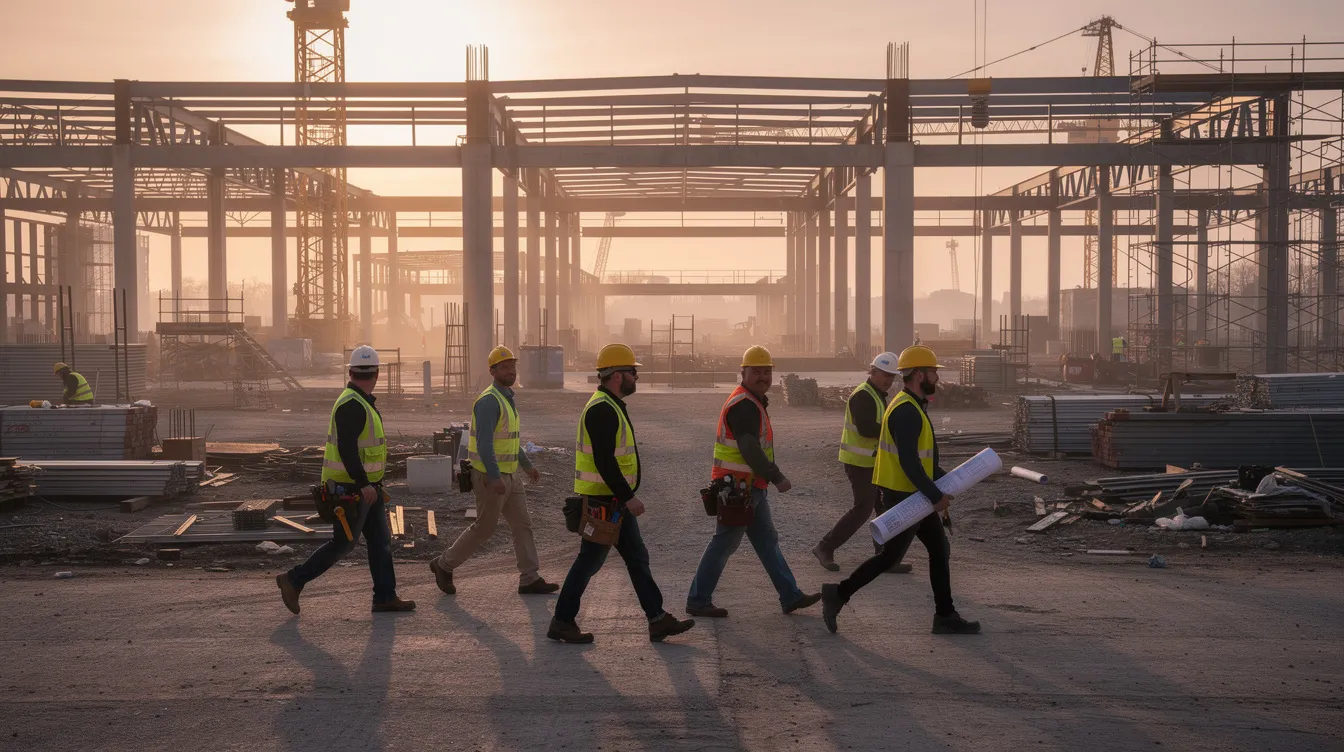
BLS data for September 2026 confirms that Pennsylvania’s labor market is unusually tight. The state’s seasonally adjusted unemployment rate dropped to 3.6%, down from 4.4% in September 2025. Construction employment was about 262,900 jobs, down about 0.5% year over year.
The overall unemployment decline means fewer people on the sidelines are seeking work, including potential construction workers. Even a small dip in construction employment, when project backlogs remain stable, can mask real labor constraints. Construction companies may be holding projects, stretching crews across multiple job sites, or deferring starts rather than adding staff they cannot find.
It is important to distinguish between statewide unemployment and construction-specific labor availability. A 3.6% overall unemployment rate includes all industries and does not reveal trade-by-trade pressures. A restaurant worker entering the job market does not solve the need for an experienced construction superintendent or a licensed electrician. Housing supply cannot meet demand due to labor constraints, and regulatory pressures complicate compliance for contractors in Pennsylvania, adding layers of difficulty beyond simple headcount. Statewide initiatives are being developed to strengthen the construction workforce pipeline, but their effects will take time to materialize.
For contractors reading these numbers alongside broader market forecasts (such as the Eastern Pennsylvania construction outlook), the conclusion is consistent: low unemployment plus flat or declining construction employment signals a workforce gap, not a slack labor market.
ABC Eastern Pennsylvania serves three distinct submarkets, and the construction workforce gap looks different in each. Philadelphia and its collar counties, the Lehigh Valley, and Northeast Pennsylvania (Scranton/Wilkes-Barre) each face unique demand profiles and talent pool constraints.
In Philadelphia and the suburban collar counties (Montgomery, Bucks, Chester, Delaware), merit shop contractors compete with unionized labor markets in one of the country’s most union-dense construction environments. Philadelphia requires 70% of on-site workers to be apprentices for contracts over $300,000, adding another layer of complexity. Construction employment in Montgomery, Bucks, and Chester counties has been running about 0.3% below September 2025 levels for ten consecutive months, suggesting labor constraints are already limiting growth even in areas with strong demand.
In the Lehigh Valley along the I-78 corridor, industrial, warehouse, and logistics construction competes heavily for the same electricians, HVAC technicians, and pipefitters needed for commercial building. The region’s training pipelines have not expanded fast enough to meet this demand. Young adults in Pennsylvania lack awareness of construction careers, especially in markets where industrial growth is outpacing local workforce development.
In Northeast Pennsylvania along the I-81 corridor, the mix of logistics, institutional projects, and infrastructure work faces additional headwinds. Logistical barriers such as transportation and childcare affect training participation and daily commutes. Fewer large employers and more dispersed populations make it harder to attract and retain qualified workers.
Across all three submarkets, the most acute pressure falls on highly skilled workers: supervisors, electricians, HVAC technicians, pipefitters, and experienced construction workers who can run complex commercial and industrial jobs. Large data center and power projects intensify regional competition for these same workers.
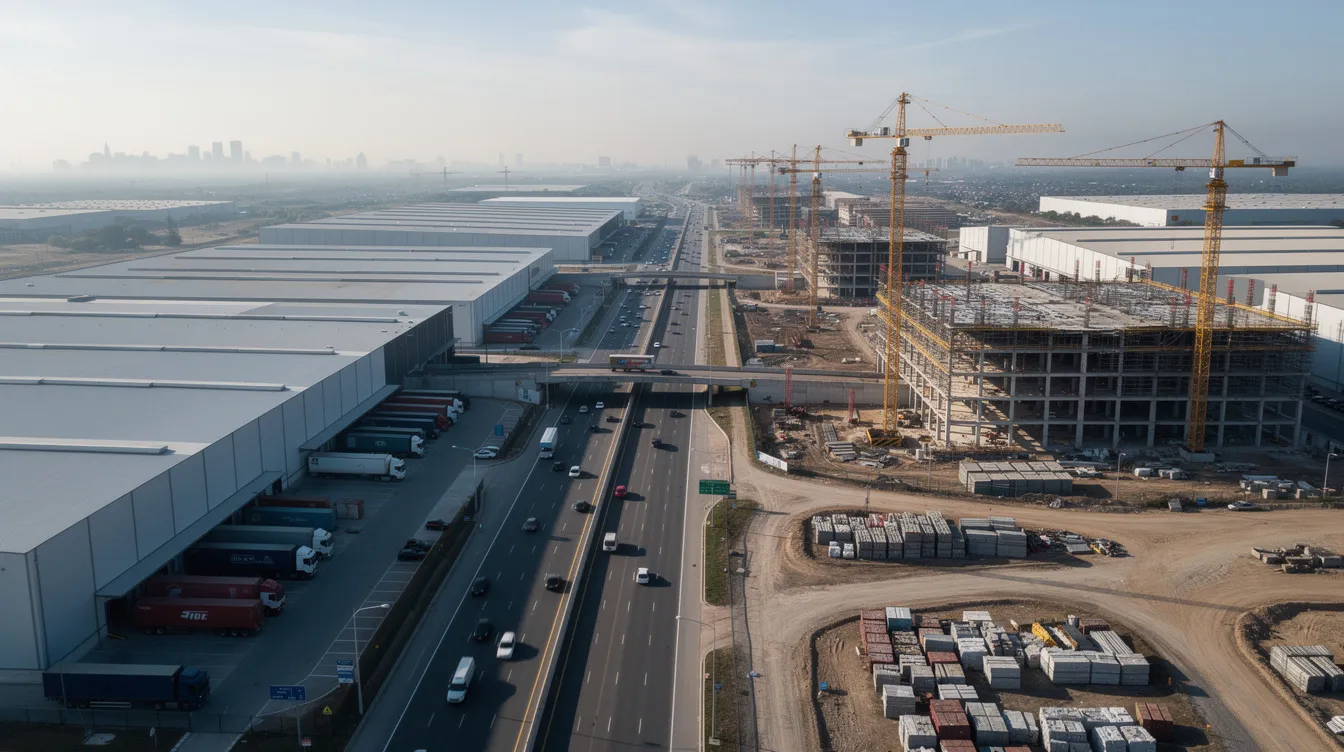
Low construction unemployment does not hit every role equally. It creates pinch points in specific positions that cascade through entire project schedules.
Field supervision is typically the first constraint. Foremen, general foremen, and superintendents who can coordinate multiple crews, maintain safety, and oversee quality are irreplaceable on complex projects. Older generations have significantly more experience than younger entrants in construction, and that experience gap is most visible in supervision. Behind supervision, the trades under greatest pressure include:
Training gaps exist between employer expectations and applicant skill levels, meaning that even when candidates apply for open positions, they may lack the necessary skills, certifications, or licenses to fill the role. The ideal candidate with five years of commercial experience and current credentials is in high demand everywhere.
The consequences are direct. A construction labor gap increases the risk of site accidents, and OSHA ranks construction among the most dangerous jobs. When crews are stretched thin, the reliance on overtime rises, safety performance can suffer, and experienced workers face burnout. Keeping projects on schedule depends on having the right people in the right roles. Protecting supervision capacity and retaining key skilled workers is as important as filling entry-level construction jobs.
Low construction unemployment changes how Eastern Pennsylvania contractors should approach bids, schedules, and risk. Construction delays significantly increase project costs and timelines, and workforce recruitment should align with anticipated construction demand rather than lagging behind it.
Bidding: Estimators and executives should factor realistic crew sizes and start dates into every bid. Assuming that new crews will be easy to hire later is a formula for cost overruns and missed milestones. The labor budget for projects starting in 2027 should reflect current market wages and staffing realities, not conditions from two years ago.
Scheduling: Project managers should build modest float into critical-path activities that rely on the tightest trades. Confirm subcontractor staffing plans in detail before committing to aggressive milestones. A subcontractor’s promise to deliver skilled workers means less if those workers are also committed to a data center project 40 miles away.
Risk: Owners and GCs should recognize that labor constraints can be as material to project risk as materials pricing. These constraints deserve discussion in preconstruction meetings and contract negotiations. Reading them alongside a construction backlog analysis and construction procurement strategy provides a clearer picture of where schedule and cost exposure actually sits.
Consider a practical example: a midsize merit shop GC in the Lehigh Valley planning a 2027 industrial project can use September’s data to adjust its assumed crew curve, tighten subcontractor prequalification criteria around committed staffing, and build two weeks of additional float into mechanical and electrical scopes, reducing the chance that labor constraints derail project delivery and completion.
This is a near-term checklist for owners, HR leaders, and project executives responding to the current construction workforce gap.
Conduct a 90-day workforce audit. Map every active and upcoming project against current crews and supervision depth. Identify where staffing assumptions are optimistic. If you find that three projects are counting on the same superintendent or the same team of pipefitters, you have a scheduling conflict that the market will not solve for you.
Refresh recruiting channels. Strengthen outreach through technical schools, veterans’ programs, and career-changer pipelines in Philadelphia, the suburbs, the Lehigh Valley, and NEPA. Target underrepresented groups in construction initiatives, and expand the candidate pool beyond traditional sources when demand exceeds supply. The industry historically favors four-year college degrees over vocational training, but construction firms that actively recruit from vocational and technical education programs will find more candidates seeking a related field with strong earning potential.
Tighten offer timelines. Reduce the lag from interview to offer. In a market where construction companies struggle to find qualified workers, losing a candidate because your hiring process took two weeks longer than a competitor’s is avoidable.
Revisit compensation and benefits positioning. Emphasize career stability, safety culture, and advancement pathways, not only hourly pay. Employer retention strategies focus on improving compensation and career advancement together. Thirty percent of construction employees report feeling burned out, and workforce development strategies have multiplied to address skilled labor needs in construction. Structured feedback, recognition programs tied to safety and quality performance, and realistic workload planning to minimize burnout in supervisory roles all contribute to retention.
In a low-unemployment environment, retaining experienced construction workers is almost always more cost-effective than constantly seeking replacements. Every departure costs your Firm institutional knowledge, project continuity, and recruiting resources that could be spent on growth.
For merit shop contractors facing a persistent construction workforce gap, the most durable response is building your own pipeline. Apprenticeship programs provide critical workforce training in construction, and they are the primary mechanism for developing the next generation of qualified construction workers.
ABC Eastern Pennsylvania operates registered apprenticeship and craft training across ten trades: carpentry, construction craft laborer, electrical, HVAC, masonry, pipefitting, plumbing, roofing, sheet metal, and sprinkler fitting. Training centers in Harleysville (Suburban Philadelphia) and Allentown (Lehigh Valley) serve employers across the chapter’s seventeen-county territory, with support for Northeast Pennsylvania companies.
The distinction between the two pathways matters:
Pennsylvania hosts 1,648 registered apprenticeship programs with 17,007 active apprentices statewide. Accredited training programs ensure workforce quality and consistency. Training should align with local project pipelines and employer needs, and modern construction practices, including technology and education, are crucial for workforce efficiency. Contractors who explore apprenticeship and craft training options now will be better positioned to staff projects confidently in 2027 and beyond.
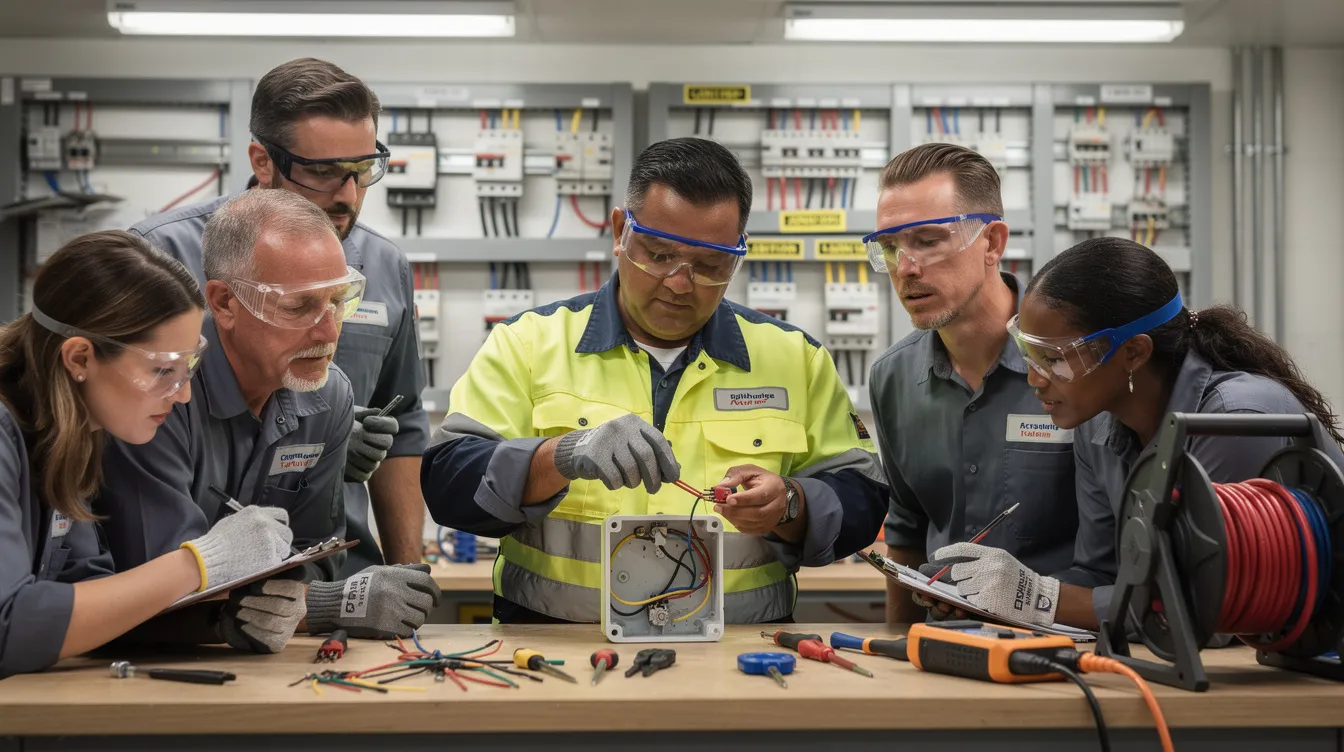
No single contractor or company can solve the construction workforce gap alone. ABC Eastern Pennsylvania coordinates partnerships to expand the skilled-worker pool across all three submarkets.
In Philadelphia and the suburban counties, the focus is on building relationships with urban high schools, community colleges, and community organizations to attract diverse candidates into construction careers and registered apprenticeship pathways. Career and technical education initiatives have expanded to support construction training in the region, and employers should collaborate on curriculum design to meet labor demand in the most needed trades.
In the Lehigh Valley, alignment with technical schools and workforce boards near the Allentown training center supports the I-78 industrial corridor’s demand for electricians, HVAC technicians, and construction craft laborers. Previous workforce development investments are foundational to addressing skills gaps, but the pace of industrial growth requires faster partnership activity.
In Northeast Pennsylvania, the team works with school districts, veteran organizations, and workforce agencies around Scranton and Wilkes-Barre to overcome transportation and childcare barriers and connect residents to construction jobs along the I-81 corridor.
ABC Eastern Pennsylvania’s Alliance Partner Consortium brings educational institutions and member companies together to create direct school-to-career pathways. The Craft Professional Recruitment Committee drives member-led talent pipeline development. Both give member contractors a structured way to participate in recruitment beyond posting open positions on a job board. Practical activities include job site tours, classroom presentations, internship placements, and early apprentice sponsorship. These partnerships convert today’s students and career-changers into tomorrow’s qualified construction workers, reducing long-run labor constraints across the region.
When workers have options, they gravitate toward employers who demonstrate strong safety culture and fair advancement based on performance. Safety training differentiates employers in a competitive hiring environment and improves construction recruitment and retention. This reflects the merit shop philosophy, which awards contracts based on qualifications and performance.
ABC Eastern Pennsylvania’s ABC-OSHA Partnership and STEP program signal to prospective employees that member firms take safety seriously. A strong safety record can differentiate a contractor in recruiting, especially among experienced construction workers who have seen unsafe job sites and chosen to leave. Merit-based advancement, combined with registered apprenticeships’ structured wage progression, supports retention and appeals to younger, career-focused workers who want clarity on where their effort leads.
Concrete recruiting messages matter. Firms that emphasize toolbox talks, formal safety training, clear stop-work authority for all field staff, and roles that offer real career growth will attract stronger candidates than those competing on wages alone. Safety and workforce development investments also strengthen bid competitiveness on public and private projects, especially where owners prequalify on safety performance and training capacity, delivering high-quality results while protecting the team.
In a persistent construction workforce gap, Eastern Pennsylvania contractors who lead on safety and merit-based development are better positioned to attract and keep the skilled workers who determine project success.
September 2026’s low construction unemployment, combined with Pennsylvania’s tight labor market and modest construction employment decline, confirms that the construction workforce gap will continue to shape every major hiring and project decision. This is not a forecast. It is today’s operating reality.
Here is what to act on now:
The contractors who will staff projects confidently in 2028 are the ones investing in their workforce today. ABC Eastern Pennsylvania helps merit shop construction firms turn labor constraints into a strategic advantage through disciplined planning, registered apprenticeship, craft training, and merit-based workforce development. The data is clear. The window to act is now.


