


Eastern Pennsylvania contractors face a collision of labor constraints, compressed schedules, and rising safety expectations on every project type, from Philadelphia institutional work to Lehigh Valley data centers to Northeast Pennsylvania logistics facilities. New national field data from ABC and the Simplar Foundation offers the first rigorous evidence that multiskilling can improve crew productivity and flexibility, and this article breaks down what that research means for construction workforce development across the region’s three distinct submarkets.
The core thesis is direct: multiskilling raises productivity and reduces idle time, but only when it is built on verified training, foreman oversight, and compliance discipline. For Philadelphia contractors navigating a 70% apprenticeship mandate on city public works, for Lehigh Valley firms staffing industrial projects along I-78, and for NEPA contractors managing trade availability on I-81 corridor logistics work, the implications are immediate.
Three concrete next steps for contractors:
ABC Eastern Pennsylvania supports over 500 member companies and more than 14,000 merit construction employees. Construction industry productivity has stagnated since 2011, and multiskilling offers one evidence-based path to reverse that trend at the crew level, a pattern reinforced by more than one industry Report and one that has worsened year over year.
Multiskilling means training a worker in one primary trade while verifying competence in adjacent tasks so that the individual can safely perform some work outside their primary classification when the project demands it. This is not task dumping, which is the informal practice of assigning unrelated or out-of-scope work without verifying capability or providing training. Task dumping sacrifices quality and safety. Multiskilling requires documented credentials, structured cross-scope work, and deliberate oversight.
Two field examples make the distinction concrete:
Skills gaps and training lag hinder worker readiness for modern tasks, but modern training approaches can shorten learning curves and improve safety when they are designed around verified competency rather than informal expectation, and when hands-on validation still matters. Safety training must be integrated at all levels of training for multiskilling to work.
Not every cross-scope assignment is appropriate. Before any task expansion, confirm competency: the worker must hold verified credentials or documented training for the adjacent scope they are being asked to perform. This is the baseline criterion.
Before any scope expansion, the contractor must ensure:
The ABC and Simplar Foundation field study, the first of its kind, observed 644 workers across 60 multiskilled crews on 36 projects in 24 states. Over 11,400 direct work-sampling observations showed that multiskilling increased the share of crew time spent advancing construction work directly by about 39%. Idle and waiting time during active work periods dropped by about 68%. Workers used nearly three distinct skill classifications per day. Across approximately 33.2 million work hours, multiskilled projects averaged a Total Recordable Incident Rate of 0.74, which is 57% below industry benchmarks. No fatalities were reported in the sample.

Translated into Eastern Pennsylvania conditions, these findings matter differently across the region’s three submarkets. The construction industry faces a significant national skills gap, with approximately 326,000 job openings as of July 2026 and 83% of companies reporting difficulty finding qualified workers. Pennsylvania construction employment hovered between 260,000 and 265,000 jobs in mid-2026, with electricians, plumbers, HVAC/R mechanics, pipefitters, masons, and laborers under the heaviest pressure.
In Philadelphia, where union density in construction sits around 22%, and a new city ordinance now requires at least 70% of onsite workers on public contracts over $300,000 to be graduates of or enrolled in a certified apprenticeship program, multiskilling gives merit shop contractors a way to demonstrate both workforce depth and training rigor. In the Lehigh Valley, where industrial and logistics construction along I-78 creates constant trade handoff pressure, multiskilled crews can absorb scope fluctuations and reduce idle time caused by trade lag. In Northeast Pennsylvania, where the I-81 corridor drives distribution and institutional work in areas with fewer available trade workers, multiskilling can reduce the impact of labor constraints and travel-time inefficiencies.
The construction industry faces significant labor constraints and aging demographics that create demand stress. Construction productivity has stagnated due to workforce issues, and these results offer a practical countermeasure.
Multiskilling delivers the biggest gains on projects with frequent handoffs between trades. Based on the national data, here are four practical applications for Eastern Pennsylvania contractors:
Technology can enhance productivity and training in construction, and as the construction industry becomes more digital with tools like BIM and robotics, the pace of scope overlap on job sites will only increase. Data-driven workforce planning tailors recruitment to actual project needs, and leveraging technology boosts learning and productivity in construction when paired with structured multiskilling programs.
Multiskilling is not risk-free. The primary danger is assigning work outside a worker’s proven competency, which can lead to safety incidents, quality failures, or both. Without documented credentialing and oversight, the result is not multiskilling but task dumping with a different name, and even minor undocumented scope creep creates risk.
Key risk zones include:
Construction safety standards reduce workplace injuries by 40% when properly implemented. Over 500 member companies follow safety standards in Eastern Pennsylvania, and more than 14,000 construction employees benefit from safety training through ABC’s programs. The integration of wearable health technology improves job site safety, and implementing mentorship programs improves safety records and job satisfaction, both of which reinforce the supervision layer that multiskilling requires.
Contractors deploying multiskilled crews should reference ABC’s partnership guidance with OSHA area offices in Allentown, Philadelphia, and Wilkes-Barre. The ABC-OSHA Partnership provides a framework for aligning cross-scope assignments with compliance expectations.
Specific controls:
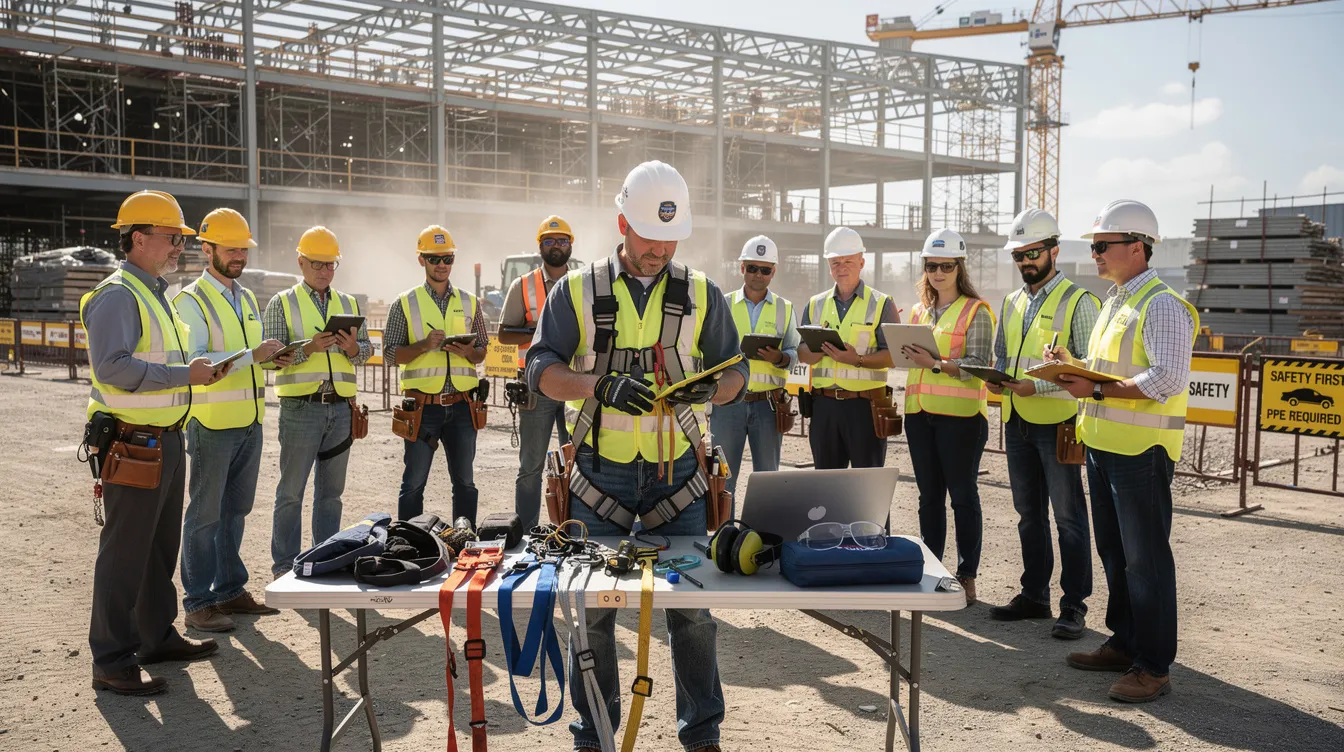
Developing a skilled construction workforce involves building sustainable pipelines, and a controlled multiskilling program is one component of that pipeline. The approach requires a multi-pronged strategy, not a single policy memo.
Here is a step-by-step framework:
Continuous learning opportunities keep the existing workforce adaptable. Public and private sectors must collaborate for effective reskilling, and contractors who invest in this infrastructure now will see long-term benefits in both productivity and retention.
Multiskilling plans should be linked directly to registered apprenticeship and career pathways. ABC Eastern Pennsylvania offers registered apprenticeship programs for skilled craft workers across ten trade areas, and these programs help bridge the construction skills gap by building verified competencies over time. Over 500 member companies benefit from apprenticeship training, and ABC Eastern Pennsylvania supports over 14,000 construction employees through these programs.
Expanded apprenticeship models help attract and develop new entrants into the industry. Nationally, nonunion registered apprenticeship participants increased by approximately 60% between 2020 and 2025, compared to 21% for union programs. In Philadelphia, pre-apprenticeship programs produce roughly 293 completions annually, and the city’s Rebuild trade academies have graduated 154 people, with more than 75% entering apprenticeship or full-time employment.
Training programs struggle to keep pace with technological innovation, which makes cross-scope exposure during apprenticeship even more valuable. Partnerships with educational institutions expand the talent pipeline, and stronger connections with education systems can attract new talent at scale. Engaging students through high school CTE programs helps attract young talent, and clear career pathways make construction careers more attractive to people who might otherwise feel the industry has no room for growth.
Craft training is also a retention and productivity tool. Workers with multiple verified skills have fewer employment gaps and longer project assignments, which directly addresses the workforce gap.
You cannot manage what you do not measure. Here are the metrics Eastern Pennsylvania contractors should track to know whether multiskilling is working:
| Metric | What to Measure | Benchmark / Target |
|---|---|---|
| Direct work share | % of crew time on tasks that advance construction | ABC/Simplar benchmark: ~39% improvement |
| Idle/waiting time | Time crews wait for other trades, materials, approvals | Target: significant reduction from baseline |
| Rework rates | Number, cost, and schedule delay from rework on multiskilled tasks | Track monthly; compare to single-trade rework |
| Schedule variance | Days saved or lost tied to multiskilling deployment | Measure per project phase |
| Incident trends | TRIR and serious incident rates for cross-trained crews | ABC study benchmark: TRIR of 0.74 |
| Retention changes | Turnover rates before and after training investments | Track quarterly |
High turnover rates hinder long-term retention in the construction industry, and employers need to encourage retention through mentorship and competitive compensation. Tracking retention changes alongside productivity metrics gives a complete picture of multiskilling’s impact on the business.
Philadelphia and suburban collar counties. With the city’s new apprenticeship mandate for public works contracts starting July 2026, contractors must prove workforce depth. Multiskilling, when documented through certified apprenticeship and craft training, strengthens a contractor’s ability to meet the 70% threshold. In a market where union density sits around 22% and prevailing wage, PLA, and RCO dynamics shape competition, demonstrating both flexibility and training credentials is a competitive advantage. Political advocacy supports over 500 construction member companies and benefits more than 14,000 merit construction employees. Advocacy efforts influence construction industry regulations and policies, and labor advocacy promotes fair wages and working conditions in construction.
Lehigh Valley (I-78 corridor). Industrial, warehouse, and logistics construction along I-78 features constant trade intersections: electrical, mechanical, structural, and material handling. Prefabrication and multiskilled material handling crews can sharply reduce idle time. Supervisory role gaps in this submarket suggest that foreman training tied to multiskilling should be a priority. A recommended pilot: deploy a multiskilled crew on one industrial prefab scope and measure direct work time against a baseline project.
Northeast Pennsylvania (I-81 corridor). Infrastructure, institutional, and logistics projects in the Scranton and Wilkes-Barre area often face trade arrival delays due to geography and labor availability. Multiskilling can help address travel-time inefficiencies and labor constraints. Regional training partners may be less dense, which makes strengthening local apprenticeship and craft training even more critical. Public and private investments support workforce development initiatives in this submarket, and ABC supports over 14,000 merit construction employees across Eastern Pennsylvania.

A recommended market-specific pilot for each submarket: Philadelphia firms should pilot on a public works project where the apprenticeship mandate applies, Lehigh Valley firms on an industrial handoff-heavy scope, and NEPA firms on a logistics facility where trade mobilization is a known bottleneck.
When presenting the business case for multiskilling to owners, estimators, or project teams, use the ABC research findings as contextual evidence rather than as promises. The national field study, reported by Construction Executive, found that multiskilled crews spent approximately 39% more of their time on work that directly advanced the project. Idle and waiting time dropped by about 68%. And if crews had been constrained to single-trade assignments, the same work sequences would have required 45% to 72% more workers.
Here is a simple before-and-after productivity snapshot a contractor could use:
| Metric | Single-Trade Crew | Multiskilled Crew | Change |
|---|---|---|---|
| Direct work time | Baseline | +39% | Significant gain |
| Idle/waiting time | Baseline | -68% | Major reduction |
| Workers needed for same scope | Baseline | 45-72% fewer | Efficiency gain |
| TRIR | Industry average | 0.74 (57% below) | Safety improvement |
Consider a Lehigh Valley scenario: a mechanical contractor on a warehouse project where the piping crew waits an average of 90 minutes per day for the rigging crew to arrive. If that piping crew has verified rigging competency, those 90 minutes can be converted into productive work. Over a six-week phase, that is roughly 45 hours of recovered production per crew member. Collaboration among stakeholders can align curricula with real project needs, and this kind of evidence makes the case concrete for people making budget and staffing decisions.
Contractors exploring multiskilling should connect with ABC Eastern Pennsylvania’s workforce development programs for pipeline support, registered apprenticeship and career pathways for structured training, construction safety resources for compliance guidance, training and education offerings for classroom and lab instruction, and membership benefits and networking for full access to the chapter’s business development ecosystem.
Construction workforce development in Eastern Pennsylvania demands more than talking about the labor gap. It demands action, and employers have much to gain by acting now. Here is what to do this quarter:
Proactive recruitment fosters diversity, equity, and inclusion in construction, and recruiting from underrepresented groups expands the talent pool significantly while helping address labor constraints. Digital tools accelerate learning and appeal to younger generations who will form the backbone of the industry’s workforce in the years ahead.
Multiskilling is not a staffing bandage. It is a productivity strategy that works when training, supervision, and compliance discipline hold it together. Eastern Pennsylvania contractors who build this capability now will be better positioned to compete for work across Philadelphia, the Lehigh Valley, and Northeast Pennsylvania in 2027 and beyond.
Explore ABC Eastern Pennsylvania membership benefits and networking to access the full range of workforce, safety, and business development resources available to the region’s merit shop construction community.


