


Construction robotics safety is no longer a conference-room topic for Eastern Pennsylvania contractors. It is a jobsite planning issue. Autonomous excavators, semi-autonomous dozers, robotic haul trucks, and layout robots are moving from demonstrations into real production work on active construction sites across the country.
The core question for every safety director, project manager, and superintendent reading this is straightforward: what must change in day-to-day procedures on a construction site when heavy machinery can move with less direct operator control? The goal is ensuring workers get home safely at the end of the day. Autonomous equipment is projected to impact jobs by only 0.06% to 0.13%, so this is not a workforce-replacement story or one where machines simply eliminate roles. It is a controls story. Collaboration between robots and humans can enhance safety protocols, but only if contractors deliberately plan for it.
This article is written for merit shop leaders across Philadelphia and its suburban counties, the Lehigh Valley, and Northeast Pennsylvania. It focuses on practical controls you can apply on real projects that bring designs to life, whether you are evaluating your first autonomous machine or preparing a safety program update for a general contractor who requires one. ABC Eastern Pennsylvania can help translate these concepts into a company-specific construction safety program, and the sections that follow will guide you on where to start.
With conventional heavy equipment, the operator sits in the cab. Workers on the ground read the operator’s body language, make eye contact, listen for engine RPM changes, and predict what the machine will do next. That human feedback loop underpins decades of struck-by and caught-in/between prevention on construction sites.
Removing the operator from the cab does not remove risk. It shifts where and how nearby workers may be exposed to potential hazards. Automated systems can perform tasks from a safe distance, reducing risks for the operator, but workers on foot, adjacent trades, and delivery drivers still occupy the same ground. Construction robotics can keep workers out of the line of fire during hazardous tasks like trenching, demolition, or material hauling, yet the machine itself still moves through shared space.
Consider these examples: an autonomous excavator trenching near existing utilities could misclassify an obstruction if sensors degrade in dust or rain. A robotic dozer performing rough grading on a site with simultaneous trades could strike a worker who crosses its path expecting it to stop. Remote-controlled demolition robots can safely dismantle unstable structures, but adjacent crews may not perceive the machine’s intent without the familiar cues of an operator in the seat. Robots can perform dangerous tasks in hazardous environments more consistently than fatigued operators, yet the biggest safety change is predictability and communication.
Here is what changes when autonomous equipment arrives:
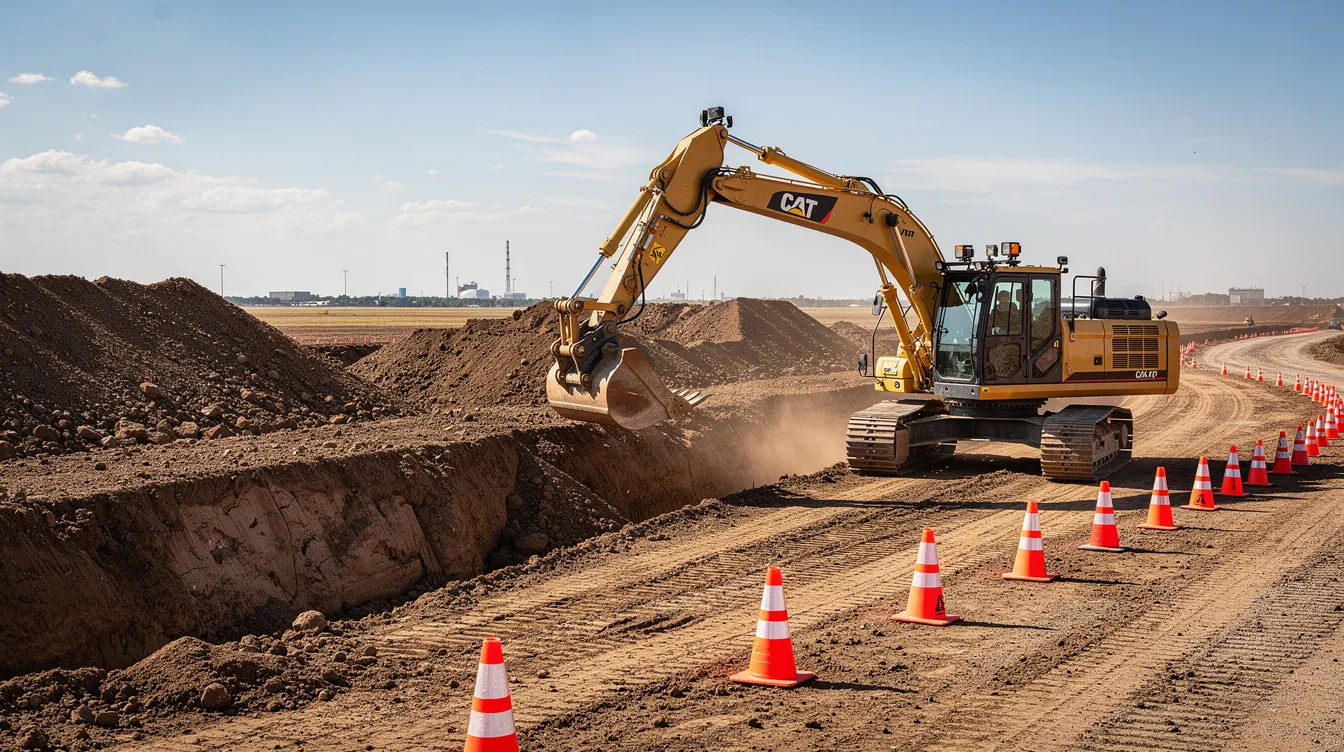
NIOSH has found that construction robots can reduce worker exposure to hazardous tasks, but human-robot interaction on active sites can also introduce new safety concerns that require new strategies. AI systems identify and mitigate construction site hazards effectively when properly integrated, yet the technology also creates hazard categories that traditional safety programs may overlook.
Robotic systems can monitor job site hazards and alert to unsafe conditions, and autonomous excavators stop automatically if unauthorized objects approach. Even so, NIOSH flags the following categories as requiring explicit attention in your construction robotics safety planning:
NIOSH also flags emerging risks related to software integrity, sensing and communication failures, cybersecurity vulnerabilities, and coordination among multiple robots working in the same space. Safety checklists help support safer operations on construction sites, and these hazard categories should be integrated into yours. Even if a vendor promotes failsafe features, Eastern Pennsylvania contractors remain responsible for controlling these hazards under OSHA rules and their own safety programs.
Visibility remains one of the most critical issues when autonomous excavators, dozers, or haul trucks operate on a construction site. NIOSH provides downloadable blind-area diagrams showing what operators can see at ground level, at about three feet, and at roughly five feet for common equipment models. Those diagrams apply equally when the machine is autonomous, because the sensors that replace human eyes have their own blind areas and limitations. Construction sites must clearly mark hazardous areas, and this obligation intensifies around robotic machinery.
On dense urban construction sites in Philadelphia, workers may be just feet from a robotic machine’s swing radius. On tight industrial plants in the Lehigh Valley, overlapping trades share limited ground space. A variety of site conditions can affect how workers and machines interact, and workers on foot can misjudge where the machine “sees” them, especially in low light or dusty conditions. Drones provide aerial views for construction site safety inspections, and drones and inspection robots can survey hard-to-reach areas without putting people at risk, but ground-level visibility controls remain essential. Proper fall protection systems are crucial for preventing injuries at elevation, and exclusion zones around robotic equipment demand the same discipline.
Practical controls to implement:
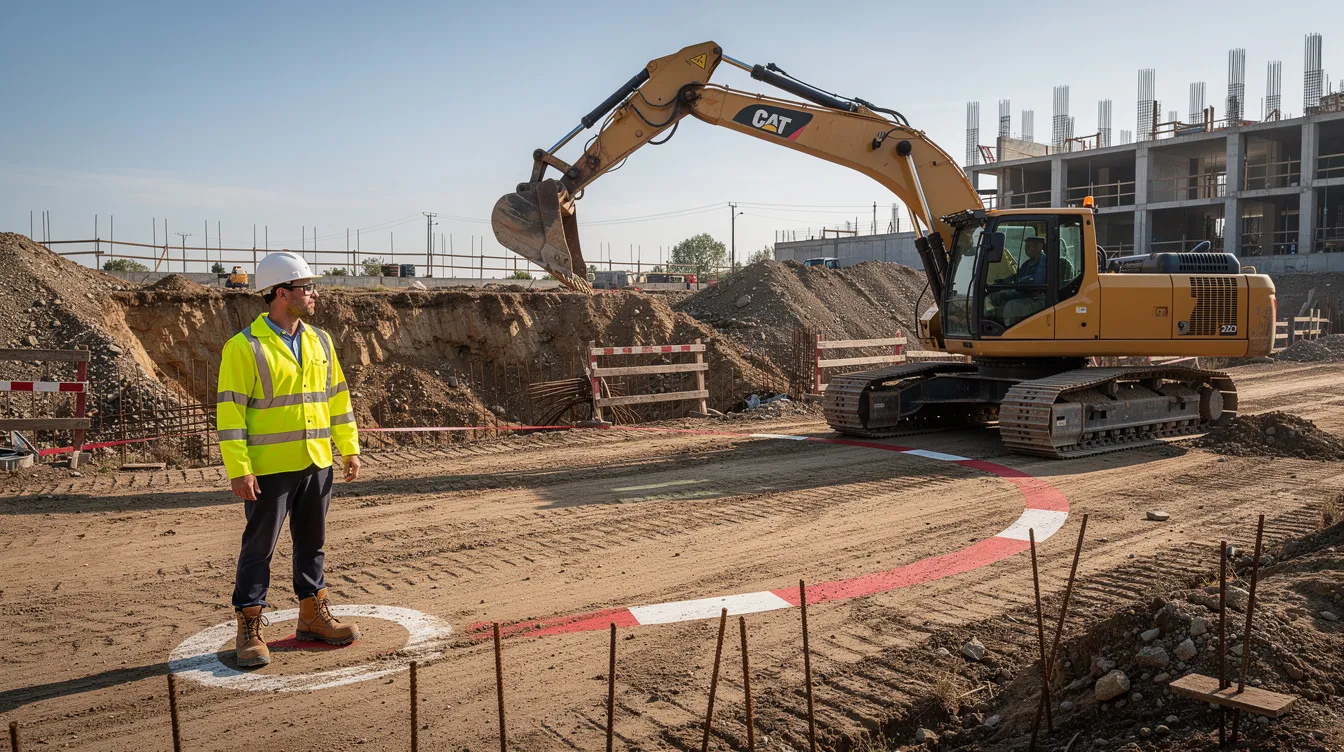
Before any autonomous or semi-autonomous machine begins production work on the construction site, your team needs a structured pre-start verification. Use this checklist during pre-task planning and again at mobilization, whether the project is a constrained Philadelphia renovation, a logistics facility near I-78 in the Lehigh Valley, or a dispersed site along I-81 in Northeast Pennsylvania. Wearable sensors monitor worker safety in real time on job sites and can complement these checks, but the checklist itself is your first line of defense. Robots improve site inspections by monitoring structural stability and safety compliance, yet human verification at startup remains non-negotiable.
Workers should immediately report damaged, malfunctioning, or unsafe robotic equipment or safety devices before startup.
Incorporate this checklist into your formal safety program and pre-job planning documents so it becomes standard, not optional.
Autonomous machinery does not eliminate the need for supervision. It changes foremen, superintendents, and spotters into system overseers who must watch both the work and the machine’s behavior. Someone must always be clearly responsible for monitoring the robot, intervening when site conditions change, and activating emergency stops. Robotics minimize risk by performing dangerous construction tasks, but the human in the loop prevents a technology failure from becoming an injury. Robotics enhances workforce safety by reducing physical strain and human error, but only when oversight is deliberate. Research shows that 40% of leaders design for both business and human outcomes; autonomous equipment demands that same dual focus on production and people.
Key role assignments for jobs using autonomous equipment:
Document these roles in job hazard analyses, pre-task plans, and daily huddles. Every person on the construction site should know who is accountable for monitoring autonomous equipment and how to escalate an issue immediately.
Working safely around autonomous construction equipment requires new knowledge for operators and workers on foot, well beyond standard heavy equipment safety training. Education and training are crucial to developing skilled construction workers, and new technologies on jobsites make that investment even more urgent. Registered apprenticeship programs build construction workforce skills, and effective workforce development includes leadership training and career pathways that prepare people for evolving site conditions. For context, states like New York enforce requirements such as Labor Law 240, which mandates specific safety equipment for work at heights; Pennsylvania contractors should expect similar regulatory attention as autonomous equipment becomes more common.
Priority training topics to integrate into toolbox talks, orientation, or formal courses:
ABC Eastern Pennsylvania’s apprenticeship and craft training centers in Allentown and Harleysville can help companies build broader safety competence across their teams. Documented competency checks and sign-offs are increasingly important when owners and general contractors evaluate a firm’s readiness to work with advanced jobsite technology.
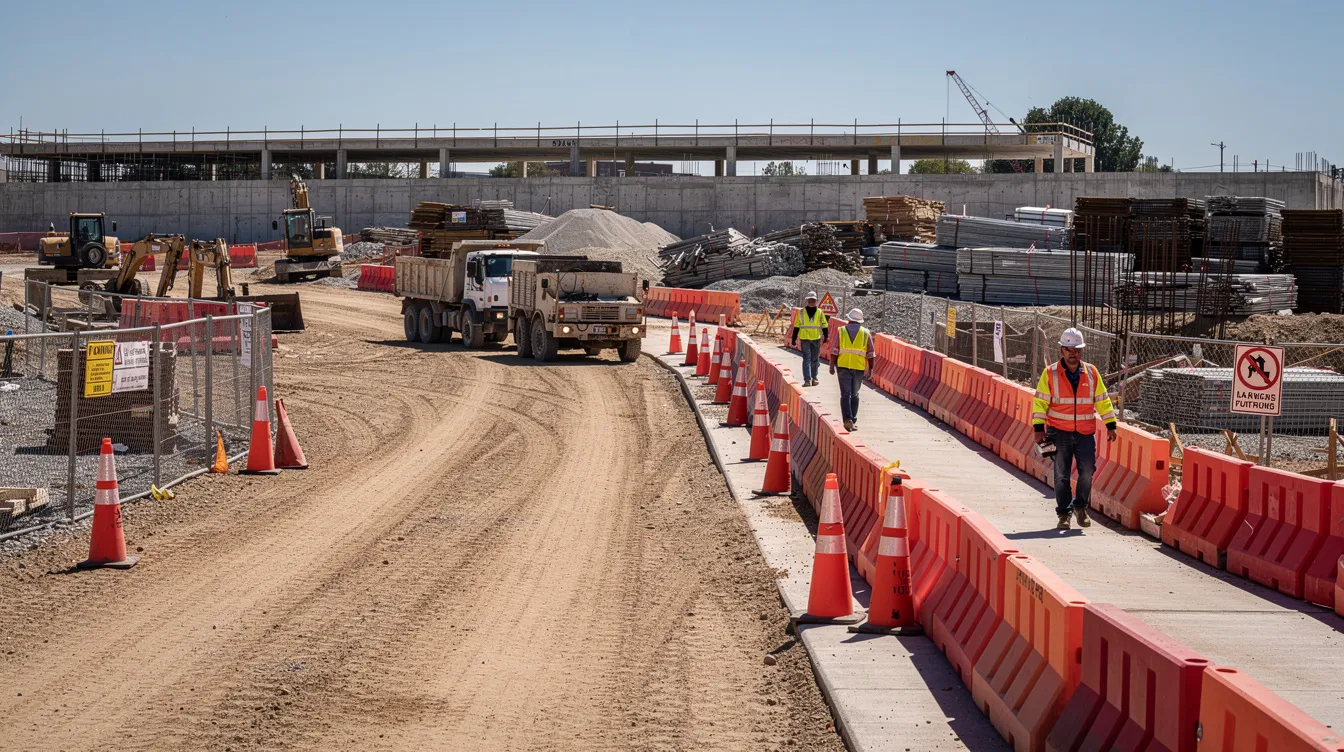
Construction sites in Eastern Pennsylvania range from tight Center City Philadelphia infill projects to wide distribution centers along I-78 and I-81. Each requires a different approach to safely routing people and robotic heavy machinery. Robots reduce physical fatigue, allowing employees to focus on critical tasks, and handle heavy lifting and repetitive movements to prevent injuries. Robotic systems can assist with tasks at elevated locations, and robots reduce the likelihood of injuries from falls and equipment-related accidents. But those benefits only materialize when the layout separates human and machine paths.
Project teams should revisit traffic-control plans, crane and truck staging, material laydown areas, and pedestrian routes whenever autonomous equipment will operate, instead of simply dropping the robot into an existing plan.
These layout changes extend OSHA work-zone traffic safety expectations, adapted for the added complexity autonomous equipment brings.
Construction robotics safety is not a one-time setup. Contractors need ongoing monitoring and feedback loops to understand how autonomous equipment behaves on their construction sites. Wearable sensors monitor worker safety in real time and can feed data into the same review process. Robots improve precision and accuracy in construction tasks, but that precision must be verified continuously. Robotics can eliminate exposure to hazardous environments like toxic substances or unstable structures, yet only when the technology performs as expected day after day.
Leading indicators relevant to construction robotics include near misses involving robots, emergency-stop activations, loss-of-signal events, sensor faults, unexpected route deviations, and unauthorized entries into geofenced zones.
Practices for ongoing monitoring:
NIOSH reinforces that software integrity, communications, and multi-robot coordination can pose emerging risks, which is why formal change-management processes matter whenever robots or their software are modified on site. That formal monitoring also supports long-term success with autonomous equipment.
Even with advanced robotics, OSHA still holds employers responsible for providing a safe construction site and protecting employees from recognized hazards, including those created by autonomous equipment. OSHA currently has no separate robotics standard for construction. Existing rules on mobile equipment, machine guarding, electrical safety, lockout/tagout principles, and the general duty clause still apply in full.
Compliance points Eastern Pennsylvania contractors should keep in mind:
ABC Eastern Pennsylvania provides safety consulting support to help member companies build these processes into their operations before an inspection or incident forces the issue.
Autonomous construction equipment can reduce certain risks on a construction site. It can perform tasks that expose people to falls, struck-by incidents, and repetitive strain. It can shape how future projects are planned and completed, supporting safer work across the industry. But those benefits only arrive when contractors deliberately redesign their safety programs, site layouts, training, and supervision to manage new worker-machine interactions. This technology does not replace the need for sound planning; it makes planning more important.
The picture is clear: this is not about whether autonomous equipment will appear on more Eastern Pennsylvania jobsites. It is about whether your company will be ready when it does, whether your safety credibility will lead or follow, and whether you can address concerns that automation could affect jobs while still helping people get home safely at the end of the day.
Immediate steps to take:
ABC Eastern Pennsylvania works with merit shop contractors across Philadelphia, the Lehigh Valley, and Northeast Pennsylvania who want to integrate construction robotics safety into their broader culture, training, and competitive positioning. Whether you need help updating a written safety program, running a gap analysis, or preparing your teams for new jobsite technologies, the chapter’s safety consulting and training resources are built for these challenges. Taking action now is what separates contractors who control risk from those who react to it.


