


Construction quality control depends on fast, reliable test results reaching the people who make field decisions. Quality control combines planning, inspection, testing, communication, and documentation, and when any link in that chain breaks, crews stall and schedules slip.
In practical terms, construction quality control means verifying that work matches the drawings, specifications, and code requirements before the next activity begins. On nonresidential jobs, that verification often depends on timely test results for concrete, soils, structural steel, fireproofing, and MEP systems.
A testing delay differs from a result delay. A testing delay means the test itself happens later than the schedule required. A result delay means the test was performed, but the report did not reach the superintendent, project manager, or other decision-maker in time to support the next step. In the field, that communication gap can be just as disruptive as a late test because crews still cannot move forward with confidence.
When test results lag, the effects can run straight through the critical path: postponed concrete pours, delayed backfill, withheld post-tensioning, or follow-on trades waiting for clearance in interior build-outs. The problem is not always lab capability. Just as often, ownership between report completion and field action is unclear.
In an article on testing delays, Construction Executive reported that on nonresidential construction projects, materials testing sits on the critical path more often than many teams account for, and that delays often occur after the test, in the gap between a result existing and a result reaching the person who needs to act on it. For Eastern Pennsylvania contractors, that makes result handoff a practical quality-control issue, not just an administrative one.

On a typical nonresidential project, the testing workflow is straightforward: a test is requested, a site visit is scheduled, the field technician collects a sample or performs the test, the lab processes it, the report is prepared, the result is distributed, and the field makes a decision. A comprehensive quality management plan should make ownership clear at each step.
Common failure points appear in predictable places. Unclear ownership of test requests leads to last-minute calls. Incomplete site readiness wastes technician time. Email-only reporting can leave a completed result sitting unread while crews wait. Documentation gaps such as missing test IDs, incorrect locations, or no timestamps make it harder to prove what happened if delay, rework, or payment disputes follow.
The weak point is often the gap between report preparation and decision-making, where no single person confirms that the right superintendent, project manager, or design contact has seen the result and acted on it.
Eastern Pennsylvania’s construction markets frequently run on compressed schedules and complex phasing. Multistory healthcare additions in Philadelphia, logistics warehouse slabs along the I-78 corridor, and higher-education renovations in the Lehigh Valley all depend on timely test results to keep subsequent activities moving.
Public work adds another layer. The Pennsylvania Department of Labor & Industry determines and enforces prevailing wage rates under the Pennsylvania Prevailing Wage Act, which raises the cost of idle labor and rework when schedules stall. On these jobs, a delayed result is not just a paperwork issue. It can quickly become a labor-cost issue.
Weather also matters. Freeze-thaw cycles, heavy spring rains, and fast temperature swings increase the need for timely field and lab results, especially when teams need confirmation before loading slabs, stripping forms, or proceeding after placement in marginal conditions.
Across ABC Eastern Pennsylvania’s seventeen-county region, this makes test-result lag a recurring risk on fast-tracked jobs. It also explains why contractors benefit from stronger communication habits, field leadership, and training support across safety, supervision, and workforce development.
Clear responsibility underpins reliable construction quality control. When nobody explicitly owns the test, the result, or the handoff, the gap between completed work and action widens.
On most projects, several parties touch the testing process: the owner, design team, general contractor or construction manager, specialty contractors, testing agency, and lab. But involvement is not ownership.
On many projects, the general contractor or construction manager should designate a single testing coordinator, often the superintendent or project engineer, to schedule tests, confirm site readiness, and track open results. That role does not replace the lab or testing agency. It closes the accountability gap that often develops on busy job sites.
Project managers should own documentation and communication when delayed or noncompliant results affect resequencing, rework, or formal notice to the owner or design team. Subcontractor foremen support the workflow by giving advance notice of readiness, verifying that the tested work matches the location and scope, and pausing only the affected activity when results are pending.

Before a critical activity such as a slab pour, footing backfill, fireproofing application, or structural steel bolting, the superintendent should confirm the following during the daily huddle:
This kind of review is simple, but it helps prevent the avoidable delays that begin before the test ever happens.
A test result does not protect the project’s quality until the right person receives it, reviews it against the acceptance criteria, and acts on it. This handoff is where many teams lose time.
Every critical test should have a named result owner: the person responsible for confirming receipt, checking the result, and authorizing the next activity or escalation.
To keep the handoff tight:
Picture a Monday morning in King of Prussia or Allentown. Concrete break results expected early have not arrived. The crew is ready to strip forms, and the next trade is already lining up. What happens next determines whether the project loses hours or days.
First, pause only the affected activity. Do not shut down unrelated work if crews can shift to layout, staging, punch work, or other productive tasks.
Second, document the delay clearly: date, time, test ID, expected turnaround, who was waiting on the result, and any schedule impact. That record matters if questions arise later about rework, delay, or added cost.
Third, escalate early instead of assuming the result will appear on its own. Contact the testing agency or lab, confirm the status, and determine whether the owner or design team needs to be informed if the delay affects critical-path work.
Finally, treat every late result as a process review. Even without new software, a shared spreadsheet reviewed in the daily huddle can expose weak points in ownership and communication.
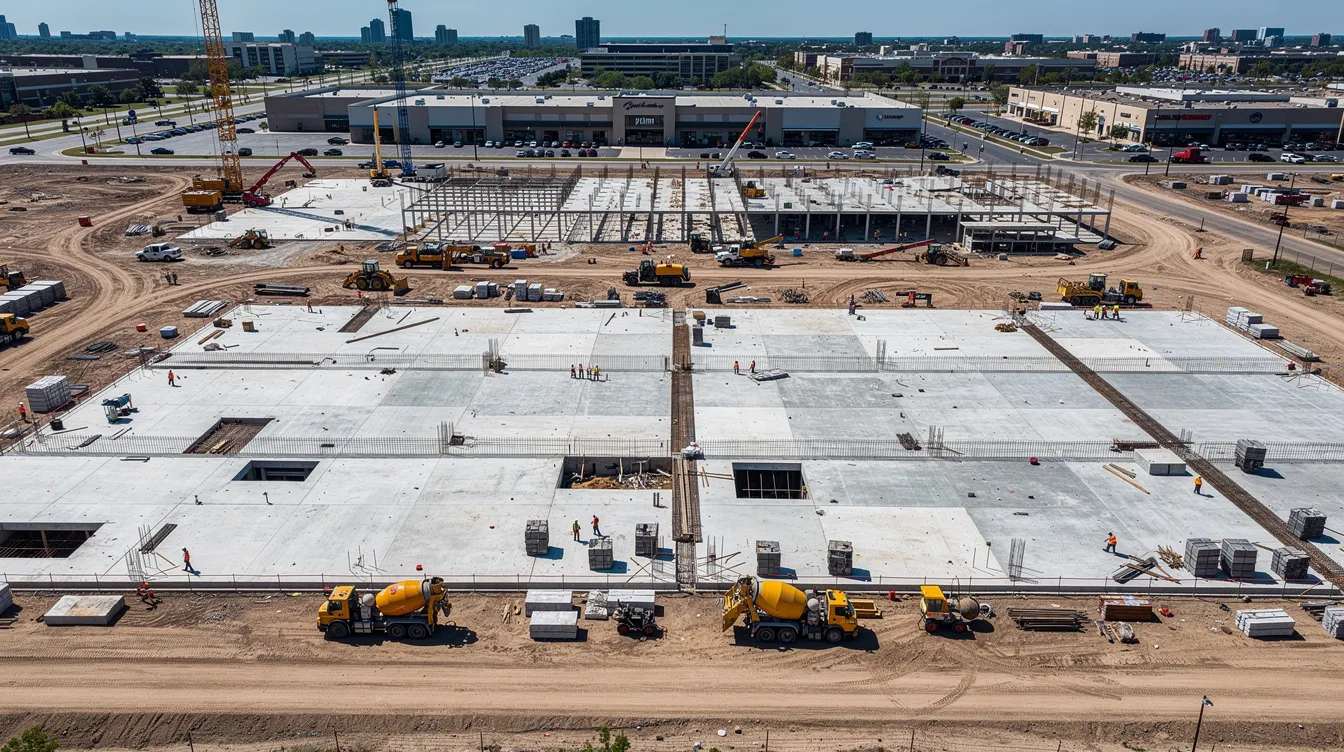
Consider a hypothetical but realistic scenario: a logistics warehouse project along the I-78 corridor in the Lehigh Valley. The scope calls for a large slab-on-grade pour on Thursday. Cylinder breaks are scheduled for the following Monday to confirm required compressive strength before later activities proceed.
The lab completes the breaks Monday morning, but the results go to a general inbox instead of directly to the project team contact responsible for action. No one notices until later. By then, the planned sequence for saw cutting or follow-on work has already started to slip.
Now compare that with a team that used a pretest checklist and named a result owner before the pour. The expected turnaround was confirmed in advance, the owner knew when to follow up if the report didn’t arrive, and the superintendent had a backup plan for crew resequencing if the result was late. The difference is not luck. It is process discipline.
Construction quality control and jobsite safety are closely connected. A slab loaded too early, fireproofing not verified before enclosure, or backfill placed over unconfirmed conditions can create both quality and safety exposure.
Disciplined testing workflows support broader project management goals by reducing avoidable rework, improving documentation, and helping teams make cleaner field decisions under schedule pressure. For contractors across Eastern Pennsylvania, that is partly a systems issue and partly a people issue.
ABC Eastern Pennsylvania supports contractors with safety resources, registered apprenticeship and craft training, and career development and management education that can help firms strengthen communication, supervision, and field execution across the region.
You do not need a brand-new system to improve construction quality control. You need tighter ownership and faster communication around test results.
The next time a result is late, the real question is not only how long the lab took. It is whether your team had a clear plan to receive, review, and act on the result before schedule pressure turned it into a larger problem.
These FAQs address common questions about testing delays, result management, and construction quality control.
A testing delay happens when the test occurs later than the schedule requires. A test-result delay happens when the test has been completed, but the report does not reach the superintendent, project manager, or other decision-maker in time to support the next step. Both can disrupt the job, but they require different fixes.
On smaller projects without a dedicated quality manager, the superintendent or project manager usually fills the testing coordinator role. The key point isn’t the title. One named person owns follow-up instead of assuming the lab or testing agency will route everything correctly.
A shared spreadsheet or paper log reviewed during the daily huddle can cover the fundamentals. The team needs a visible record of outstanding results, which activities depend on them, who is responsible for follow-up, and what happens if a result is late.
Look for clear communication protocols, consistent reporting formats, and a willingness to align with your project schedule. It is also useful to ask how the agency handles urgent or out-of-spec results and who receives those notifications first.
Owners and the design team typically need to be informed when a delayed or noncompliant result affects critical-path work, requires design clarification, or may affect milestone dates. Minor timing issues on noncritical work can often stay within the contractor’s normal workflow if the quality control plan defines that threshold in advance.


