


Construction management agreements are the contracts that turn your bid assumptions into enforceable obligations on scope, payment, schedule, documentation, and risk.
Construction management agreements often decide whether a solid estimate stays profitable. Before a crew mobilizes in Philadelphia, the collar counties, the Lehigh Valley, or Northeast Pennsylvania, those agreements lock in how the job will handle payment, schedule pressure, scope gaps, documentation, and risk transfer.
That is why construction management agreements deserve a structured internal review before anyone signs. A one-sided payment clause, vague scope language, unrealistic notice requirements, or an insurance obligation that doesn’t match actual coverage can turn a manageable project into a margin problem. This article gives Eastern Pennsylvania contractors a practical pre-sign review framework focused on one core decision: whether the contract matches the way your company can actually perform the work.
ABC Eastern Pennsylvania supports merit shop contractors across the region with membership resources, safety training, advocacy, and industry connections. It does not provide legal advice, and qualified construction counsel should interpret contract-specific language.
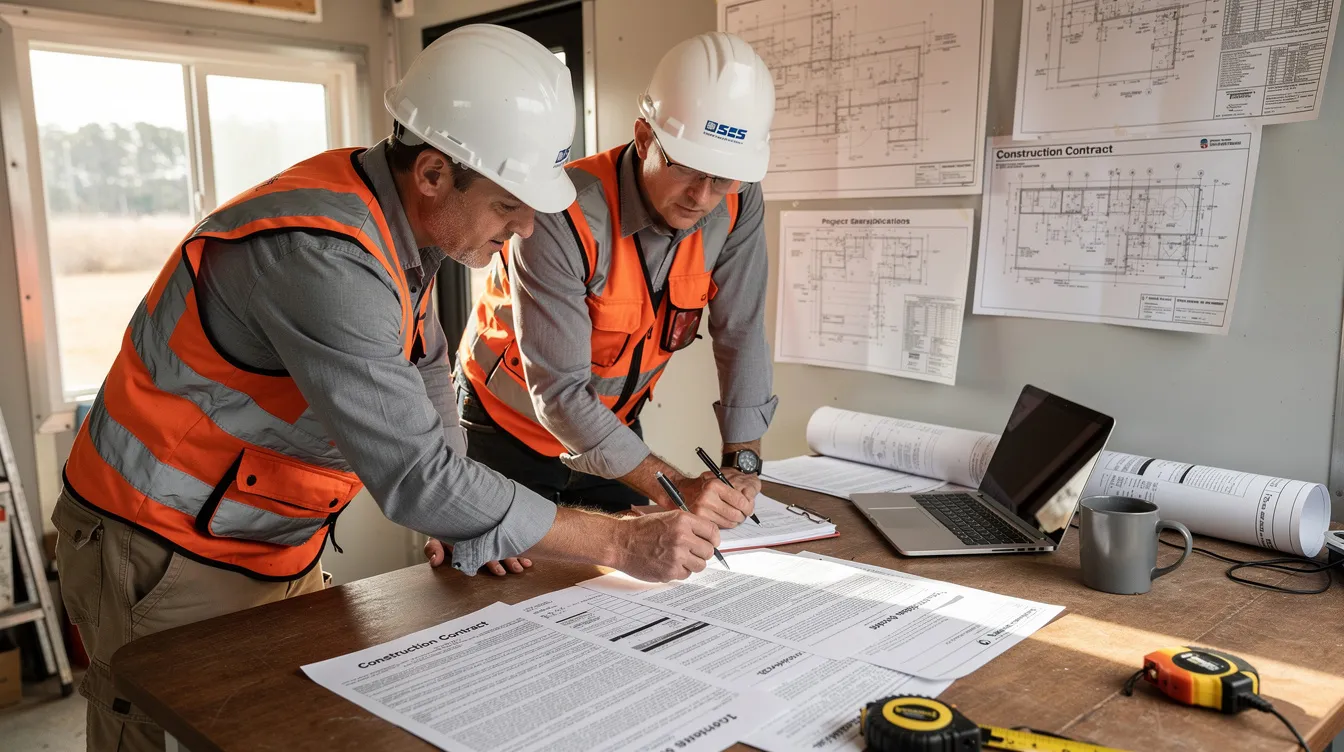
Many pre-sign reviews focus on whether a clause looks aggressive. That matters, but a more useful business question is whether the agreement fits how your company actually runs jobs.
For example, a notice clause may sound routine until your project team realizes it requires same-day written notice for delay events across multiple active jobs. A safety requirement may sound reasonable until you compare it to your current staffing, documentation process, or training records. A schedule commitment may look achievable until you map procurement, manpower, and owner decision timing against the baseline.
In practice, construction management agreements should be reviewed through three lenses at once:
If the answer is no in any of those areas, the contract deserves revision, qualification, escalation, or legal review before execution.
A construction management agreement defines the relationship and duties among project participants. Depending on the delivery method, the construction manager may act in an advisory role, serve in a CM-at-risk role, or carry preconstruction and construction responsibilities through execution.
These agreements typically address:
That last issue is especially important for contractors. If the prime agreement imposes strict documentation, timing, indemnity, or schedule obligations, but your downstream agreements do not align, your company can end up carrying risk it cannot realistically push to the responsible party.
The same contract form can create different exposure depending on where and how the work is being performed. A school project in Montgomery County, a Philadelphia public works job, an industrial project in the Lehigh Valley, and a logistics facility along the I-81 corridor can each bring different compliance and administration demands.
Common local risk factors include:
These issues do not automatically make a project unacceptable. They do mean the contract should reflect the real administrative burden of the work instead of assuming that burden disappears into overhead.
Payment language affects cash flow faster than almost any other clause. Before signing, confirm:
For public work, do not assume retainage or release rules are standard across owners. Verify owner-specific and statutory requirements with counsel or your contract reviewer instead of relying on habit.
On many jobs, the ability to recover for added or revised work depends less on the field condition than on whether the contract-prescribed process was followed.
Review:
If the notice window is so narrow that your team is unlikely to meet it consistently, that is not a paperwork issue. It is a risk signal before the job starts.
Schedule clauses often turn manageable jobs into high-risk jobs. Focus on:
A useful review question is simple: if the project slips for reasons outside your control, does the contract provide a realistic path to time relief?
Scope disputes often begin with incomplete alignment between the estimate and the contract package. Review:
If it mattered during bid day, it should not disappear at contract stage.
Review these clauses together, because the business question is not just what risk the contract transfers. It is whether your company actually has coverage or downstream protection for that risk.
Confirm:
Broad indemnity obligations can create uninsured or underinsured exposure depending on the wording and available coverage. That is usually a sign to bring in counsel and your broker early.
Use this checklist in your internal contract review meeting. It is designed to spot mismatches between the agreement and your real operating capacity.
| Question | If Yes | If No |
|---|---|---|
| Are all bid assumptions, exclusions, and clarifications carried into the contract documents? | Proceed to scope confirmation. | Revise before signing. |
| Can the project team realistically meet the agreement’s notice and documentation deadlines? | Assign responsibility by role. | Negotiate or escalate. |
| Does the schedule reflect actual procurement, staffing, and owner-decision assumptions? | Proceed to delay-risk review. | Request clarification or revision. |
| Have indemnity and insurance requirements been checked against actual coverage and broker input? | Document the review. | Do not treat the clause as routine. |
| Are public-work compliance obligations clearly identified and priced? | Confirm administration plan. | Recheck labor-compliance assumptions. |
| Do downstream subcontract forms support required flow-down obligations? | Proceed to final review. | Fix the mismatch before award. |
Immediate red flags: undefined scope gaps, extremely short notice windows, payment language your team cannot explain clearly, delay exposure without a workable extension process, or insurance requirements no one has checked against the actual policy.
Consider a hypothetical Lehigh Valley contractor awarded a fast-track institutional project. The contract price is acceptable, and none of the clauses look unusual at first glance. But once the team maps the process, problems appear:
On paper, the agreement looked manageable. Operationally, it required same-speed documentation across estimating, project management, field leadership, and subcontract administration. The practical decision is not merely whether the clause is “fair.” It is whether the company has the process to comply. If not, the contractor either negotiates the language, builds the process immediately, or escalates for legal review before signing.
Internal review can catch many issues, but some contracts should move to counsel before execution. Escalate early when you see:
Early legal review usually preserves more leverage than post-award damage control.
ABC Eastern Pennsylvania does not draft or approve construction management agreements, but it can help member contractors improve the systems that make contract compliance more realistic.
For many firms, stronger contract performance starts before legal review. It starts with better internal coordination between estimating, operations, safety, leadership, and outside advisors.
Construction management agreements are not just legal paperwork. They are operating documents that define how your company will get paid, document change, handle delays, absorb risk, and comply with public-work obligations.
For Eastern Pennsylvania contractors, the best pre-signing habit is a repeatable review process built around one decision: does this contract fit the way we actually deliver work? Use the clause review, checklist, and red flags in this article to test that fit before execution. If the answer is uncertain, escalate before signing, not after the first dispute.
Below are answers to common questions about this topic.
A construction management agreement often focuses more heavily on coordination, phased services, cost management structure, and administrative responsibility. A lump sum contract usually centers on delivering a defined scope for a fixed price. The practical difference is how risk, changes, and documentation obligations are allocated.
Subcontractors should focus on flow-down language, notice deadlines, schedule obligations, indemnity, payment timing, and documentation requirements. The most important question is whether the subcontract passes down obligations the subcontractor can realistically meet.
Yes. Public work may add prevailing wage, Davis-Bacon, city-specific requirements, project labor agreement provisions, or responsible contractor ordinance considerations. Review those issues before pricing and again before execution so you don’t overlook the administrative burden.
At least annually, and sooner when the company moves into new markets, takes on larger public projects, or sees repeated issues in disputes, closeout, or compliance administration.
Yes. If an agreement requires detailed training records, site-specific plans, reporting, or other field controls, weak safety systems can become a contract-performance problem. That is one reason some firms use training and system reviews to strengthen readiness before signing demanding project agreements.


