


Construction job costing tracks the labor, materials, equipment, subcontractors, and other project expenses tied to a specific contract, rather than looking only at companywide totals. For contractors, it shows where margin is holding, where it is slipping, and which jobs need attention before a month-end report becomes a problem.
For merit shop contractors across Eastern Pennsylvania, that visibility matters in every direction. Firms may be bidding institutional work in Philadelphia, industrial and warehouse projects in the Lehigh Valley, or logistics and commercial work across Northeast Pennsylvania. In each case, leaders need cost information that is coded accurately, reviewed consistently, and useful to both operations and finance.
This article explains what Construction Executive’s 2026 Top Construction Accounting Firms ranking measures actually and how contractors can use that list as a screening tool when evaluating outside accounting support for construction job costing, revenue recognition, and broader financial oversight.
Construction Executive’s 2026 Top Construction Accounting Firms ranking is built from survey data collected from U.S. construction accounting firms. According to the publication’s methodology page, the ranking was developed by asking more than 700 firms to complete a survey. The weighted factors were 2025 construction-practice revenue, the number of CPAs in the construction practice, the percentage of total firm revenue derived from construction, the number of states licensed to practice in, the year the construction practice was established, and the number of architecture, engineering, and construction clients served.
That matters because the list is not framed as a general popularity contest. It is a construction-specific benchmark that emphasizes depth of practice and industry concentration. The published 2026 list ranks Baker Tilly No. 1, CLA No. 2, and CohnReznick No. 9.
For contractors, the main takeaway is not simply which firm ranks highest. It signals which accounting practices report meaningful specialization in construction, rather than offering contractor work as only a small part of a broad general practice.
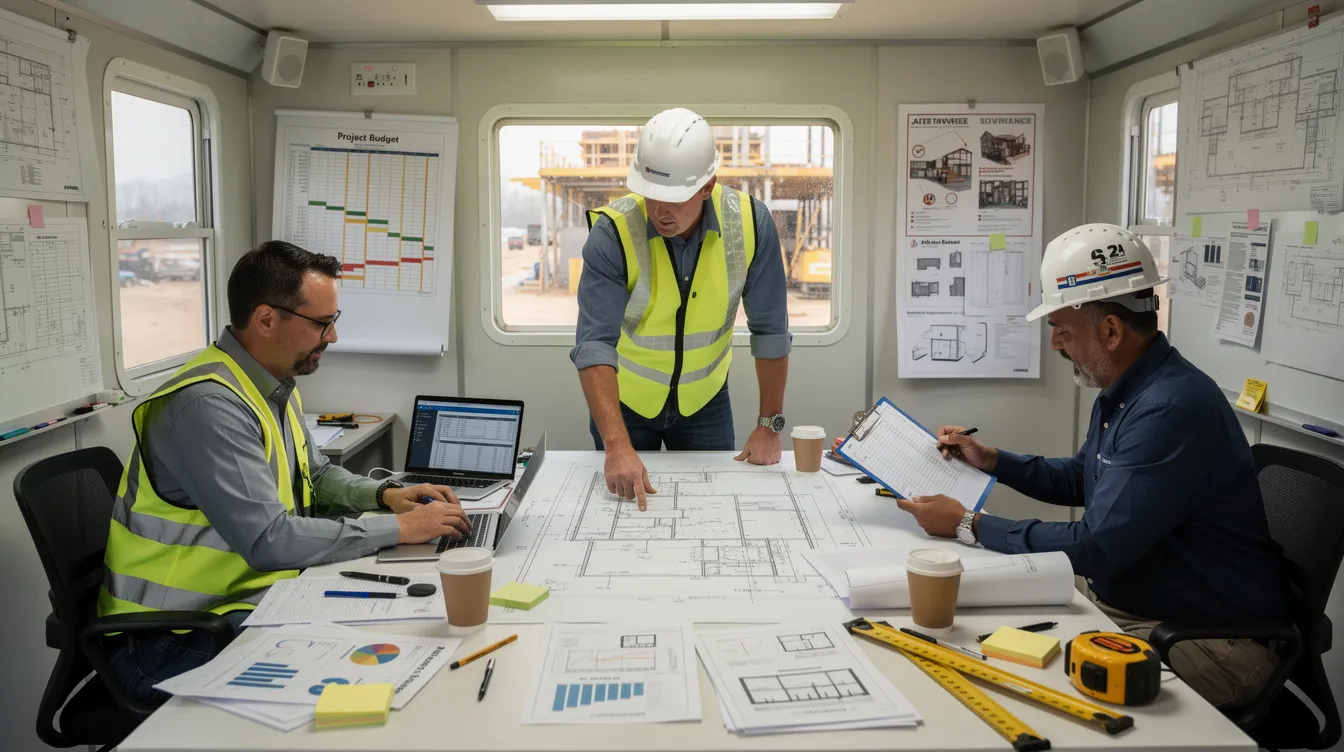
Construction Executive’s methodology page also highlights a core distinction that contractors already feel in practice: construction accounting measures profitability at the contract level and ties revenue recognition to work actually performed, not just to billing activity or companywide profit-and-loss reporting.
That difference shows up in several day-to-day disciplines:
That is why a contractor can have solid bookkeepers and still struggle with construction-specific reporting. General accounting competence is not the same thing as understanding retainage, estimate revisions, work-in-progress schedules, and project-by-project profitability management.
For contractors in ABC Eastern Pennsylvania’s territory, the right accounting support should match the realities of a regional, multi-market business. A company may be managing dense institutional or healthcare work in the Philadelphia area, industrial and warehouse jobs along the I-78 corridor, or distributed commercial and logistics work across Northeast Pennsylvania. These project types create accounting pressure around cost tracking, schedule-driven billing, subcontractor management, and cash timing.
That does not mean every contractor needs a national Top 10 firm. It does mean your accounting partner should support the parts of construction finance that directly affect project decisions, including job costing structure, work-in-progress reporting, revenue recognition processes, and management reporting that operations leaders can actually use.
A strong construction accounting relationship should help answer questions such as:
1. Contract-level job costing support. A firm that understands construction should help you evaluate cost-code structure, reporting cadence, and the connection between field activity and financial statements. The goal is not more paperwork. The goal is earlier, better decisions.
2. Revenue recognition and WIP discipline. Contractors should expect informed support around work-in-progress schedules, overbilling and underbilling analysis, estimate updates, and the reporting issues that arise on long-term contracts. Tax and financial statement treatment should be discussed with qualified advisers based on your company’s project mix and entity structure.
3. Advisory value beyond annual compliance. The most useful accounting relationships do more than prepare returns or complete year-end work. They help leadership interpret backlog risk, cash-flow pressure, ownership-transition questions, banking and surety expectations, and the financial consequences of operational decisions.
That advisory layer matters most when a contractor is growing into new project sizes, entering a new submarket, or tightening controls after a difficult year. Construction accounting should support management discipline, not just historical reporting.
Construction-focused branding by itself is not enough. Contractors should look for proof that a firm can work at the level where margin is actually won or lost.
You are not only hiring tax preparation. You are evaluating whether the firm can support decisions made by owners, controllers, project executives, and project managers throughout the year.
Use the 2026 ranking methodology as a practical interview guide.
Practice depth
Job costing and WIP reporting
Management and advisory support
Fit for your business
These questions move the conversation past website credentials and into the day-to-day usefulness of the relationship.
The ranking does not tell you which firm is automatically right for your company. It does, however, reinforce a broader point: construction accounting is its own discipline, and contractors should evaluate outside firms accordingly.
For many Eastern Pennsylvania firms, the most important issue is not whether the accountant is nationally well known. It is whether the team can help management maintain visibility across active contracts, spot financial trouble early, and support better estimating and backlog decisions going forward.
That is where the ranking becomes useful. It gives contractors a construction-specific framework for what specialization can look like: practice revenue tied to construction, dedicated people, market longevity, broad client exposure, and a visible commitment to the sector.
Step 1: Review your current reports. Look at whether your job-cost and WIP reports are timely, understandable, and connected to field decisions. If project leaders do not trust or use them, the system needs work.
Step 2: Benchmark your accounting support. Compare your current firm or prospective firms against the factors Construction Executive uses in its 2026 ranking. The point is not to mimic the list exactly. It is to test for real construction focus.
Step 3: Close internal capability gaps too. Outside accounting support is only part of the answer. Contractors also need internal leaders who can read reports, manage change, supervise crews, and improve operational discipline. ABC Eastern Pennsylvania supports that broader effort through registered apprenticeship and craft training, career development and management education, and broader member resources.
Step 4: Strengthen risk conversations around growth. If your company is taking on larger or more complex work, financial controls should grow with it. ABC Eastern Pennsylvania members can also explore available insurance program options and chapter support resources as part of a wider business-risk review.
Construction Executive’s 2026 accounting-firm ranking is most valuable when you use it as a decision tool rather than a headline. For contractors across Philadelphia, the suburban counties, the Lehigh Valley and Northeast Pennsylvania, stronger construction job costing is not just an accounting upgrade. It is a management advantage that can protect margin when projects get more complex and competition gets tighter.


