


Construction accounting involves specialized financial management for project-based industries, and its importance is growing as projects become more complex, compliance requirements expand, and margins tighten. For construction company owners operating across Philadelphia, the Lehigh Valley, and Northeast Pennsylvania, construction accounting services are far more than bookkeeping. They connect job costing, construction payroll, retainage, work-in-progress reports, and cash flow forecasting to the daily decisions that determine whether a project makes money or quietly bleeds it away.
Cash flow management in construction accounts for delayed payments and upfront material costs, a reality that hits Eastern Pennsylvania contractors especially hard. Construction companies often wait an average of 90 days to be paid after submitting final invoices. Add retainage holdbacks, prevailing wage requirements on public projects, and the cost of floating payroll across multiple jobs, and the gap between earning revenue and collecting it can threaten even profitable firms.
This article breaks down what construction accounting services actually include, why contractors need specialized support instead of generic small-business accounting, and what Eastern Pennsylvania construction businesses should look for when evaluating providers. The goal is not to recommend a specific firm. It is to help construction contractors understand what “good” looks like so they can make informed decisions.
Construction companies do not operate like retail stores, medical practices, or service firms. Each construction project functions as its own profit center, with a unique budget, cost codes, billing terms, timeline, and risk profile. Standard accounting methods often do not capture the financial complexities of construction projects because they were designed for businesses with a single, continuous revenue stream.
Construction firms often face unique organizational challenges not encountered in standard industries. Crews and equipment move across decentralized job sites, from Center City Philadelphia to a warehouse build in Allentown to a public infrastructure project near Scranton. Construction accounting tracks financial data across those decentralized job sites and long-term contracts, assigning every dollar of labor costs, materials, equipment, and subcontractor expenses to a specific project and cost code. Construction companies need job-specific accounting methods because project scopes and timelines vary, so each active project needs its own financial snapshot.
Construction accounting must account for labor and material costs on a project-by-project basis. Long-term construction contracts may last many months, with 5 to 10 percent of billings held as retainage until project completion. A generic accounting system that treats all revenue and expenses as one pool will miss job-level profitability, WIP status, and the cash flow risks that keep many contractors up at night.

Construction accounting tracks costs at the project level and provides enhanced visibility into project performance and financial metrics. Specialized construction accounting ensures accurate compliance with regulatory and tax obligations. Here is what a solid service package typically includes:
Not every firm will need every element on day one. But these building blocks separate construction accounting systems from basic bookkeeping, and contractors should recognize and ask about them.
Job costing is the backbone of construction accounting. It categorizes expenses for specific construction projects and tracks direct labor, materials, and subcontractor payments against budgets. Without reliable job costing, a contractor running multiple jobs has no way to know which projects are profitable based on the work completed before closeout, and by then it is often too late to act.
A capable provider establishes standardized cost codes, ties field timesheets and vendor invoices to specific jobs, and updates estimated costs to complete monthly as the project progresses. The goal is not just historical recordkeeping. It is giving project managers real-time visibility into whether labor hours, material purchases, and subcontractor commitments are tracking to budget or drifting. Accurate project-level profitability tracking is crucial for managing construction projects effectively, and construction profitability often relies on accurate project-level financial tracking.
Specialized construction accounting software can integrate timesheets, purchase orders, and equipment usage logs so job-cost reports arrive with enough time to respond. Consider a contractor working along the I-78 corridor on a warehouse project. If overtime and travel push labor costs above the estimate, strong job costing surfaces that overrun within weeks, not months. Weak job costing might not reveal it until the entire project margin has evaporated.
| Weak Job Costing | Strong Job Costing |
|---|---|
| Labor hours coded after month-end; guesswork on sub costs; estimate to complete rarely updated | Timesheets entered daily or weekly; sub and material costs posted as they arrive; estimate to complete updated monthly |
| Only company-wide income statement; no per-job profitability until closeout | Job profit and loss visible each month; warning flags when cost overruns emerge |
| Retainage aggregated or buried; WIP not reconciled | Retainage tracked by job; WIP schedule reconciled to general ledger |
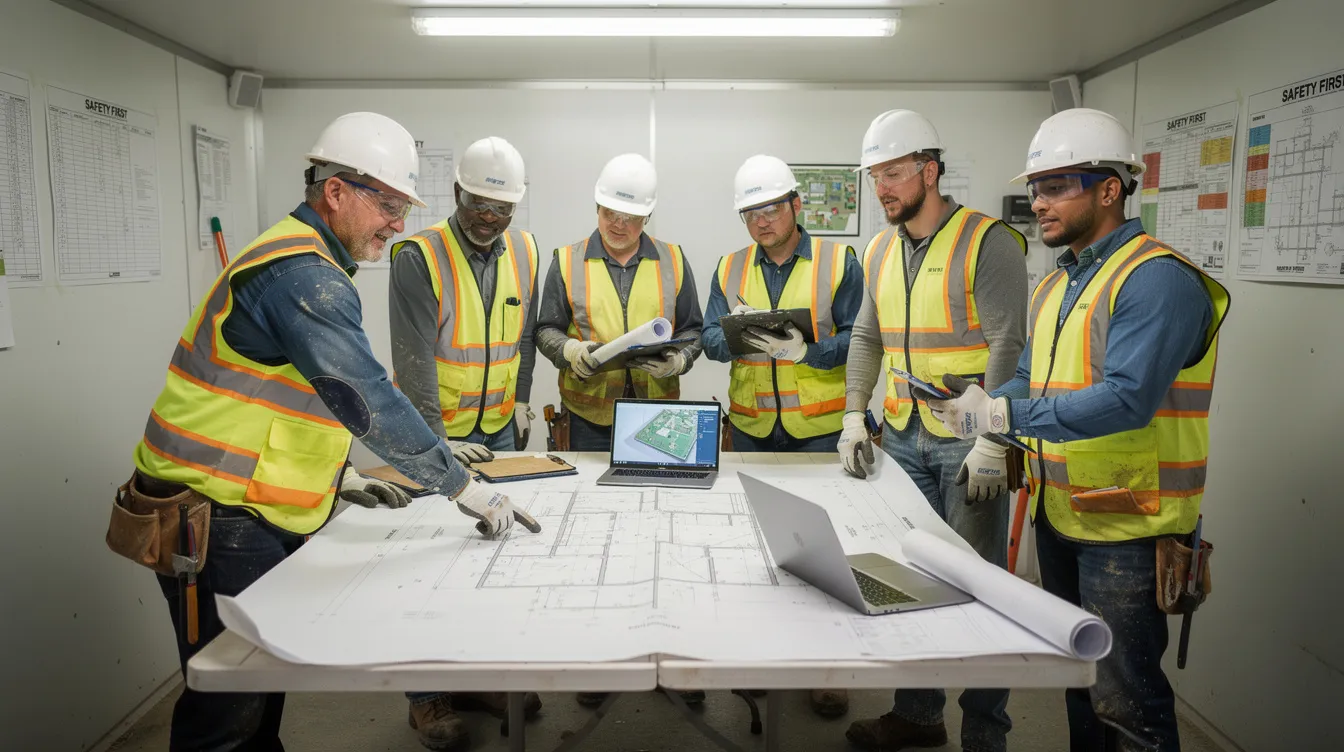
Work in progress reports compare costs incurred, revenue recognized, and amounts billed on each active project. In practical terms, a WIP schedule answers the question every contractor should be asking monthly: on each job, have we billed more or less than we have actually earned?
Construction accounting includes monitoring overbilling and underbilling to ensure accurate financial tracking. Overbilling means you have billed more than you have earned so far, creating a liability on your balance sheet. Underbilling means you have earned more than you have billed, which creates an asset on paper but a real cash flow risk if the client delays payment. Both conditions need to be understood and managed.
Work-in-progress reporting assesses financial health and estimated profitability of ongoing construction projects. Construction companies use these reports to monitor liquidity, profitability, leverage, and efficiency. Connecting WIP data to overall construction backlog quality helps leadership understand whether signed contracts will translate into predictable revenue or expose the firm to margin erosion.
A useful WIP package should include:
Sureties and banks in Eastern Pennsylvania routinely request WIP schedules during bond renewals and credit reviews. If your data is unreliable, your bonding capacity and financial position may be at risk.
Retainage typically ranges from 5 to 10 percent of contract value, withheld from progress payments to protect project owners until work is substantially complete; after closeout requirements are satisfied, it is generally released with final payment. For a contractor running several retainage-heavy public projects, the total amount tied up in retainage receivable can be substantial. Poor retainage tracking can distort perceived profitability and hide looming cash constraints.
Retainage creates a timing gap: the contractor has often earned the revenue operationally but does not have the cash. Revenue recognition in construction follows project progress, not billing, and the percentage-of-completion method recognizes revenue and expenses as work progresses. Under U.S. GAAP, retainage might be classified as a receivable or as part of a contract asset or liability, depending on whether the contractor’s right to payment is unconditional. This analysis happens on a contract-by-contract basis.
Bonding companies need specialized financial statements to evaluate contractor risk, so retainage accounting must be accurate, transparent, and defensible. Strong construction accounting services should:
For construction firms bidding on public work across Philadelphia’s suburban counties or competing for industrial projects in the Lehigh Valley, getting retainage accounting right is not optional. It directly affects your financial statements, bonding conversations, and ability to pay your subcontractors on time.
Construction payroll is a specialized service area, not an add-on. Contractors must allocate labor costs across multiple jobs, handle multiple pay rates and trade classifications, and stay compliant with wage laws that vary by project type and jurisdiction.
Construction accounting must also navigate payroll regulations for government-funded projects. Eastern Pennsylvania contractors often face Pennsylvania Prevailing Wage Act requirements for public work over $25,000, federal Davis-Bacon prevailing wage rules for federally funded projects, and certified payroll and compliance reporting obligations that demand precision. Construction payroll must comply with prevailing wage laws, and certified payroll reports are necessary for public projects. For union contractors, payroll also requires tracking wages, fringe benefits, and deductions for the appropriate local unions, with added reporting complexity when multiple locals are involved under collective bargaining agreements.
Construction payroll involves multi-state tax compliance for traveling crews, a common reality for contractors whose workers cross between Pennsylvania, New Jersey, and Delaware. Prevailing wage contractors in Eastern Pennsylvania face a layered compliance environment that generic payroll management tools are not built to handle.
A capable construction payroll service should handle:
Some contractors use a dedicated construction payroll provider integrated with their accounting software. ABC Eastern Pennsylvania can connect members with construction-specific solutions, including industry partners who understand prevailing wage rates, union reporting, and the payroll complexities of running crews across Eastern Pennsylvania’s three distinct sub-markets.
The biggest financial risk for many contractors is not a lack of profit on paper but weak cash flow from delayed billing and collections. Construction cash flow reflects cash movement over specific periods. Cash flow is calculated by subtracting cash outflows from inflows, and positive cash flow indicates surplus incoming funds over outgoing payments. Delayed invoicing can significantly impact cash flow, turning a profitable quarter into a scramble for working capital.
Industry-specific financial forecasts are crucial to bridge cash flow gaps in construction projects. Construction accounting services support billing discipline by:
Many contractors across Philadelphia, the Lehigh Valley, and along the I-81 corridor run projects where payroll, subs, and material outflows hit weeks before incoming payments arrive, and payment delays are a routine cash-flow problem a good provider helps firms absorb and plan around. A good provider helps owners see whether those outflows align with expected cash inflows by project, flagging delayed payments before they trigger a borrowing event.
Consider a specialty contractor running three active projects simultaneously. Two projects have 60-day payment terms, and one has 10 percent retainage of the total contract value. Without a cash flow forecast tied to the billing schedule, that contractor may need to draw down a line of credit simply because invoices were submitted late or change orders were not billed. Better billing discipline and project-level cash flow reporting can prevent that scenario entirely. Subcontractors who factor working capital costs into their bids tend to operate with healthier margins, while those who ignore cash timing often absorb the financial risk without realizing it.
When interviewing potential providers, whether outsourced construction accountants or in-house hires, use these questions as a decision checklist:
Experience and specialization:
Technology and reporting:
Collaboration and decision support:
For construction contractors managing multiple projects across Eastern Pennsylvania, the right provider understands that construction accounting is about making the business’s financial health visible at the project level, not just producing an annual income statement.
ABC Eastern Pennsylvania does not replace a construction CPA or an accounting firm. The association helps construction businesses understand what “good” looks like so they can choose the right partners and construction accounting systems for their operations. The chapter’s network includes member firms and industry partners, among them associated builders and construction CPAs, who focus on job costing, financial reporting, and payroll management for contractors.
ABC Eastern Pennsylvania connects accounting decisions to the broader picture of running a financially healthy construction business:
If your firm is evaluating its accounting infrastructure, contact ABC Eastern Pennsylvania for guidance on training options or introductions to industry partners who understand the financial position of Eastern Pennsylvania construction firms.
Construction accounting services should function as a control system for the entire project portfolio, not just an after-the-fact recordkeeping exercise. For construction contractors in Eastern Pennsylvania, the right accounting infrastructure means trustworthy job-cost data across individual projects, clear WIP and backlog visibility, accurate construction payroll and compliance reporting, and proactive cash flow insights that align payroll and collections.
The practical next step is straightforward. Block time in the next 30 days to review your current accounting reports and identify gaps compared to the capabilities described here. Ask whether your leadership team has project-level visibility into estimated costs, project costs, and financial performance, or whether you are relying on historical records that arrive too late to change outcomes. Many contractors discover that upgrading their accounting support pays for itself through earlier detection of cost overruns, better billing discipline, and stronger bonding capacity.
Eastern Pennsylvania construction companies competing for public and private work across Philadelphia, the Lehigh Valley, and Northeast Pennsylvania deserve accounting support that matches the complexity of the work they build. Connect with ABC Eastern Pennsylvania for education, peer insight, and resources that support stronger financial control across your business.


