


Every building asset a contractor owns, leases, rents, or stockpiles either protects margin or quietly erodes it. In a 2026 market where aluminum mill shapes are up 52.4% year over year, steel mill products have climbed 16.9%, and the gap between input costs and bid prices keeps widening, Eastern Pennsylvania contractors cannot afford to manage equipment, fleet, and materials reactively. This article is a playbook for turning asset decisions into margin decisions across Philadelphia, the Lehigh Valley, and Northeast PA.
Construction material prices rose 6.2% across 2025 according to BLS data, and the acceleration has continued into 2026. The Producer Price Index for nonresidential construction inputs climbed roughly 7.1% from June 2025 to June 2026, with metals absorbing the worst of tariff exposure: aluminum up 52.4%, copper and brass up 26%, and steel up 16.9%. Tariff rates on some categories now reach 50%.
The margin math is brutal. Contractors’ bid prices for new nonresidential work rose about 3.5% year over year in May 2026, while input costs rose 8.4% over the same period. That roughly five-point spread is real-time margin erosion. According to the AGC 2026 Outlook Survey, 70% of contractors report being affected by tariffs, 40% have raised bid prices in response, and 32% have accelerated purchases to hedge against further increases.
The thesis is straightforward: in a market where rising material costs and trade policy changes can add 9% or more to project costs overnight, contractors need confidence when making large asset and software purchase decisions, and every asset decision, from a dump truck to a software license, is a lever for protecting profitability.
Trade policy raises the cost baseline for every contractor in the construction industry, regardless of whether you import materials directly. Tariffs on steel, aluminum, and copper raise prices for domestic producers as well, because reduced import competition allows domestic mills to follow suit. Tariff-driven price changes can alter costs overnight, which means a bid submitted on Monday may already be underwater by Friday.
This volatility converts capital equipment, fleet vehicles, and even tool inventories into financial instruments. An excavator purchased at the right time holds its resale value and absorbs overhead across busy months. The same excavator purchased speculatively, sitting idle in a yard, burns insurance, depreciation, and working capital while generating zero revenue. When input costs are stable, that waste is manageable. When inflated prices squeeze every line item in a bid, idle assets become the difference between profit and loss.
About 11% of contractors surveyed by AGC absorbed most or all tariff-related cost increases in 2026. For smaller construction companies without deep cash reserves, that absorption can threaten financial stability.
Philadelphia and Suburban Philadelphia. Tight urban sites, regulatory compliance layers, and frequent demolition or utility relocation work drive up mobilization time. Steel-heavy facades and curtain wall systems face direct tariff exposure. Prevailing wage obligations equalize labor costs across firms, leaving materials and equipment as the primary variables contractors can control to protect margin. Staging and logistics add a premium to every piece of equipment moved into the city.
Lehigh Valley and the I-78 Corridor. Warehouse and industrial projects dominate here, and each one needs structural steel in volume. Fabricator quotes have been increasing twice per bid cycle in 2026: once for material, once for delivery. Heavy equipment often travels long distances to reach sites, meaning fuel and transport costs compound the tariff premium. Fleet sizing decisions carry outsized risk; one idle crane on a 500,000-square-foot warehouse pad costs more per week than many firms realize.
Northeast PA and the I-81 Corridor. Mobilization from metro supply hubs is expensive. Roads are less accessible, projects are often smaller in scale, and specialty trade subcontractors have less purchasing power to lock in pricing. When equipment stages far from suppliers, inventory holding costs, fuel, and transportation constraints escalate. Delays here translate directly into lost productivity and overhead that cannot be recovered.
Across all three sub-markets, prevailing wage requirements reduce the ability to differentiate on labor cost, which intensifies the focus on assets and procurement as the controllable margin variables.
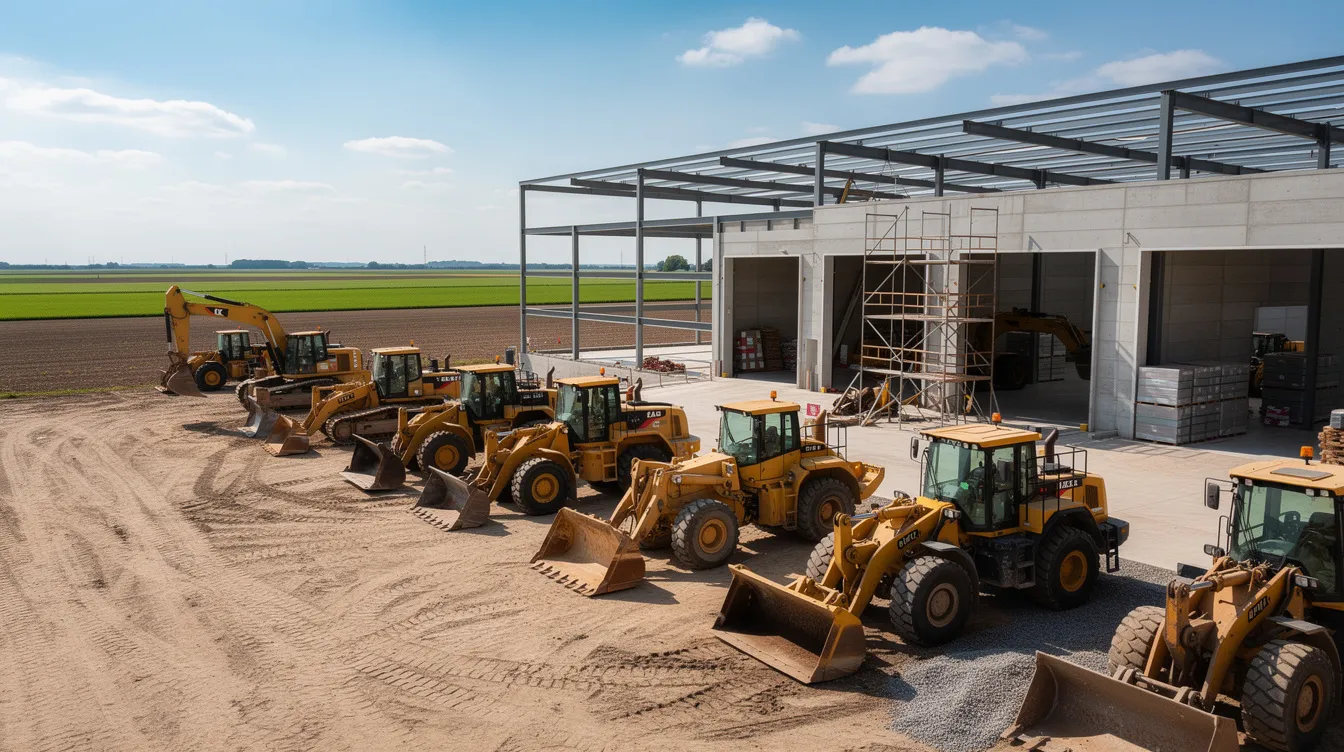
Building an asset means creating or acquiring a resource that has economic value. Assets are expected to generate future financial benefits, and for contractors, the concept extends well beyond the balance sheet.
Assets can take physical, financial, or intangible forms in personal finance and business contexts. For a contractor, the practical categories include:
| Asset Category | Examples |
|---|---|
| Owned equipment | Excavators, loaders, cranes, generators, pumps, attachments |
| Rented or leased assets | Long-term lease agreements, short-duration rentals |
| Vehicles | Trucks, trailers, pickup trucks, dump trucks, utility vehicles |
| Tools | Power tools, saws, compressors, welders |
| Temporary facilities | Job trailers, scaffolding, temporary power, on-site offices |
| Inventory and materials | Stockpiled materials, spare parts, fasteners |
| Technology platforms | Fleet tracking, estimating software, CMMS, reporting systems |
Digital assets are intangible properties such as software and established social media accounts, and they belong on this list too. Investments in paper or digital instruments designed to grow wealth are financial assets, while equipment, vehicles, and similar long-term resources are typically treated as fixed assets; for contractors, bonding capacity and reserve accounts serve a similar function. Intellectual property includes patents, trademarks, and copyrights that protect creative works or inventions, and while most contractors won’t hold patents, proprietary processes and training curricula (like those built through registered apprenticeship programs) can create a defensible economic advantage.
Real estate can appreciate in value or generate rental income, making it a viable asset. Physical property developed or acquired to generate rental income is a real estate asset, and many Eastern PA contractors own yard space, shop buildings, or storage lots that should be evaluated the same way.
Building cash-flow generating assets is a priority for effective asset accumulation. Asset building is the process of gathering and growing valuable items to increase overall wealth. The reframe for contractors: review every truck, trailer, and tool as a cash-flow lever, not a sunk cost. Job skills and education increase earning potential and create human capital assets, which is why investing in crew training through apprenticeship and management education programs compounds the return on every physical asset in your fleet.
Asset utilization is the single clearest indicator of whether equipment is earning its keep. Industry benchmarks for heavy equipment target 70% to 85% utilization when deployed. Below 60%, the asset is costing more in carrying costs than it returns in productivity.
Construction asset management software improves asset utilization and reduces downtime by tracking hours, location, and operating status. That visibility can produce measurable savings through better deployment and less idle time. Real-time data tracking enhances visibility into asset performance, replacing the guesswork that leads to misallocation. Centralized asset management minimizes errors and manual tracking, giving operations teams a single source of truth across projects in Philadelphia, the Lehigh Valley, and NEPA.
Contractors should review every asset with utilization below 50% to 60% and decide whether to reassign it to an active job, rent it out, sell it, or retire it. In the Lehigh Valley, where warehouse projects cycle through heavy earthwork phases then shift to structural and finishing trades, equipment that sits idle between phases drains margin if no redeployment plan exists.
Reactive maintenance can cost 3 to 9 times more per event than planned preventive maintenance. That multiplier includes not just the repair bill but the schedule delays, crew downtime, and overhead absorption lost while a machine sits waiting for parts.
The operational rule: when annual maintenance costs for a piece of capital equipment approach 50% to 60% of its replacement or rebuild cost, it is time to retire or sell. Before that threshold, preventive maintenance is a margin protection investment, not a cost. Improved compliance with industry regulations is a key benefit of disciplined maintenance scheduling, especially on OSHA-regulated job sites where equipment failures can trigger enforcement actions and disrupt active work, making it harder to maintain operational continuity.
Preservation strategies include scheduled lubrication, filter replacement, and component inspection at manufacturer-recommended intervals. Rebuild programs can extend the useful life of high-value assets like excavators and cranes at a fraction of replacement cost, preserving resale value and reducing capital outlay.
Enhanced inventory management prevents stockouts and project delays, both of which cascade into lost labor hours and schedule penalties. Standardize specification documents, use supplier scorecards that track price, lead time, and reliability, and define emergency purchase thresholds. Above a set dollar amount or percentage of project budget, require higher-level approval.
Dynamic pricing software helps suppliers quote accurately in real time, strengthening trust with customers while protecting margins, and contractors who demand this capability from their vendors gain a material advantage. Real-time pricing platforms reduce manual quoting work by 90%, which matters when tariff-driven price changes can occur overnight. Dynamic pricing software updates costs automatically in quotes, replacing static price sheets that risk underquoting and margin erosion. Build that discipline into the company’s procurement strategy.
Link procurement timing to your project backlog, material lead times, and any long-term or fixed-price work where escalation clauses may be appropriate. Structural steel lead times of 12 or more weeks mean locking in pricing at project start avoids post-bid cost increases. For a Lehigh Valley warehouse job or a Philadelphia curtain wall project, that discipline protects the bid.
Decision criteria include utilization rate, project duration, financing cost, tax implications, and resale value. If a piece of equipment will operate above 70% utilization for two or more years, owning it typically costs less per hour than renting. For volatile or one-off project needs (specialized scaffolding, a second crane for a six-week lift sequence), renting avoids the risk of owning an idle asset after the job ends.
Contract type matters here. Fixed-price contracts expose contractors to material cost increases and post-signing price swings, so firms may hesitate to invest aggressively in equipment without strong backlog support. Cost-plus contracts pass material cost fluctuations to project owners, reducing the contractor’s asset-timing risk. Unit price contracts distribute risk based on quantities used. Align your buy, lease, or rent decision to the contract structure you’re working under; a fixed-price contract demands more conservative equipment commitments because you cannot pass on unexpected costs.
Include financing cost, insurance, storage, depreciation, and tax treatment (depreciation deductions for owned assets, operating expense treatment for rentals) in every comparison.

Landed costs include material price, import duties, tariffs, freight, customs, handling, inland transport, insurance, storage, and local taxes. When a tariff rate changes from 25% to 50% on steel, landed cost jumps before the next purchase order clears.
Currency fluctuations can reshape material costs for any contractor whose supply chain touches imported materials, even indirectly through domestic fabricators sourcing foreign raw stock. Just-in-time procurement increases exposure to price spikes because there is no buffer inventory to absorb sudden cost jumps. Tariff-driven price increases on materials create unpredictable costs that can surface between bid submission and material delivery.
The timing problem runs both directions. Buying too early ties up cash and creates storage and depreciation risk. Buying too late can force payment at higher tariff rates or miss supplier deadlines, stalling the critical path. Warning signs include: supplier quotes that expire in under 48 hours, frequent negative cost variances post-bid on steel or aluminum, backlogged orders with uncertain delivery dates, and fuel or freight surcharges added without advance notice.
Before setting a bid price, teams should review:
| Metric | Why It Matters | Threshold to Watch |
|---|---|---|
| Utilization rate | Hours working vs. hours available | Below 60% signals underuse |
| Maintenance cost per hour | Preventive vs. reactive spend | Reactive exceeding 3x planned |
| Downtime (scheduled + unscheduled) | Availability below target | Below 85% availability |
| Replacement cycle and depreciation | Asset age, salvage value, useful life | Maintenance > 50% of replacement cost |
| Fuel spend | Diesel was 65.8% higher YoY as of June 2026 | Monthly variance > 10% from budget |
| Job-level overhead absorption | Fixed costs carried by active jobs | Unabsorbed overhead rising quarter over quarter |
| Input PPI vs. bid price PPI | Spread between cost inflation and bid inflation | Spread > 3 points |
Diversifying across asset classes can protect against market downturns; for contractors, that means balancing owned equipment, rental agreements, and cash reserves rather than concentrating capital in one category. Maintaining liquidity and a conservative debt-to-equity ratio are crucial for risk management, especially when payment cycles on public work stretch 60 to 90 days.
What is a building asset for a contractor? Any owned, leased, rented, or temporarily held item through which contractors expect to recover cost through productive use: equipment, vehicles, tools, temporary facilities, inventory, technology platforms, and real estate.
How do tariffs affect equipment and procurement? Tariffs increase material costs directly (steel up 16.9%, aluminum up 52.4% in 2026), push domestic suppliers to raise prices in parallel, and create bidding uncertainty when costs shift between bid and delivery.
Which assets most often erode margin? Heavy equipment idled between jobs, older assets with high maintenance costs, specialty tools used on fewer than two projects per year, and inventory held without a confirmed project need.
When does buy, lease, or rent make sense? Buy for high utilization over two or more years. Lease for multi-year projects with uncertain duration. Rent for peak demand or infrequent-use equipment. Always model total cost including transport, maintenance, depreciation, and financing.
What metrics should estimators review before bidding? Utilization rate, maintenance cost per unit, downtime, fuel spend, overhead absorption, input cost inflation vs. bid inflation, and supplier lead times.
How does maintenance expense protect margin? Prevention avoids 3x to 9x cost multipliers from reactive repairs, reduces schedule delays, preserves resale value, and cuts unpredictable cost spikes.
AI-enabled estimating tools can forecast input cost trends, embed tariff expectations into estimates, and simulate procurement-timing scenarios to compare landed-cost outcomes. This kind of reporting is especially useful for contractors working across different sectors with different equipment needs. Reporting dashboards tied to telematics and CMMS platforms expose real-time utilization, maintenance windows, and downtime patterns, giving operations leaders the data to make informed decisions about redeployment or disposal and ultimately support better asset decisions.
The caution: field validation remains essential. If an algorithm predicts utilization or schedule performance, supervisors must confirm actual hours and document reasons for delays. Data supports decisions; it does not replace the judgment of experienced teams on the ground.
Philadelphia. Stage equipment and materials at secured satellite yards in the suburban collar counties (Montgomery, Delaware, Bucks, Chester) to reduce urban congestion delays. Account for prevailing wage and PLA/RCO compliance costs in every bid; these reduce labor-line flexibility, making equipment and procurement efficiency the primary margin control levers.
Lehigh Valley. Size fleet to match phased demand on large-footprint warehouse and industrial projects. Avoid committing to full fleet ownership for a single project phase; rent supplemental equipment for earthwork, then release it before structural work begins. Track fabricator quote validity daily when steel tariffs are active.
Northeast PA. Plan mobilization as a line item with its own budget and schedule. Stage spare parts and consumables closer to job sites along the I-81 corridor to avoid multi-day delays waiting for deliveries from metro supply hubs. For smaller-scale projects, rental agreements often preserve more working capital than ownership.

Equity ownership can create upside and involves risk evaluation; the same principle applies to every capital equipment decision a contractor makes. Recurring revenue models can enhance the value of a business as an asset, and for contractors, consistent backlog paired with disciplined asset management functions the same way. Reinvesting profits into acquiring more assets can compound growth over time, but only when each investment is matched to confirmed demand.
ABC Eastern Pennsylvania provides resources that support these decisions: management education for contractors, AI estimating and bid discipline guidance, and broader membership and business support for firms navigating the 2026 market. Member benefits and services include networking, safety consulting, workforce development through registered apprenticeship, and access to the Eastern Pennsylvania construction outlook that contextualizes regional demand by sub-market.
Building robust assets requires a deliberate strategy focused on value accumulation and growth. For Eastern Pennsylvania contractors competing in a tariff-pressured, cost-volatile 2026 market, the firms that measure asset performance weekly, act on the data monthly, and align every purchase to confirmed backlog will hold margin while competitors absorb losses.
Run the 30-day building asset review before your next bid goes out.


