


If you are an owner, safety director, or field supervisor at one of the construction firms in Philadelphia, Bucks, Montgomery, Chester, Delaware, the Lehigh Valley, or Northeast PA tasked with getting your safety program in order this year, this article is for you. A construction safety program is no longer just about OSHA compliance. It is a business tool that determines whether your organization wins work, controls insurance costs, and retains skilled people.
Public and private owners now require written safety and health programs, EMR thresholds, and OSHA log summaries as part of the bidding process. OSHA requires a workplace free from recognized hazards, and insurers in Eastern Pennsylvania use TRIR, EMR, and loss runs to price workers’ compensation and general liability-strong safety programs can materially reduce premiums over three to five years. Effective safety programs reduce workplace accidents and costs while protecting your business’s well-being. On Pennsylvania prevailing wage compliance projects, auditors scrutinize safety training records, toolbox talks, and certified payrolls, making documented procedures a competitive advantage. Visible management commitment to safety is foundational for an effective program. Safety policies must be communicated and regularly updated so they reflect real field conditions. Legal compliance with OSHA standards is crucial for avoiding fines and legal liabilities.
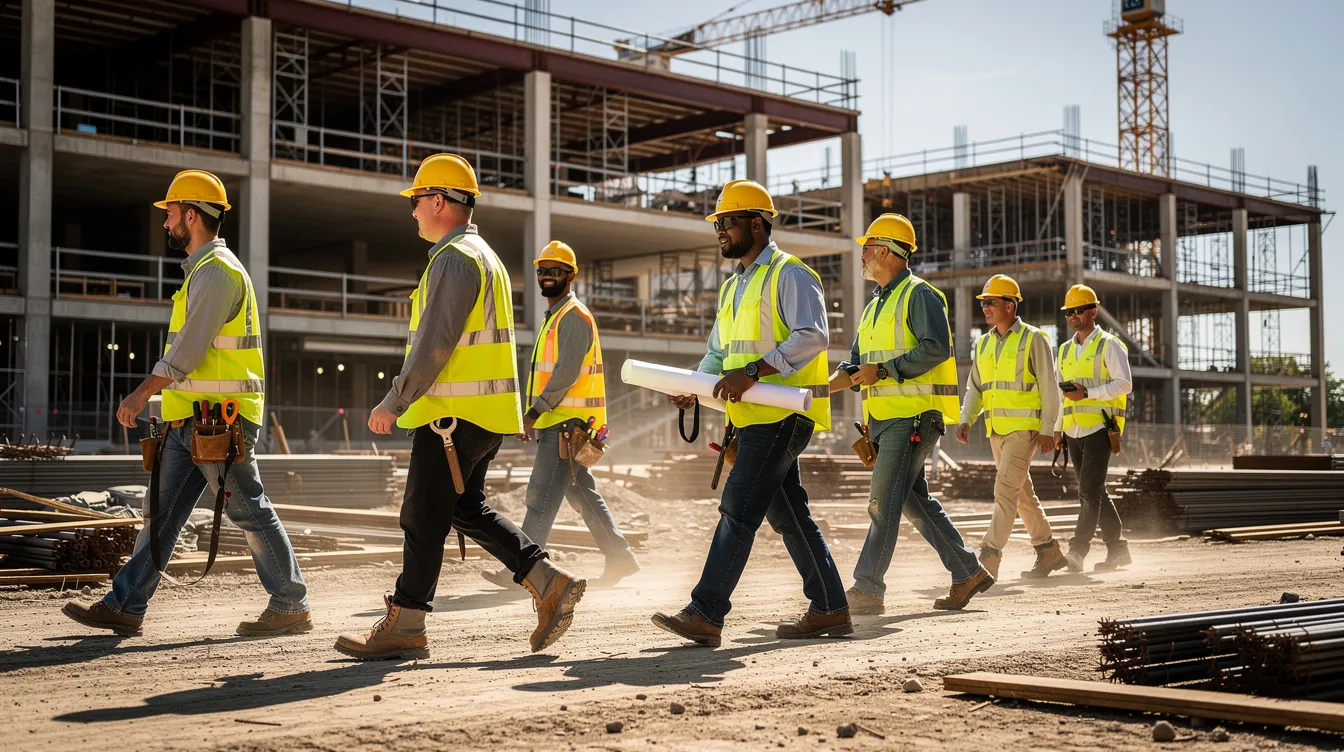
At ABC Eastern Pennsylvania Chapter, our focus is helping merit shop contractors build safety and health systems that stand up against any competitor in the region-because an effective construction safety program fosters a proactive safety culture that protects workers and wins bids.
Any safety program must start with OSHA’s Focus Four workplace hazards because they account for the majority of construction industry fatalities. OSHA mandates hazard identification and the implementation of effective safety measures at every job site. Controlling hazards before work begins is essential for maintaining safety.
A construction safety program should translate these risks into specific controls: fall protection plans at six feet and above, equipment spotters, excavation safety procedures, lockout/tagout, and GFCI use. Training should be understandable and appropriate for construction workers-available in English and spanish-to enhance safety compliance. Every new-employee orientation, apprenticeship class, and foreman meeting in 2026 should explicitly review Focus Four exposures for current projects. ABC Eastern Pennsylvania coaches members to center their safety training, toolbox talks, and jobsite inspections around these four hazards.
Many construction firms do not know where they stand on safety. The STEP Safety Management System is ABC’s no-cost benchmarking and recognition framework designed to fix that. Continuous evaluation and improvement are crucial for maintaining an effective construction safety program, and STEP provides the tools to do it.
STEP evaluates both leading indicators (orientation, safety training, jobsite inspections, toolbox talks) and lagging indicators (TRIR, DART), then compares your results to national construction industry benchmarks. Key components include strong leadership and worker participation. The six recognition levels are Participant, Bronze, Silver, Gold, Platinum, and Diamond. Moving up signals a maturing health program to owners and insurers. There is no submission cost for ABC members, making it practical for small and mid-size contractors. Participants who reach top tiers have reported being up to 827% safer than the industry average. Employee involvement in safety programs increases hazard awareness and improves safety culture across the organization. ABC Eastern Pennsylvania’s safety team can walk members through STEP questions, interpret scoring, and build a prioritized improvement plan. Learn more about recognition at our STEP Safety Awards page.
In December 2025, ABC Eastern Pennsylvania Chapter entered a formal alliance agreement with OSHA area offices in Allentown, Philadelphia, and Wilkes-Barre to improve construction safety performance. This engagement supports construction workers on real jobsites across the Lehigh Valley, Northeast PA, and the Philadelphia region through joint jobsite visits, sharing best practices, and clarifying complex OSHA standard interpretations. The Construction Safety Council is an OSHA-authorized Education Center that provides additional industry resources nationally.
Creating a safety culture requires moving beyond compliance to peer-to-peer accountability. ABC Eastern Pennsylvania participates in national OSHA campaigns, including the annual National Stand-Down to Prevent Falls each May and the Safe + Sound campaign each August; activities include toolbox talks, field stand-downs, and supervisor briefings. Regular engagement with OSHA specialists normalizes safety conversations from apprentice learners to superintendents and strengthens jobsite safety culture across every trade.
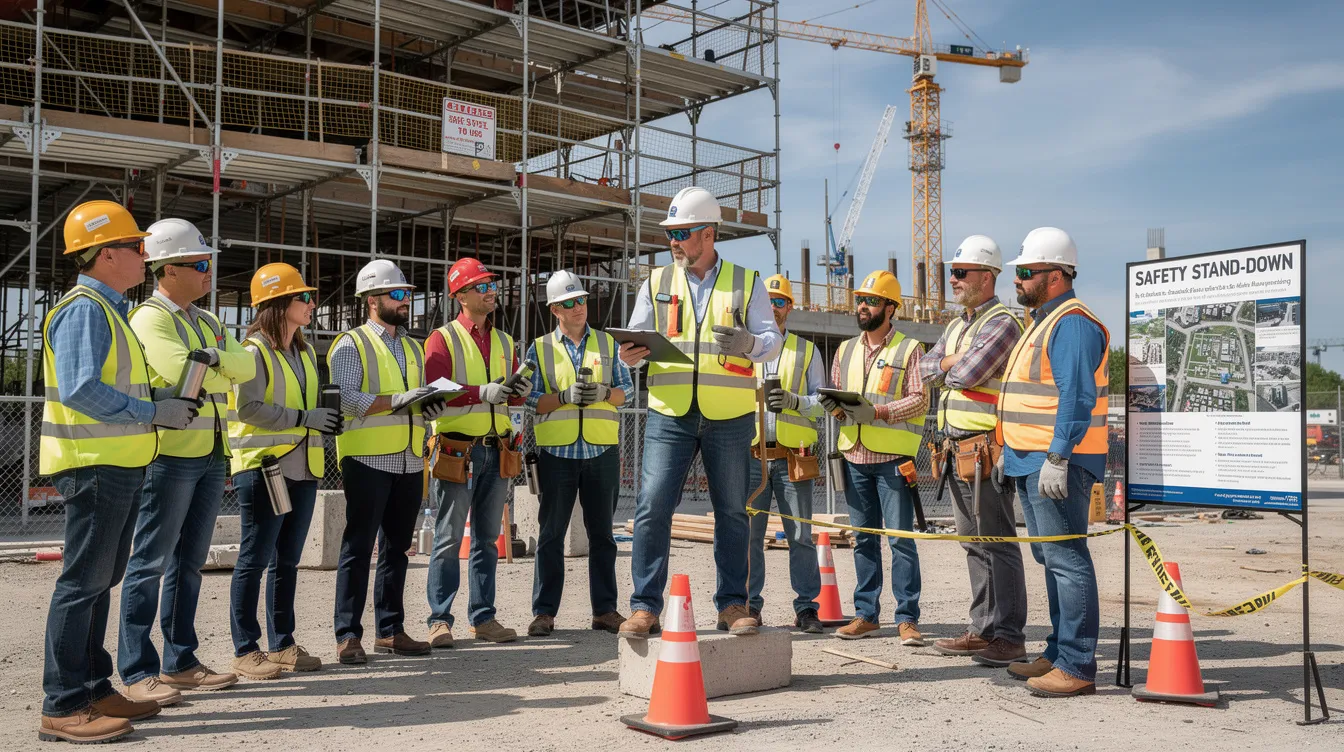
These building blocks apply across trades-from electrical contractors in Philadelphia to heavy/highway crews in the Poconos-and should be integrated into daily planning and supervision.
Written programs align field expectations, support OSHA compliance, and provide evidence for insurers and general contractors. A safety program identifies and mitigates job site hazards. Key elements include:
Structure a company safety committee with managers, field supervisors, and craft employees who meet monthly to review incidents, near misses, and inspection findings. Feedback from the field drives real improvement. ABC Eastern Pennsylvania provides sample written programs and safety committee templates customized by trade through our safety consulting services.
Consistent employee training is the backbone of any safety program and often the first thing OSHA and owners ask to see after an incident. Well-trained employees significantly reduce the likelihood of injuries and accidents on construction sites. Ongoing training for construction workers on the use of personal protective equipment and emergency procedures is essential.
Build a training matrix tracked by name and date:
For context, New York City requires 40 hours of safety training for construction workers, and OSHA requires 40 hours of safety training for NYC construction workers specifically-a benchmark worth noting. AGC offers IACET CEUs for construction safety training, and Vector Solutions offers a comprehensive training library for construction safety topics. Toolbox talks-brief discussions led by foremen tied to current tasks-should have documented attendance. ABC Eastern Pennsylvania’s registered apprenticeship training embeds safety into every craft curriculum, combining classroom instruction with hands-on practice in hazard identification and safe work methods for all team members.
Regular site inspections and job hazard analyses are critical for identifying hazards. A construction safety program reduces workplace injuries and enhances project quality when inspections verify that written policies are followed in the field. Implementing a hierarchy of controls mitigates identified risks. Subcontractors must adhere to the same safety standards as company employees.
Practical inspection rhythm:
| Frequency | Who | Focus |
|---|---|---|
| Daily | Supervisors | Walk-arounds, immediate hazards |
| Weekly | Competent person | Formal checklists, Focus Four |
| Periodic | Corporate or third-party | High-risk operations, audit prep |
For incident investigation: respond promptly to injuries and near misses, conduct root cause analyses without blame, and communicate corrective actions across job sites. Triggers for outside help include repeated fall-protection violations, confusion over confined-space classifications, complex crane picks, or preparation for a major owner or OSHA visit. Consulting projects range from gap analyses of existing programs to electrical hazard assessments and supervisor development in investigative techniques.
For merit shop contractors, construction safety is now a differentiator that wins prequalification, reduces insurance costs, and supports long-term workforce development. Younger craft professionals and experienced foremen increasingly choose employers who invest in solid safety training, stable health programs, and clear expectations. Safety records reflect your commitment to quality and the importance of protecting every person on your team.
ABC Eastern Pennsylvania Chapter integrates safety with business growth: STEP participation, ABC–OSHA Partnership engagement, registered apprenticeship training programs, and political advocacy that supports safe, open competition in the regional construction industry. Explore all member benefits to see how the chapter supports your development.
Your next steps:
Bring safety directors, estimators, and project managers into the conversation so that safety requirements, training budgets, and bid strategies are aligned from the office to the field. The resources, skills, and knowledge are available-now it is time to learn, act, and create safer work environments across Eastern Pennsylvania.
These FAQs address common follow-up questions from contractors and safety leaders in the region.
Review your written program at least annually or whenever there are major changes in OSHA standards, new types of work (adding demolition, utility, or service work), or after serious incidents. ABC Eastern Pennsylvania’s safety consulting services can perform a periodic program review and recommend updates specific to local enforcement trends and owner expectations. Keeping documentation current ensures successful completion of audits and bid prequalification.
Common requests include new-hire orientation logs, Focus Four and fall protection training rosters, equipment qualification records (forklifts, aerial lifts, cranes), and attendance sheets for toolbox talks and safety meetings. Keeping records organized by project and by employee-with each entry showing name, date, and topics covered-makes it easier to respond during audits, OSHA inspections, and Pennsylvania prevailing wage compliance reviews.
STEP is designed for construction firms of all sizes, including small specialty contractors with a single crew. Many Eastern Pennsylvania subcontractors use their STEP level as evidence of a formal safety program when bidding for work with larger general contractors or construction managers. The activities involved in STEP-documenting practices, tracking incidents, running inspections-scale to fit any size company.
Conduct immediate incident investigations, perform targeted fall protection inspections on all active jobsites, and verify that harnesses, anchorage points, and training meet OSHA requirements. Contact ABC Eastern Pennsylvania Chapter to schedule a fall protection gap analysis, field coaching for supervisors, and participation in the next National Stand-Down to Prevent Falls activities to identify systemic gaps.
Consistent reduction in recordable injuries lowers your Experience Modification Rate (EMR) over several policy years, which directly impacts workers’ compensation premiums. Insurers and brokers view STEP participation, documented safety training, and active jobsite inspections as positives when negotiating coverage terms for construction firms in Eastern Pennsylvania-people notice when your numbers improve year over year.


